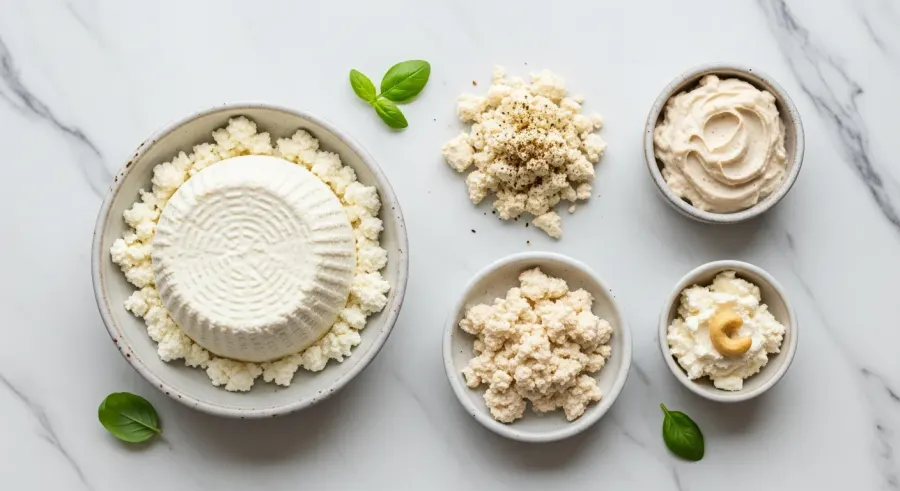
In Short
Cottage cheese is the closest 1:1 match for texture, while béchamel provides the authentic Italian alternative. The right choice depends heavily on your sauce acidity—and why spreading cold cream cheese will physically ruin your dish is below.
Realizing you forgot to buy ricotta right as your pasta finishes boiling is a specific kind of kitchen panic. But baked pasta is actually quite forgiving. The middle cheese layer only has one real job: providing a creamy, fatty contrast to the heavy meat sauce and dense noodles. Once you look at it that way, your fridge is full of options.
Cottage Cheese Is Your Closest Match
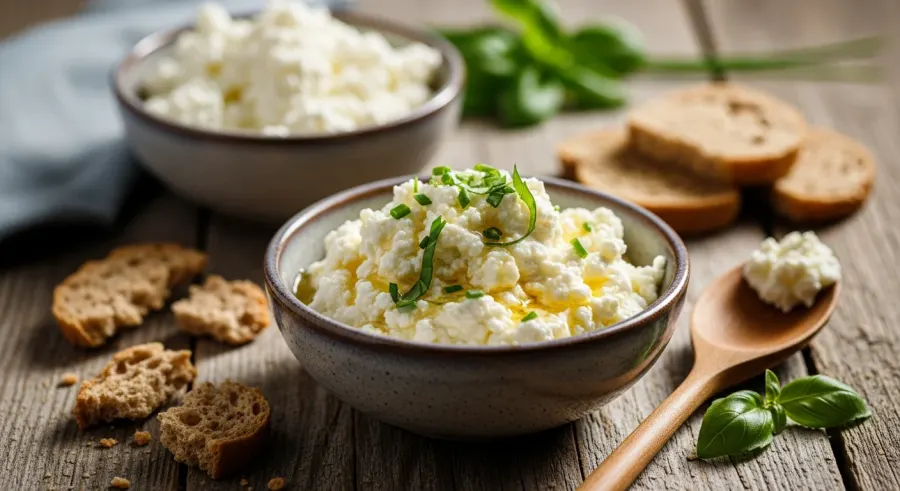
If you look at a spoonful of small-curd cottage cheese, the visual similarities are obvious. It is essentially the curd form of what ricotta provides as a whey cheese. When baked between layers of pasta, the moisture release and structural hold are nearly identical, making it a perfect 1:1 swap.
The main thing you will notice is the salt. Commercial cottage cheese is heavily seasoned during production, meaning you may need to reduce the added salt in your specific recipe layer. It also carries a slight lactic tang that ricotta lacks, though this usually gets lost under a heavy blanket of tomato sauce.
Nutritionally, this is a highly efficient swap. Whole milk ricotta sits around 150 calories with 7.5 grams of protein and 10 grams of fat per 100 grams (USDA). Whole milk cottage cheese drops the caloric load to roughly 98 calories while bumping the protein up to 11.1 grams per 100 grams (USDA).
This substitute excels in classic, heavy baked ziti or a standard red-sauce lasagna. It holds its shape against the acidity of tomatoes perfectly. It does not work well in sweeter, delicate profiles.
The most common mistake people make is trying to force the texture to match ricotta by running the cottage cheese through a food processor. Blending destroys the structural integrity of the curds, turning the dairy into a watery slurry. Once that slurry hits a 375-degree oven, the water seeps out, pools at the bottom of the pan, and turns the bottom pasta sheet to mush.
The Authentic Method Uses Béchamel
Northern Italy bypassed the soft cheese problem centuries ago. Traditional Bolognese lasagna uses béchamel instead of distinct cheese layers. This is a simple white sauce made by cooking butter and flour, then whisking in milk until it thickens. Instead of dolloping mounds of cheese, you pour about a cup of this smooth sauce over each layer of noodles.
The flavor difference is distinct. Béchamel brings a mellow, nutty warmth from the cooked butter and a mandatory pinch of nutmeg, completely skipping the acidity of cheese. It creates a cohesive, silky dish rather than one with distinct fluffy white pockets.
People often assume a butter-based sauce is the heaviest option available, but the opposite is true. Because the bulk of the volume comes from milk and water trapped in a starch matrix, béchamel sauce contains significantly fewer calories and less fat per 100 grams than standard whole milk ricotta (USDA).
This works beautifully with rich, slow-simmered meat sauces where a tangy cheese would compete with the beef and pork. It fails instantly in quick weeknight lasagnas where you just want to assemble raw ingredients and bake.
The failure case comes down to starch gelatinization. If you pull the sauce off the stove while it is still thin and watery, it will simply wash the tomato sauce away. If you boil it until it turns pasty, the layers will cement together into a dense block.
Mascarpone Gives A Much Richer Melt
Fat dictates how dairy behaves in a hot oven, and few things carry more of it than mascarpone. This Italian cream cheese lacks the firm protein structure of regular cheese, so it melts beautifully into a velvet pool. You can use a 1:1 ratio, though it helps to cut it 50/50 with a splash of milk or plain yogurt to loosen the texture.
The flavor leans heavily toward sweet cream. There is almost no acidity. The mouthfeel is dense and coats the palate entirely, making it feel closer to a savory pastry filling than a standard cheese layer.
The numbers reflect this density. Mascarpone carries roughly 435 calories and over 40 grams of fat per 100 grams (USDA). That is four times the fat content of standard ricotta.
This richness makes it the ideal candidate for vegetable-based lasagnas. A spinach, mushroom, or butternut squash layer benefits immensely from the heavy, buttery profile. It struggles in heavy meat sauces, where the combined fat from the beef and the mascarpone becomes overwhelming.
Using mascarpone straight out of the tub in a thick, one-inch layer creates serious structural issues. Because it is mostly fat, prolonged oven heat causes the emulsion to break. The oil separates from the dairy solids and floats to the top of your baking dish, leaving a greasy surface and a flat, collapsed filling.
Crumbled Tofu Solves The Dairy Problem
What happens when you need to feed a table of vegans? Plant-based baking usually requires some heavy textural compromises, but firm tofu actually works perfectly here. It mimics the exact granular crumb of a soft dairy cheese. The ratio is a simple 1:1 swap by volume once you crumble the block by hand.
Plain tofu tastes like nothing, which is both a benefit and a liability. To mimic the savory notes of dairy, the crumbled soy requires aggressive seasoning. A standard approach involves mixing in olive oil for fat, lemon juice for lactic brightness, salt, and a heavy pour of nutritional yeast for a cheesy, umami background.
This is a highly functional macronutrient swap. Firm tofu provides 144 calories, 17.3 grams of protein, and 8.7 grams of fat per 100 grams (USDA). The protein density helps bind the layer without relying on eggs, making it the only logical choice for dairy allergies.
The absolute worst thing you can do is buy the wrong firmness. Silken tofu contains coagulants that hold massive amounts of water in a fragile gel. If you crumble silken tofu into a baking dish, it will completely liquefy under the heat. Even with firm tofu, skipping the initial pressing stage leaves too much water in the soy matrix, preventing it from absorbing the olive oil and lemon juice.
Cream Cheese Works In A Pinch
Desperation often leads to searching the back of the refrigerator for anything spreadable. Standard block cream cheese functions as a great emergency binder. You use a 1:1 ratio, but the block requires thinning. Mashing two tablespoons of milk into every eight ounces of cheese loosens the dense stabilizers enough to mimic a traditional filling.
The flavor is significantly sharper and heavier. The intense tang cuts through rich ingredients, making it an excellent pairing for spicy Italian sausage or heavy garlic red sauces.
Nutritionally, this is a heavy addition. Cream cheese delivers about 350 calories, 34 grams of fat, and 6 grams of protein per 100 grams (USDA). The high fat content and commercial gums give it a sticky, slow-melting quality that holds the noodles together tightly.
This is not an option for delicate herb or fresh tomato lasagnas, as the heavy tang simply overpowers lighter vegetables.
The physical application is where most people ruin the dish. Spreading cold cream cheese directly from the fridge onto boiled lasagna noodles will tear the pasta sheets to shreds. The block must sit at room temperature for an hour, or be gently microwaved, until it is entirely soft before it touches the pasta.
Fresh Goat Cheese Brings Serious Tang
Some alternative ingredients change the entire profile of the dish, rather than just acting as a structural stand-in. Fresh chèvre has a moisture content and crumbly nature that closely matches ricotta. It blends seamlessly with a beaten egg for binding. You typically use about 3/4 cup of goat cheese mixed with 1/4 cup of whole milk to replace one cup of ricotta.
The flavor is aggressively earthy and tart. It dominates the palate in a way neutral dairy never does, turning a basic comfort food into something very distinct.
Fresh goat cheese brings 264 calories, 21 grams of fat, and 18.5 grams of protein per 100 grams (USDA). The high protein helps it set up beautifully during the bake.
This substitute shines in white lasagnas. Pairing it with roasted chicken, caramelized onions, or a garlic cream sauce creates a restaurant-quality profile.
It clashes violently with traditional, slow-cooked red sauce. The natural acidity of tomatoes combined with the intense tang of goat cheese creates a harsh, sour bite that no amount of sugar can balance. Additionally, buying an aged goat cheese log with a developed rind instead of fresh chèvre introduces hard, rubbery chunks that will never melt into the surrounding ingredients.
Bottom Line
Building a layered pasta dish does not require strict adherence to one specific grocery item. Once you understand the role the middle layer plays—adding fat, binding the sheets, and providing a creamy contrast to the sauce—the structural logic makes sense. You just pick the ingredient that fits the texture and richness you want for tonight's dinner.