In Short
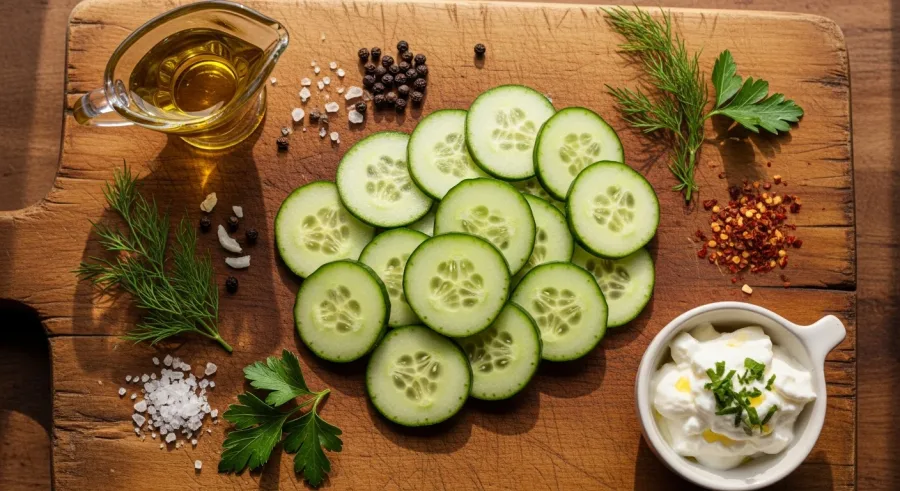
Dill, mint, and cilantro are the most chemically compatible herbs for cucumber, while feta cheese, red onion, and toasted sesame provide the best structural and flavor contrasts. Why these specific plants share chemical compounds (and how fat transforms a watery vegetable) is below.
Cucumbers are essentially structured water, but their flavor profile is surprisingly complex when you look closely at the chemistry. Finding the right pairings is rarely about covering up their mild taste. It is about matching their molecular structure with ingredients that pull out their best qualities.
Why Dill Always Works
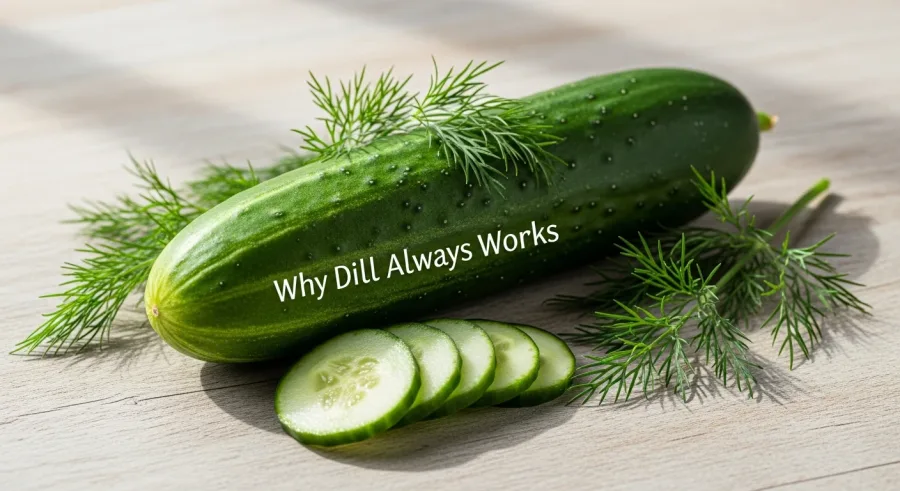
The pairing of dill and cucumber has been standard for so long it feels almost automatic. If you look at the flavor chemistry, the reason for this long-standing culinary marriage becomes obvious. Cucumber flavor is driven primarily by specific aldehydes, most notably (E,Z)-2,6-nonadienal, which gives the fruit its distinct watery, green aroma. This compound is highly volatile and delicate.
Dill brings an entirely different set of molecules to the table, specifically carvone and limonene. These aromatic terpenes do not compete with the cucumber's aldehydes. Instead, they fill in the sensory gaps, creating a fuller, more rounded profile on the palate. When you eat them together, your brain registers a complete spectrum of freshness.
There are failure cases with dill, though. If you use it with a heavy hand, the carvone can easily overpower the subtle melon-like notes of the cucumber. Chopping a tablespoon of fresh dill fronds for every large cucumber leans into this classic combination without destroying the balance. A mild dressing for cucumber salad, perhaps utilizing a gentle white wine vinegar and a light olive oil, allows these specific flavor compounds to shine without masking them under aggressive acidity.
Mint Actually Makes It Taste Colder
Menthol does something completely unique to the human mouth. It physically tricks your sensory receptors (specifically the TRPM8 receptor) into feeling a cold sensation, even if the food you are eating is sitting at room temperature.
Cucumbers naturally feel refreshing because of their physical makeup. They contain around 95% water (USDA FoodData Central), which provides an immediate, literal cooling effect on the palate. When you introduce fresh mint into the bowl, the menthol amplifies that perceived freshness exponentially. It is one of the most effective cucumber flavor pairings for a hot summer afternoon.
Not all mint behaves the same way in a salad. Peppermint contains a much higher concentration of menthol compared to spearmint, which can sometimes push the dish into a territory that tastes oddly like toothpaste. Spearmint is generally the safer culinary choice, offering a sweeter, softer herbal note. Slicing the mint in a thin chiffonade right before serving prevents the delicate volatile oils from oxidizing and turning black. Tossing the mixture with a slight squeeze of lime juice adds a necessary acid that cuts through the herbal sweetness and keeps the whole dish bright.
The Case For Salty Dairy
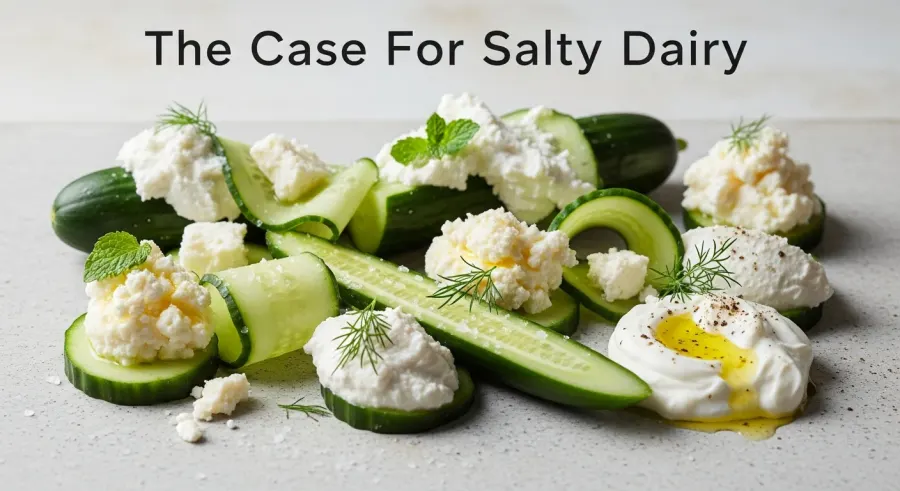
Water and fat are natural enemies in the kitchen, but they can be forced into a highly successful truce. Feta cheese is technically a protein and fat pairing, but in the context of a raw vegetable dish, it acts much more like an aggressive seasoning.
The astringent, green notes of a raw cucumber desperately need grounding. Feta provides a dense dose of rich butterfat and lactic acid, while its heavy salt content performs a mechanical function. It draws moisture out of the vegetable through osmosis. This slight dehydration process actually concentrates what goes with cucumber so well, which is its inherent crunch.
There is a specific window for this interaction. Mixing a half-cup of crumbled feta with two sliced cucumbers and letting it sit for about ten minutes allows the cheese to break down slightly, creating a milky, savory coating on the vegetables. If you leave it for an hour, the cucumbers will release too much water, leaving you with a diluted, unappetizing soup. Timing is the difference between a crisp, savory side dish and a soggy mistake.
A Little Allium Goes a Long Way
(If you are going to add raw onion to a delicate salad, red is the only real option.)
White and yellow onions are often too sulfurous and sharp to be eaten raw in large quantities, especially next to something as quiet as a cucumber. Red onions contain pungent sulfur compounds called thiosulfinates, but they also carry a higher natural sugar content that softens their bite.
On their own, raw onions can dominate a palate for hours. But cucumber is remarkably resilient when paired correctly. The sweet, mild aldehydes in the cucumber act as a buffer, mellowing the aggressive heat of the onion. This pairing is heavily reliant on prep technique. Instead of chopping thick chunks, slicing the red onion paper-thin is essential.
Soaking the onion slices in a bowl of ice water for ten to fifteen minutes before adding them to the salad leaches out the harshest, most volatile sulfur compounds. What remains after a quick drain is a crisp, snappy texture and a sweet, sharp flavor that perfectly frames the cucumber without overwhelming the rest of the meal.
The Toasted Sesame Trick
Sometimes you need a deeper flavor profile that moves away from traditional garden freshness. While most cooks look for light, bright additions, toasted sesame oil and seeds bring a roasted, savory element that completely changes the trajectory of the dish.
The Maillard reaction that occurs when sesame seeds are roasted introduces hundreds of complex flavor molecules, most notably pyrazines. These nutty, earthy, deeply savory compounds provide a heavy, anchoring bass note to the light, floating aroma of the raw cucumber. It is a study in complete sensory contrast.
Because sesame oil is so intensely concentrated, it is very easy to ruin a salad by over-pouring. Using just a half-teaspoon of toasted sesame oil goes a long way toward building this profile. Tossing the cucumbers with a pinch of salt and the oil, then finishing with whole toasted seeds, bypasses traditional Western flavor structures entirely. It pushes the salad into a rich, umami-driven space that pairs perfectly with heavier proteins.
Tarragon Introduces Licorice Notes
French cuisine rarely relies on raw cucumbers, but when it does, the herb choice is deliberate. Tarragon contains a compound called estragole, which is responsible for its distinct anise or black licorice aroma.
At first glance, licorice and watery vegetables seem like a clash. However, estragole shares certain aromatic properties with the compounds found in fennel and basil. When paired with cucumber, tarragon acts as a bridge between sweet and savory. The inherent sweetness of the cucumber’s nonadienal latches onto the sweet licorice notes of the tarragon. It creates an almost perfume-like quality in the bowl.
This is a pairing that requires a fat to carry the flavor. Because estragole is fat-soluble, tossing tarragon and cucumber in a completely fat-free environment means the flavor flashes over your palate and disappears immediately. Whisking a spoonful of crème fraîche or full-fat Greek yogurt into your dressing gives the estragole molecules something to cling to, lengthening the flavor experience and coating the cucumber slices evenly.
Bottom Line
Building a good pairing profile just requires balancing the high water content with something sharp, fatty, or structurally similar. A simple cucumber base can shift in an entirely different direction just by changing the herb.