In Short
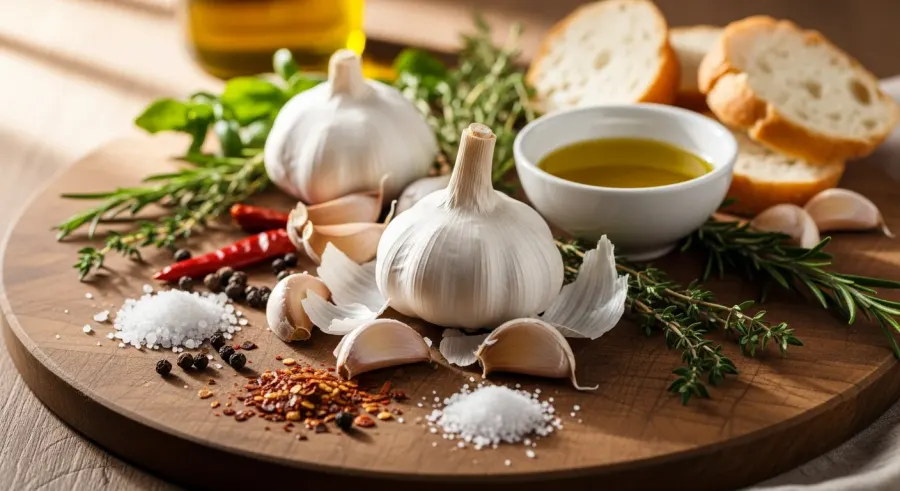
Rosemary, thyme, parsley, mint, and basil are the most effective herbs to pair with garlic, each serving a distinct culinary purpose. Why a specific enzyme in parsley fixes garlic breath (and why mint is a surprisingly perfect match) is detailed below.
Garlic has a habit of taking over a dish if you let it. But when you match it with the right chemical partners, it stops shouting and starts singing. The secret lies in pairing garlic’s volatile sulfur compounds with herbs that either stand up to its intensity or cleverly neutralize it.
Rosemary and Thyme Take the Heat
Woody herbs are built differently than their delicate, leafy cousins. Rosemary and thyme have thick, almost leathery leaves packed with fat-soluble flavor compounds like camphor, cineole, and thymol.
When you crush a clove of garlic, a rapid enzymatic reaction creates allicin, the molecule responsible for that sharp, unmistakable sulfur punch (Journal of Agricultural and Food Chemistry, 2007). But allicin is highly unstable. Under the high heat of a roasting pan or a cast-iron skillet, it degrades into a complex mixture of other sulfur compounds, primarily diallyl disulfide.
Because rosemary and thyme contain such robust, resinous oils, they do not simply vanish when exposed to high heat. Instead, their piney, earthy notes dissolve into the cooking fats alongside the garlic. Butter or olive oil acts as a solvent, catching the flavors of both the herbs and the mellowed, roasted garlic and fusing them together. You get a unified, deeply savory flavor profile that works beautifully for dense, rich foods.
A classic application involves stripping a tablespoon of fresh thyme or rosemary leaves and smashing three garlic cloves in hot oil for about a minute before adding a steak or roasting potatoes. The hot fat extracts the compounds from both ingredients simultaneously.
Parsley Actually Neutralizes the Smell
Roughly thirty percent of the population deals with halitosis at some point, and eating a heavily garlicky meal is a guaranteed way to make it worse. The lingering scent of garlic is notoriously difficult to get rid of because it does not just stay in your mouth. The volatile sulfur compounds (particularly allyl methyl sulfide) are absorbed through your gastrointestinal tract into your bloodstream, eventually making their way to your lungs and pores. Brushing your teeth only solves a fraction of the problem.
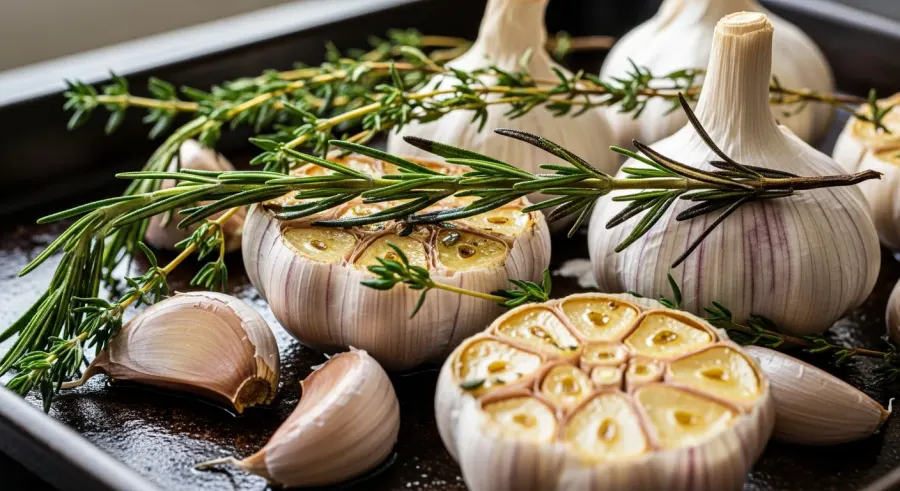
Parsley offers a genuine biochemical solution. This soft, bright herb contains a high concentration of an enzyme called polyphenol oxidase. Research published in the Journal of Food Science (2014) demonstrated that this specific enzyme physically reacts with and breaks down the volatile sulfur compounds in garlic.
It is not just masking the scent with a stronger one. The parsley is fundamentally altering the chemistry of the garlic on your breath. Folding a handful of chopped flat-leaf parsley into a garlic-heavy dish right off the heat takes advantage of this deodorizing reaction, keeping the meal fresh rather than heavy.
Wait, Mint Works With Garlic?
Can you successfully pair something icy and cooling with something that burns? You absolutely can. Mint and garlic might sound like a clash to a Western palate accustomed to mint chocolate chip, but they are a staple, synergistic pairing in Vietnamese and Mediterranean cooking.
Mint contains menthol, a compound that triggers the cold-sensitive receptors on your tongue. Garlic’s raw thiosulfinates trigger warmth and slight irritation. Eating them together creates a dynamic, contrasting sensory experience where the garlic provides the savory heat and the mint immediately cools it down.
On top of the temperature play, mint shares parsley's breath-saving secret. It also contains polyphenol oxidase enzymes that help tone down those aggressive sulfur notes. This makes it an ideal companion for heavy, fatty meats like lamb, which need both the savory depth of garlic and the lift of a fresh herb to prevent the dish from feeling sluggish. Blending two cloves of fresh garlic with a cup of fresh mint leaves and plain yogurt makes an excellent sauce that traps the flavor in the dairy fats while keeping the raw garlic in check.
Basil Balances the Raw Bite
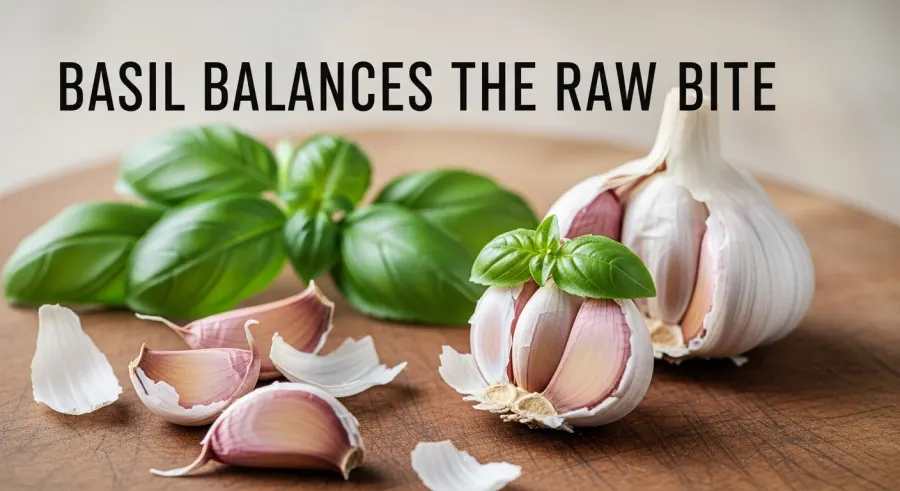
Raw garlic is a fundamentally different ingredient from cooked garlic. Without heat to tame the alliinase enzyme, the flavor remains sharp, biting, and somewhat metallic. Sweet basil serves as the perfect counterweight to this aggression.
Basil contains high levels of methyl cinnamate and eugenol. These are the compounds that give the herb its sweet, slightly clove-like, and highly aromatic profile. When you pound or blend raw garlic and fresh basil together, the sweet floral aromas of the herb act as a buffer. They round off the jagged, harsh edges of the allicin, creating a harmony that neither ingredient could achieve alone.
This specific chemical balance is why traditional Genovese pesto feels vibrant and bright rather than overwhelming. Pounding three cups of sweet basil with two cloves of raw garlic, pine nuts, and olive oil creates this exact balance, provided the mixture stays completely unheated. If you apply heat to this pairing, the delicate floral esters in the basil evaporate, and the garlic loses its fresh snap.
Oregano Anchors the Savory Side
Dried herbs often lose their nuance and turn to dust in the pantry, but oregano is a stubborn exception. Its primary flavor compound is carvacrol, which is highly stable and brings a warm, earthy, almost medicinal pungency. This robust nature pairs beautifully with garlic's sweeter, cooked side.
While fresh basil demands to stay cool, oregano wants to simmer. When paired with garlic and tomatoes, the slight bitterness of the oregano balances the acidity of the fruit and the lingering sweetness of the cooked garlic. According to USDA FoodData Central, a 100g serving of raw garlic packs around 33 grams of carbohydrates, a portion of which will undergo the Maillard reaction and caramelize when sautéed. Oregano is strong enough to cut through that caramelized sweetness without getting lost in the background.
Simmering a teaspoon of dried oregano with two minced garlic cloves in a tomato base for twenty or thirty minutes allows those robust flavors to meld properly, building a savory foundation for pizzas and braises.
Sage Needs Butter to Make It Work
Sage is an herb that feels like a velvet blanket. It is heavy, musky, and dominant, thanks to compounds like thujone and pinene. If you pair raw garlic with sage, the two ingredients will simply fight each other, resulting in a harsh, muddy flavor.
The secret to this pairing is time and temperature. When garlic is roasted whole, its sulfur compounds break down completely, leaving behind a soft, sweet, almost jam-like texture. When sage is crisped in browned butter, the milk solids toast and provide nutty, caramel notes. The browned butter acts as a chemical bridge between the musky sage and the sweet, roasted garlic.
Mashing a head of deeply roasted garlic into a pan of butter-fried sage leaves creates a rich, complex sauce that works flawlessly over squash or gnocchi.
Bottom Line
Understanding how these herbs interact with garlic changes the way you cook. You stop throwing everything into the pan at once and start treating flavor as a chemical equation—one that is highly satisfying to solve.