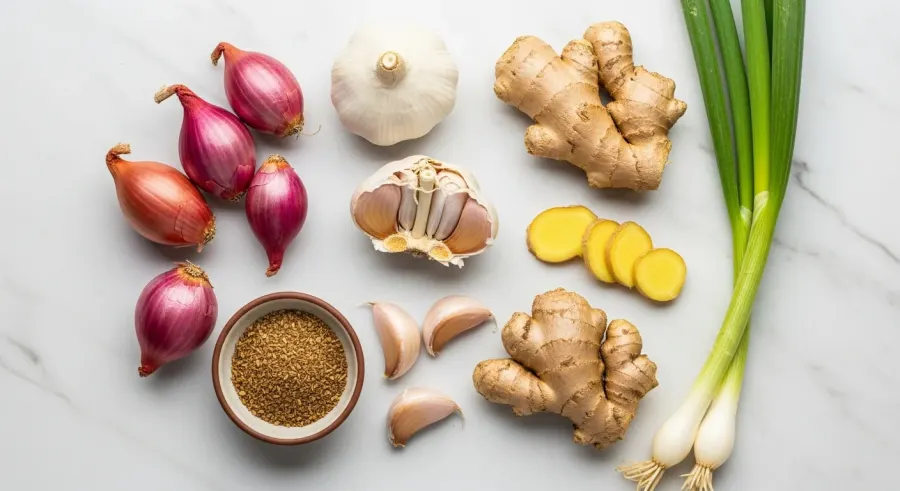
In Short
Garlic powder is your best quick swap (1/8 teaspoon per clove), while shallots provide the closest fresh texture. But if you want to perfectly mimic garlic's unique sulfur notes without the actual allium, there is a highly specific Indian spice you need to know about.
I was staring at a half-finished pan sauce the other night when I realized I was completely out of fresh garlic. It happens to everyone. You reach for that papery bulb on the counter and find nothing but empty skins. Instead of panicking or settling for a bland dinner, you actually have quite a few ways to replace fresh garlic and get those savory, sulfurous notes into your food.
Powder and Granules (The Easy Swap)
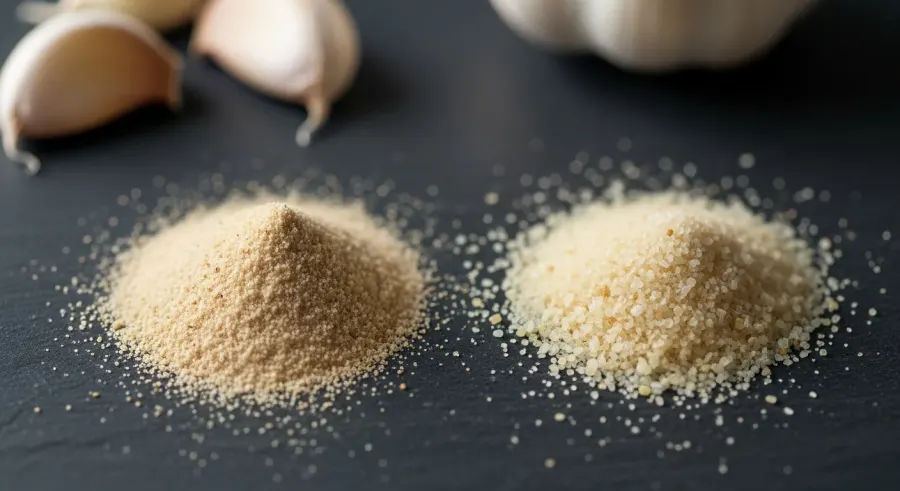
One medium clove of fresh garlic translates to roughly 1/8 teaspoon of garlic powder. If you are using granulated garlic, you will need 1/4 teaspoon to get the same flavor intensity, making this the most common garlic powder equivalent.
The distinction between powder and granules actually matters quite a bit in the kitchen. Granulated garlic consists of larger particles, while garlic powder is ground much finer. Because of this size difference, garlic powder dissolves much faster in liquids. This makes powder ideal for marinades and batters where you need the flavor to disperse instantly. Granulated garlic resists clumping and is much better suited for dry rubs on meats. However, due to its increased surface area, garlic powder loses its volatile flavor compounds (specifically diallyl disulfide) faster during long-term storage compared to the granulated version.
When fresh garlic is dehydrated to make these spices, the enzyme alliinase is deactivated. This stops the production of allicin, which is the compound responsible for the sharp, aggressive bite of a raw clove. What you get instead is a mellower, slightly sweeter flavor profile. It lacks the pungent sting of the fresh stuff, but it still delivers the underlying savory depth.
You should rely on powder or granules for dry applications like spice blends, breading for fried chicken, or dusting over roasted potatoes. It fails when a recipe specifically relies on the sharp bite of raw garlic, like in a fresh pico de gallo or a classic Caesar salad dressing. The dried versions just taste flat and slightly roasted in those contexts.
Wait, What About the Jarred Stuff?
Does anything divide home cooks quite as much as pre-minced garlic in a jar? Some people swear by the convenience, while others refuse to let it in their house.
If you are reaching for the jar, the standard minced garlic conversion is 1/2 teaspoon to replace one fresh clove. The ratio is straightforward, but the flavor is where things get complicated. To keep the product shelf-stable and prevent the growth of dangerous bacteria like Clostridium botulinum, manufacturers have to drop the pH of the mixture. They typically do this by soaking the chopped cloves in a citric acid solution, bringing the pH down to around 3.7 or lower (International Association for Food Protection).
Because of this necessary preservation method, jarred garlic carries a distinctly sour, acidic undertone. Furthermore, sitting in liquid for months causes the volatile sulfur compounds—which give garlic its characteristic aroma—to degrade heavily. The result is a much milder, slightly pickled flavor.
This substitute works perfectly fine in heavy, long-simmering dishes like beef stew, chili, or complex curries. The prolonged heat cooks off the sharp acidic notes, and the mild garlic flavor blends into the background of the dish. You definitely want to skip it if you are making garlic butter or tossing it with pasta and olive oil, as the sourness will immediately overpower the food.
Shallots Are Actually a Great Backup
Sometimes the best backup plan for an allium is just a different allium entirely. Shallots sit comfortably on the flavor spectrum somewhere between a sweet yellow onion and a mild garlic clove.
You can swap in about 1 tablespoon of finely minced shallot for every clove of garlic your recipe requires. While they do not have the exact same chemical makeup, shallots provide the same foundational savory depth and structural texture when cooked in a pan. They lack the intense sulfurous punch of a raw garlic clove, offering a much more delicate, slightly sweet profile.
This swap shines in French cooking, pan sauces, and delicate vinaigrettes. If you are deglazing a pan with wine after searing a steak, minced shallots will do the job beautifully. They melt into the sauce and provide a complex aromatic base without shouting over the other ingredients.
The main failure case for shallots is heavily spiced dishes. If you are making a robust Indian curry or a spicy Sichuan stir-fry, the quiet sweetness of a shallot will just disappear into the background noise.
The Magic of Asafoetida (Hing)
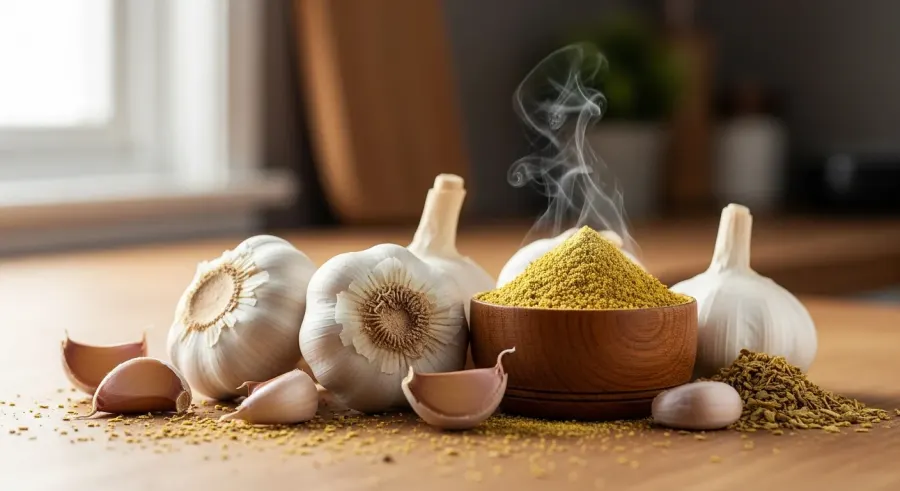
There is a dried plant resin that smells shockingly similar to onions and garlic, and it has been a staple of Indian cooking for centuries. Asafoetida, frequently sold as hing, is a powder extracted from the roots of the Ferula plant.
Because it is highly concentrated, you only need about 1/8 teaspoon of hing to replace one clove of garlic. The chemistry behind this mimicry is fascinating. Asafoetida essential oil is packed with volatile sulfur-containing compounds, particularly 2-butyl propenyl disulfide and diallyl disulfide. These are the exact same types of chemical structures that give garlic its signature aroma.
Using it requires a specific technique. You absolutely must bloom the powder in hot oil or ghee for five to ten seconds before adding any other ingredients to the pan. Heating it alters the sulfur compounds, mellowing the harshness and releasing a deeply savory, roasted-garlic aroma. If you taste it completely raw, it is aggressively bitter and unpleasant.
Hing is brilliant in lentil soups, braised vegetables, and curries. As a bonus, it contains none of the fermentable carbohydrates (FODMAPs) found in actual garlic, making it a perfect garlic alternative for allergy sufferers or people with specific digestive sensitivities.
Using Chives Instead
If you find yourself at the very end of cooking a meal and realize you missed the garlic step entirely, look to fresh herbs. Garlic chives (Allium tuberosum) are a fantastic way to introduce those missing notes at the last minute.
Use roughly 1 to 2 tablespoons of finely chopped chives to replace a single clove. Unlike regular chives, which taste heavily of onion, garlic chives have flat leaves and deliver a pronounced garlicky aroma. They give you the flavor without the lingering harshness that sometimes accompanies raw garlic.
Because the aromatic oils in chives are extremely volatile, they do not survive prolonged heat. You should fold them into mashed potatoes right before serving, scatter them over a stir-fry as it comes off the wok, or use them to garnish a clear broth. Tossing them into a soup that needs to simmer for an hour will completely destroy their delicate flavor profile.
Just Use Infused Oil
Maybe you do not actually need the physical texture of a minced clove. If your recipe just requires the flavor to coat the ingredients, garlic-infused olive oil is a highly effective substitute.
Swap about 1/2 tablespoon of infused oil for every clove of garlic requested, adjusting the other cooking fats in your recipe accordingly so your dish does not end up greasy.
The oil extracts the fat-soluble flavor compounds from the garlic, leaving behind the fibrous plant material. This delivers a pure, unadulterated garlic aroma directly to the fat in your dish. It works beautifully for sautéing spinach, starting a tomato sauce, or drizzling over a finished pizza crust.
You will run into trouble using this substitute in baking or emulsified sauces where adding extra liquid fat throws off the intended chemistry. A meatball recipe, for instance, relies on minced garlic for internal flavor; adding extra oil instead could cause the meatball to fall apart in the pan.
Bottom Line
The lack of a single ingredient rarely ruins a dish entirely. Understanding how different substitutes behave—whether it is the quick solubility of a powder or the sulfurous bloom of a dried resin—allows you to adjust the flavor profile of your meal on the fly, often with results that rival the original recipe.