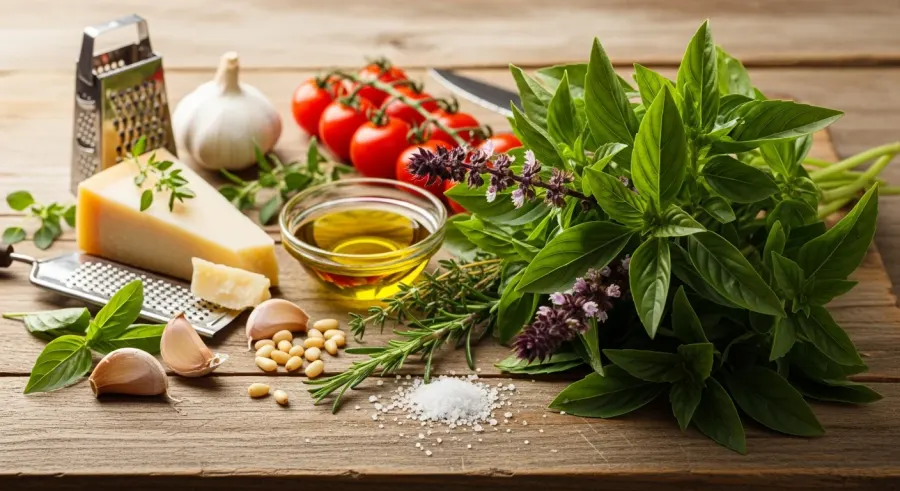
In Short
Tomatoes and mozzarella are just the beginning. The real magic happens when you pair basil with strawberries, vanilla, or chili peppers based on shared chemical compounds like eugenol and linalool. The breakdown of what flavors go with basil—and exactly why they work—is below.
Oh, you know what I learned about basil? It is quietly the most complex herb in your kitchen. Most of us just throw it at a pizza and call it a day, but sweet basil contains a fascinating mix of flavor compounds—things that smell like cloves, citrus, and even cinnamon. Once you understand what those compounds actually are, you can start matching it with ingredients that seem completely wrong but taste exactly right. (Also, for the curious, it is an absolute nutritional powerhouse: fresh basil provides just 23 calories per 100g but packs immense levels of Vitamin K, according to the USDA FoodData Central database). Grab a coffee, because we need to talk about flavor science.
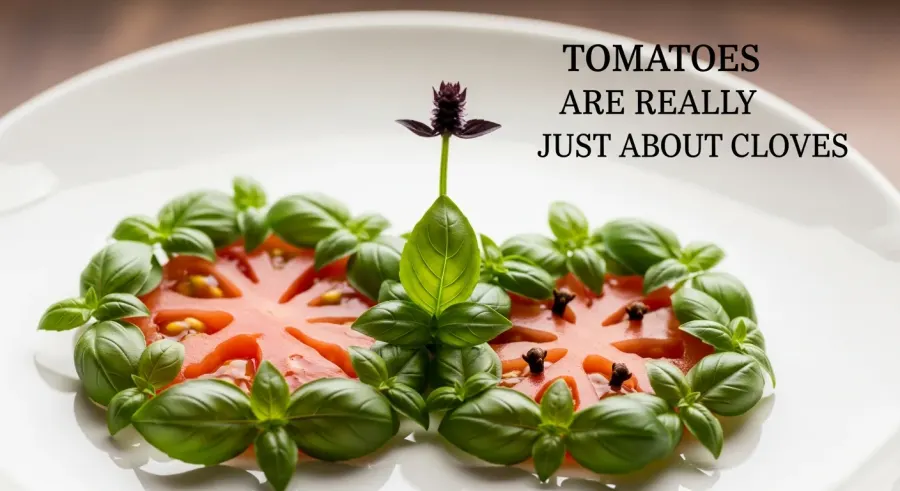
Tomatoes Are Really Just About Cloves
We all know tomatoes and basil belong together. The reason goes much deeper than Italian culinary tradition. Sweet basil is packed with a phenylpropene called eugenol, which is the exact same chemical compound that gives cloves their warm, spicy aroma.
Tomatoes bring malic and citric acid to the party. That high acidity desperately needs an aromatic anchor to balance it out, and the clove-like warmth of eugenol does exactly that. The two ingredients form a bridge between bright acidity and deep spice. When you eat them together, your palate registers the contrast first, followed by a long, harmonious finish.
If you want to maximize this interaction, blister a pint of cherry tomatoes in a hot pan (pushing the heat past 300°F, where the Maillard reaction begins to create new savory flavor compounds) for about 10 minutes. Take them off the heat, and immediately toss in a handful of fresh basil. The residual heat releases the eugenol into the pan juices without destroying the delicate leaf structure.
Why Olive Oil and Cream Fix Everything
Fat is a flavor carrier. You have probably noticed that basil tastes much more vibrant when it is dripping in olive oil or layered over fresh mozzarella. This is simply a matter of solubility.
One of the main aromatic compounds in basil is linalool, which brings a bright, floral, citrus-like scent. Linalool happens to be highly lipophilic, meaning it dissolves beautifully in fats but struggles to break down in pure water. When you pair basil with heavy cream, olive oil, or rich cheese, the fat physically traps those volatile linalool molecules. Instead of flashing off into the air, the flavor sits on your tongue and releases slowly over several seconds.
Terpenes like linalool require a bit of gentle heat to loosen their bonds from the plant fibers. Steeping a cup of bruised basil leaves in two cups of warm heavy cream for 30 minutes creates a brilliant base for panna cotta or homemade ice cream.
Strawberries Make It a Dessert
Have you ever smelled a fresh strawberry and thought of cinnamon? Probably not consciously, but your nose knows they share some molecular overlap.
Certain varieties of sweet basil contain high amounts of methyl cinnamate. This compound has a distinctly sweet, balsamic, and fruity aroma. It also happens to be a key flavor compound found naturally in ripe strawberries. When you put them together, the shared methyl cinnamate tricks your brain into perceiving the basil as a sweet, gourmand ingredient rather than a savory herb. The strawberry's natural malic acid further brightens the herbal notes, preventing the combination from tasting flat or muddy.
Macerating a pound of sliced strawberries with two tablespoons of sugar and a few torn basil leaves for 20 minutes will draw out the fruit juices and blend the shared compounds seamlessly.
Garlic Grounds the Licorice Notes
Basil has a distinct licorice note, courtesy of a compound called estragole. On its own, estragole can feel a bit too high and airy—almost medicinal. It needs an earthy floor to stand on.
Garlic and shallots provide that grounding effect through their sulfur compounds. When you crush raw garlic, an enzyme called alliinase creates allicin, which provides a sharp, pungent heat. The savory depth of the allicin anchors the floating anise-like sweetness of the estragole. It is a balancing act of heavy, pungent flavors and light, ethereal aromas.
You only need a tiny amount of raw garlic to make this work. Crushing just half a clove of garlic into a quarter-cup of olive oil alongside a mountain of basil gives the estragole exactly what it needs to shine without getting overwhelmed.
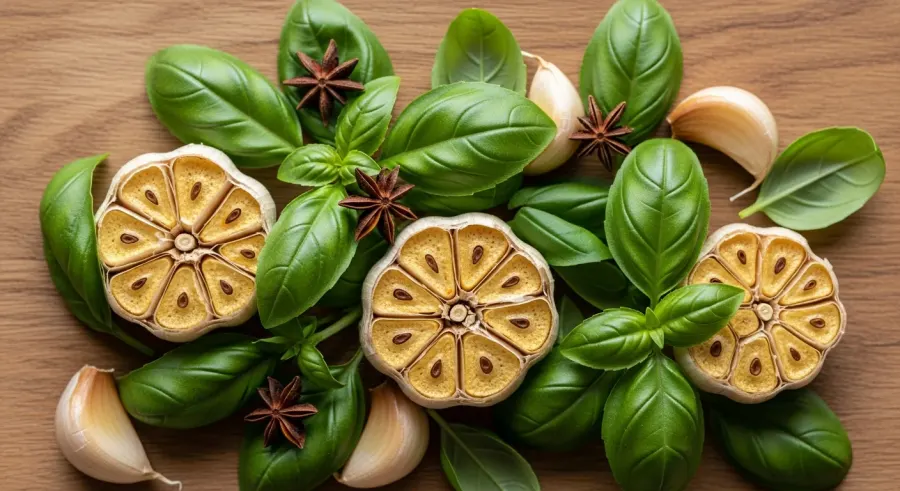
Wait, Vanilla and Chocolate?
This one sounds like a mistake until you look at the molecules. Vanilla and basil are chemically related.
The primary flavor in vanilla is vanillin, while a major component of basil is eugenol. Both of these are phenolic compounds derived from the phenylpropanoid pathway. If you look at their chemical structures, they are strikingly similar. Because their molecular shapes are so alike, they stack perfectly on the palate. The sweet warmth of vanilla highlights the clove-like spice in basil.
This same principle applies to white chocolate, which relies heavily on vanilla and cocoa butter for its flavor profile. Muddling a single basil leaf into a cold brew coffee with a splash of vanilla syrup is an easy way to test this out. The bitterness of the coffee contrasts with the sweet, herbal synergy happening between the vanilla and the herb.
The Hot and Cold Trick With Chilis
The sensation of temperature in food isn't just about the stove. Certain chemical compounds trick our nervous system into feeling hot or cold.
Basil contains eucalyptol, the exact same cooling compound found in eucalyptus and mint. When you eat it, it triggers the cold receptors in your mouth. If you pair basil with Thai bird chilis or jalapeños, you introduce capsaicin, which triggers the heat receptors. Eating them together creates a sensory push-and-pull—a simultaneous cooling and burning sensation that makes a dish feel physically dynamic.
Heat management is crucial here. Tossing fresh basil into a spicy stir-fry right as you pull it off the burner ensures the delicate eucalyptol survives to contrast the lingering chili oil.
Bottom Line
It turns out, nature gave us a cheat code for flavor in the form of overlapping molecules. Treating basil as a sweet or spicy ingredient rather than just a pizza topping opens up a completely different side of the plant. Exploring these shared compounds makes cooking feel a little less like guesswork and a bit more like finding hidden connections.