In Short
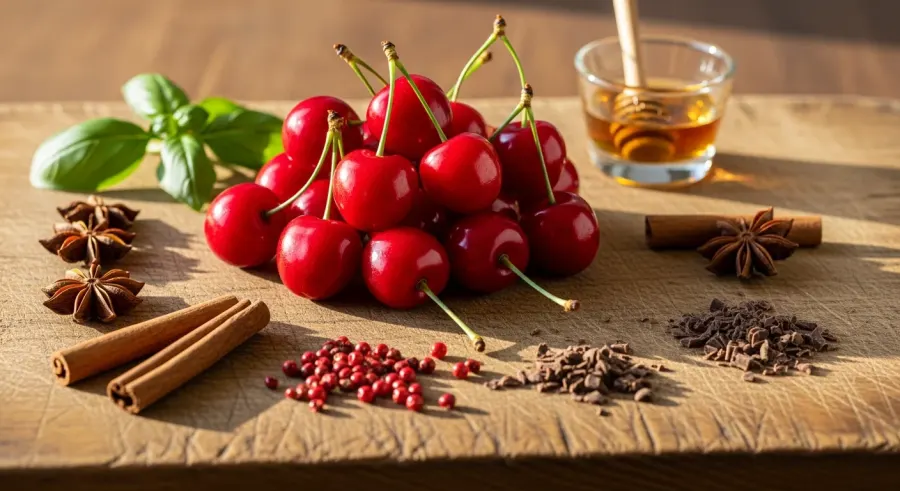
Almonds and dark chocolate are classic, but cherries really shine when paired with savory fats like duck, sharp blue cheese, and warming spices like black pepper. The secret lies in shared aromatic compounds like benzaldehyde and eugenol, which bridge the gap between sweet fruit and savory dinners.
I was eating a bowl of fresh sweet cherries last summer when I noticed they smelled faintly of amaretto. It sent me down a rabbit hole of flavor chemistry, and it turns out the compounds that give cherries their distinct taste are shared by some very unexpected ingredients. We all know they belong in pies and ice cream. But looking at the actual science of what goes well with cherries reveals they are capable of so much more than dessert.
The Nutty Secret Inside the Pit
Have you ever bought a bottle of almond extract and thought it smelled exactly like cherry candy? That is not an accident. Both almonds and cherries are members of the Prunus family, a botanical group that also includes peaches, plums, and apricots. Deep inside the pits of all these fruits lies a shared chemical backbone.
The primary link here is a cherry flavor compound called benzaldehyde. According to a study (Journal of Agricultural and Food Chemistry, 2003), benzaldehyde provides that distinct nutty, woody, and slightly fruity aroma we associate with both ingredients. Because they share this exact molecule, almonds act like an acoustic amplifier for cherries. Adding a splash of amaretto liqueur or a handful of toasted almonds to a cherry dish doesn't compete with the fruit. It just makes the cherry taste more like itself.
This overlapping chemistry is so potent that for centuries, Middle Eastern bakers have used a spice called mahlab, which is made from ground cherry pits, to give breads a bitter-almond flavor.
A simple way to use this cherry and almond pairing is swapping a quarter of the regular wheat flour for almond flour the next time you bake a clafoutis or a fruit crumble. If you want to skip the baking entirely, a tablespoon of slivered, toasted almonds tossed over a bowl of fresh, pitted cherries works perfectly. The crunch of the nut contrasts the soft fruit, while the benzaldehyde in both ingredients ties the whole bowl together.
Why Seared Meats Need Them
Fruit and meat can sometimes feel like a forced marriage on a dinner plate. With cherries, however, the pairing makes complete biochemical sense.
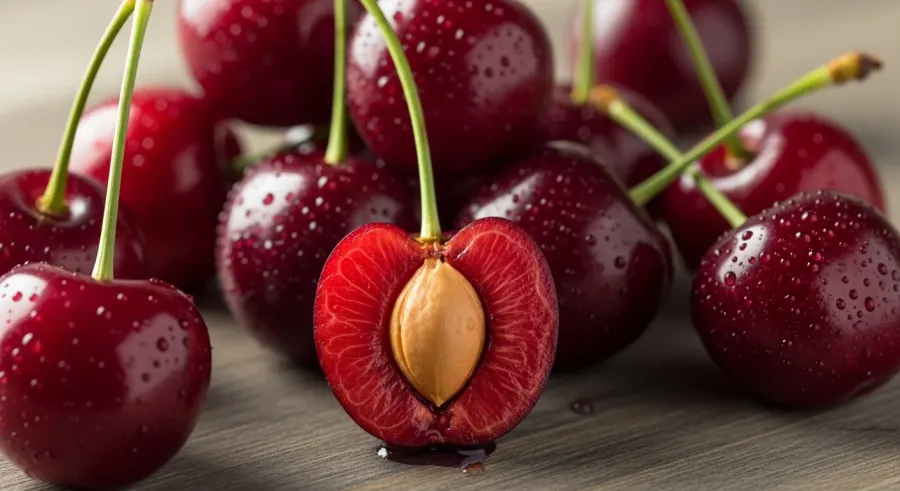
Rich, fatty meats like duck breast, pork shoulder, and venison have a tendency to coat the palate with heavy lipids. This tastes wonderful for the first few bites, but eventually, your tongue gets fatigued by the sheer unctuousness of the fat. Cherries are highly acidic, usually sitting around a pH of 3.2 to 4.5 depending on the variety. When you introduce that low-pH tartness to the rich fat of a seared duck breast, the acid physically cuts through the lipid coating, refreshing your mouth so the next bite tastes as bright as the first.
There is also a beautiful interaction that happens in the pan. Searing meat triggers the Maillard reaction, a browning process that creates savory umami notes and specific sulfur-containing molecules called thiols. The residual sugars in cherries contrast those savory thiols, creating a deep, complex flavor profile that neither ingredient could achieve alone.
But heat management is vital. Cherries have high sugar content, which means they will scorch and turn bitter if you add them to the skillet while searing the meat at high temperatures.
The best method involves searing the pork or duck first to develop a heavy crust. Once the meat is resting on a cutting board, lower the heat and toss a cup of pitted cherries into the hot pan with a splash of dry red wine. Reducing that mixture for 5 to 7 minutes builds a thick pan sauce that pulls up all the browned savory bits from the meat. This approach works beautifully for fatty cuts, but if you are cooking a very lean pork tenderloin, whisking a knob of cold butter into the sauce at the very end will help carry the cherry flavors.
The Spice You Aren't Using
Black pepper works.
I know it sounds a little strange to season summer fruit like a steak, but just trust the chemistry on this one. Sweet cherries contain a distinct aromatic compound called eugenol. This is the exact same phenolic compound found heavily in cloves and allspice, and is also present in black pepper.
Eugenol brings a woody, warming, slightly numbing spice note to the table. It triggers the warmth receptors on your tongue, which is why spices like cloves feel warm even when served cold. When you pair cherries with black pepper, your brain recognizes the overlapping compounds and links them together seamlessly. It completely changes how the fruit presents itself. Instead of tasting like simple sugar candy, the fruit takes on a darker, more mature profile.
Try taking half a cup of fresh, halved sweet cherries and grinding coarse black pepper directly over them. (This is the one time you really need fresh cracked pepper—the pre-ground powder in the shaker has lost most of its volatile oils). Let the bowl sit on the counter for ten minutes.
The salt-free spice draws out the fruit's natural juices while infusing it with a gentle, blooming heat. You can spoon this peppery fruit over a slice of pound cake, but it makes an especially brilliant topping for a bowl of vanilla ice cream. The dairy fat mellows the bite of the pepper, leaving only the warm spice and the sweet cherry.
Dark Vinegars Change the Math
Vinegar and fresh fruit sounds like a mistake until you actually taste it.
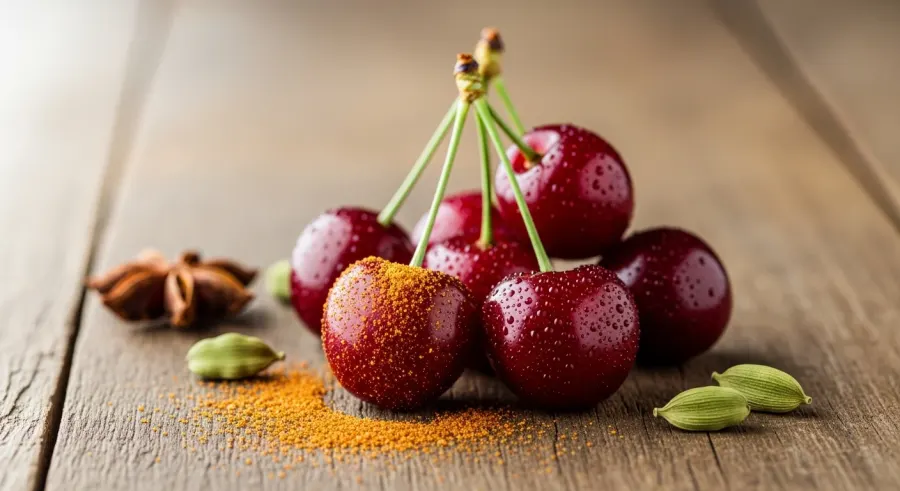
Aged balsamic vinegar is basically an Italian masterclass in balancing sweet and sour, a concept known as agrodolce. When you pair it with sweet cherries, the acetic acid in the vinegar suppresses our palate's perception of the fruit's sugar. At the same time, because traditional balsamic is aged for years in wooden barrels, it absorbs vanillin—the exact same aromatic compound found in vanilla beans.
This woody, vanilla undertone anchors the bright, high-pitched fruit notes of the cherry. The vinegar brings the acid, the barrel brings the vanilla, and the cherry brings the sweetness.
Situational branching matters here depending on the quality of your pantry staples. If you have a highly aged, syrupy balsamic, you can simply drizzle it raw over fresh cherries and eat them with a spoon. But if you only have a standard, thin balsamic vinegar from the grocery store, the raw acetic acid will be far too sharp.
You can fix a thin vinegar by roasting the fruit. Tossing two cups of pitted cherries with one tablespoon of standard balsamic vinegar and roasting them on a sheet pan at 400°F for about 15 minutes works wonders. The oven heat concentrates the cherry sugars, while the thin vinegar reduces into a sticky, complex glaze that mimics the expensive aged bottles.
The Blue Cheese Situation
We need to talk about dairy mold.
Blue cheeses like Roquefort, Gorgonzola, and Stilton are notoriously aggressive. They are pungent, sharp, and heavily salted during the cheesemaking process. A lot of people try to tame them with dry crackers or a heavy pour of honey, but cherries actually do the job much better.
It comes down to a battle of moisture and sugar. The water content in a fresh cherry physically washes the heavy, salty butterfat of the cheese off your tongue. Meanwhile, the simple fructose in the fruit provides a direct counterweight to the sharp, pungent bite of the Penicillium roqueforti mold. You get the savory, earthy depth of the cheese first, followed immediately by a clean, sweet finish from the fruit.
Textures play a major role in savory cherry recipes, and the contrast here is highly satisfying. The soft, creamy breakdown of a good Gorgonzola Dolce finds a perfect foil in the tight, snappy skin of a fresh Bing cherry.
There is no cooking required to make this work. A piece of toasted baguette smeared with soft blue cheese and topped with a halved cherry is all it takes to build a perfect bite. If you are building a cheese board, leaving a cluster of cherries on the stem right next to the blue cheese wedge encourages people to combine the two themselves.
Bottom Line
Flavor pairings rarely happen by accident. When you start looking at the overlapping compounds between fruits, spices, and meats, the kitchen becomes a lot more interesting. You do not have to memorize the chemical names to make a good dinner, but knowing why an almond makes a cherry taste better gives you permission to start playing with your food. It turns out the pepper grinder is often exactly what a bowl of fruit needs.