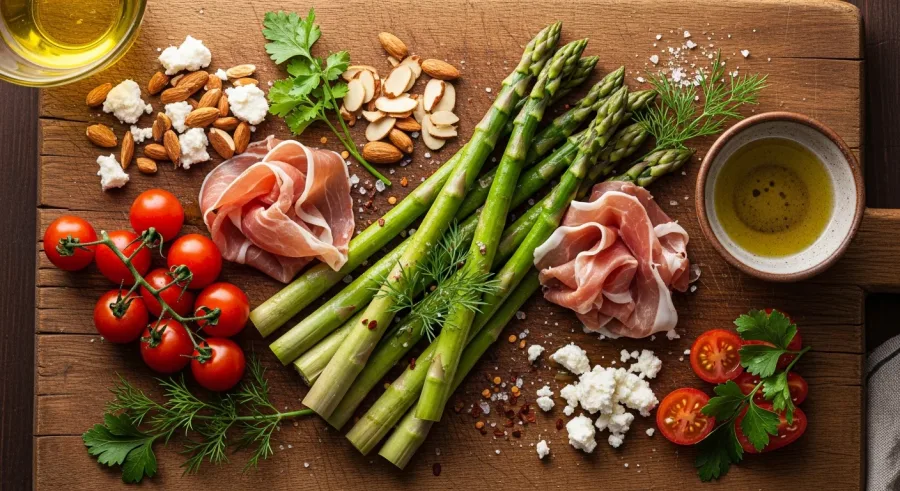
In Short
Asparagus naturally pairs with fat (butter, parmesan), sulfurous foods (eggs, truffles), and bright acids (lemon, white wine). The exact reason why these classic combinations work—and why coffee is an unexpected match—comes down to the specific aromatic compounds released when the vegetable is heated.
Asparagus can be a tricky vegetable to match. It has a distinctive grassy bite that tends to overpower delicate ingredients, but it also carries underlying sweet and nutty notes that are easy to accidentally bury. Finding the right companions means looking closely at what happens to its chemical structure when it hits the heat.
Fat Balances the Bitter Edge
You rarely see a plate of asparagus served completely bare. This vegetable has a naturally astringent, slightly bitter quality, especially the thicker green stalks. Dairy and fats work as a buffer. According to the USDA FoodData Central, raw asparagus contains almost zero fat (0.12 grams per 100 grams) and only 20 calories [1.2.8]. Adding butter or olive oil isn't just about indulgence. The fat actually coats your palate, dulling the perception of bitterness while carrying the fat-soluble flavor compounds from the spear directly to your taste receptors.
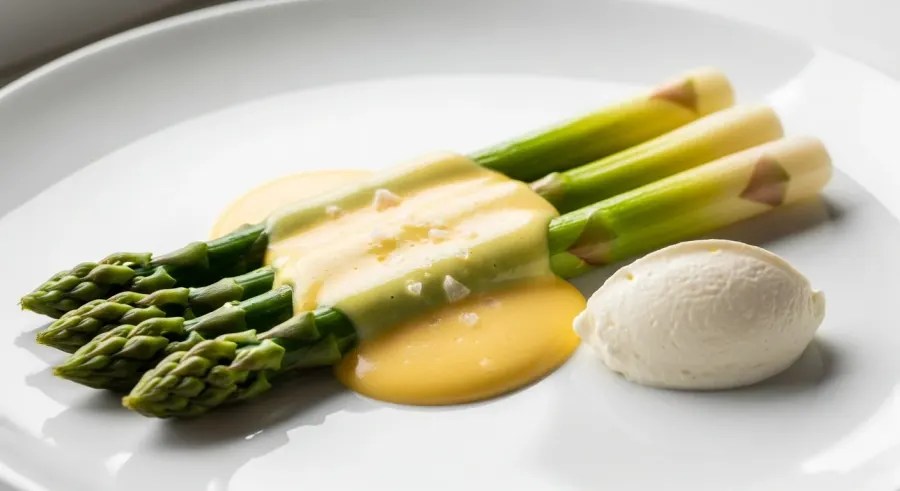
Hollandaise is perhaps the most famous companion to asparagus, and it works by combining two of the vegetable’s best friends: butter and egg yolks. The emulsion is thick enough to cling to the slick surface of a steamed spear, whereas plain melted butter might slide right off. If you are serving it cold, a thick mayonnaise or aioli performs the exact same mechanical function.
A heavy dusting of Parmigiano-Reggiano is another classic move because the cheese brings umami and salt without adding too much moisture. But this pairing has a breaking point. If you steam the stalks until they are limp, throwing heavy cheese on top just creates a watery mess. Save the hard cheeses for pan-roasted or grilled asparagus, tossing a handful over a pound of spears during the last 30 seconds of cooking. Gruyère and Swiss cheeses, which have their own nutty, sweet profiles, work beautifully in tarts or bakes. Their melting point allows them to form a cohesive crust that traps the steam of the asparagus, keeping the delicate tips from drying out in the oven.
Why Lemon Usually Works
Acidity is the default seasoning for most green vegetables, and asparagus is no exception. It contains aldehydes, which are the same aromatic compounds that give citrus fruits their bright, fresh scent. Squeezing half a lemon over a tray of warm spears highlights those natural floral notes.
Timing is everything, though. If you toss asparagus in lemon juice or vinaigrette before roasting, the acid reacts with the chlorophyll in the vegetable. The vibrant green turns a dull, muddy olive color, and the texture can become strangely tough. The acid should always be a finishing touch.
If you want the citrus flavor without the risk of the acid turning your bright green asparagus drab, reach for the zest instead of the juice. The zest contains essential oils loaded with aldehydes, but it lacks the citric acid that attacks the chlorophyll. Grating the zest of half a lemon over a tray of asparagus just before it goes into the oven bakes those bright, floral oils right into the stalks.
A splash of dry white wine like Sauvignon Blanc, which shares similar grassy, herbaceous notes, added to the pan right as you turn off the heat is often all you need. You can also use a mild white balsamic vinegar or a few capers. Capers bring a briny, acidic punch that cuts through the grassy notes without overwhelming them, especially when mixed with a little butter.
Fresh Herbs Change the Profile Completely
Adding fresh herbs is the easiest way to shift the entire mood of an asparagus dish. Tarragon and dill are classic pairings, especially in French and Nordic cooking. Tarragon contains a compound called estragole, which gives it a sweet, anise-like flavor that plays perfectly against the grassy bitterness of the asparagus.
When you fold fresh chopped tarragon into a buttery sauce like Béarnaise, the fat carries the herbal notes and the egg yolks bridge the sulfur compounds. It is a scientifically perfect pairing. Mint is another strong option, especially when serving asparagus cold in a spring salad. The menthol in the mint provides a cooling contrast to the sharp bite of the raw or lightly blanched stalks. Just a small handful of torn mint leaves tossed with a pound of blanched asparagus, a handful of peas, and some olive oil changes the entire dynamic of the dish.
Basil is a surprisingly effective match, particularly the sweeter Genovese varieties. The clove-like notes in basil play against the green bite of the asparagus, especially when tied together with a squeeze of lemon. Chervil, a delicate herb often used in French cuisine, offers a milder, more refined anise note than tarragon and works beautifully if you are pairing the vegetable with mild seafood like sole or flounder. Avoid woody herbs like rosemary, as the piney flavor will completely obliterate the delicate taste of the asparagus.
Roasting Pulls Out Nutty Notes
When you subject asparagus to dry heat, like grilling or roasting at 400°F, you trigger the Maillard reaction. This browning process creates new flavor compounds, specifically pyrazines and furans, which register to our brains as roasted or nutty.
That explains why slivered almonds or toasted hazelnuts are such reliable companions. Tossing a quarter cup of toasted almonds into a skillet with brown butter and roasted asparagus amplifies the savory depth that boiling completely washes away.
Sesame is a fantastic parallel to tree nuts. A drizzle of toasted sesame oil or a spoonful of tahini whisked with a little water and lemon juice makes an excellent coating for steamed asparagus. The intense roasted flavor of the sesame seeds mirrors the pyrazines developed during browning, meaning you can get that warm, roasted flavor profile even if you choose to gently steam or blanch the stalks.
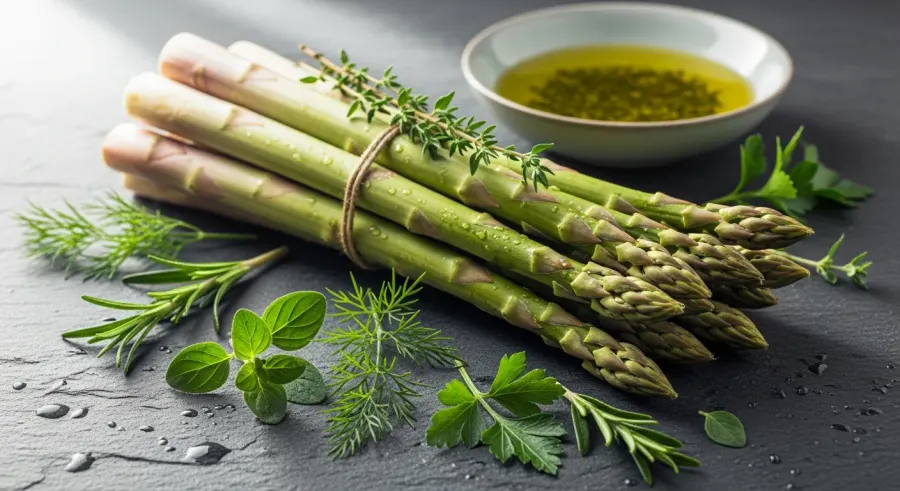
White asparagus, which is grown underground without sunlight, naturally possesses more of these mellow, nutty characteristics than the green variety. Because it lacks the aggressive green chlorophyll bite, white asparagus is an even better candidate for gentle, nutty pairings like toasted pine nuts or a very light peanut sauce.
Coffee and Orange Actually Make Sense
It sounds like a mistake, but coffee and orange are a surprisingly effective match for green asparagus. This kind of molecular pairing is part of a broader culinary science movement that looks at the exact gas chromatography of ingredients to find hidden matches. It turns out green asparagus actually shares specific volatile compounds with roasted coffee beans and the essential oils found in orange skins.
Some modern chefs lean into this by creating a quick dressing. A tiny pinch of very finely ground coffee—used sparingly, almost like a dry spice—mixed with a tablespoon of olive oil, a splash of orange juice, and a pinch of salt can be drizzled over cold, blanched asparagus. It works for a sharp, savory appetizer, though you probably wouldn't want to serve it alongside a heavy steak.
It is a pairing that relies entirely on overlapping aromatic compounds rather than traditional culinary history. If coffee feels too adventurous, a simple orange vinaigrette using both the juice and the zest is a highly reliable way to step outside the standard lemon box.
Bottom Line
Pairing flavors is less about memorizing strict rules and more about recognizing what you want to highlight in the vegetable. A quick boil calls for rich dairy to add weight, while a hard roast practically begs for toasted nuts or sharp citrus to balance the char.