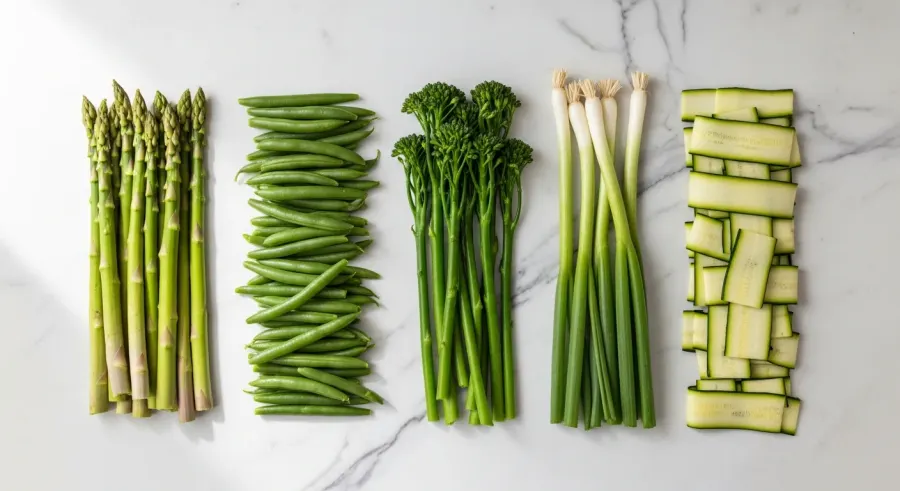
In Short
Broccolini is the best substitute for asparagus if you are roasting, while green beans take the prize for boiling and steaming. Fiddleheads match the earthy flavor perfectly, but avoid using snap peas for high-heat oven roasting.
It happens to the best of us. You pull out a recipe for a spring risotto or a roasted vegetable medley, and the bunch of asparagus you bought three days ago has turned into a limp, sad mess. Finding the best substitute for asparagus usually comes down to what you actually need the vegetable to do. Are you looking for that specific earthy flavor, or do you just need something green and crunchy to fill out the plate?
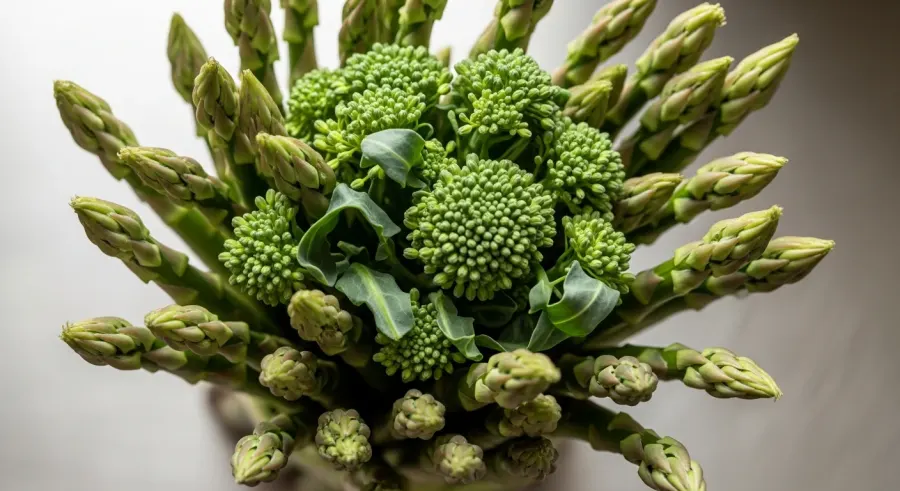
Broccolini: The Closest Visual Match
Broccolini might look like someone put regular broccoli in a stretching machine, but it is actually a natural hybrid. It crosses standard broccoli with gai lan (Chinese broccoli). When you are looking for an everyday asparagus alternative, this is usually my top pick.
At 35 calories and about 3.5 grams of protein per 100g, it sits slightly higher on the nutritional scale than asparagus, which hovers around 20 calories and 2.2 grams of protein (USDA FoodData Central, 2019).
You can swap it in at a clean 1-to-1 ratio. If a recipe asks for a pound of asparagus, a pound of broccolini slides right in. The stalk thickness mimics asparagus almost perfectly, meaning you do not have to mess around with adjusting the cooking time. You get that same charred, slightly crisp texture when it hits a hot pan.
The flavor is a little different, though. Broccolini leans sweeter and carries a mustardy note, whereas asparagus has those highly distinct, grassy, sulfurous tones. Still, the overall vegetable profile aligns beautifully.
Broccolini excels in high-heat scenarios. Think roasting, grilling, or hard searing. The leafy little florets at the top trap oil, garlic, and salt in the exact same way the scaled tips of asparagus spears do. It gives you those wonderful crispy edges.
Do not use broccolini if you are making a delicate pureed soup. The florets can turn the texture gritty rather than silky, and the cabbage-like flavor of the brassica family easily overwhelms milder dairy-based broths.
Green Beans: Your Reliable Swap
Sometimes you just need something green, snappy, and long to finish a dish. Green beans fill that role brilliantly, and they are almost always easier to find at the grocery store.
A 100g serving of raw green beans contains 31 calories, 0.22 grams of fat, and nearly 2 grams of protein (USDA FoodData Central, 2019). That makes it a very close metabolic match to asparagus. You won't be throwing off the nutritional balance of your meal by making this vegetable swap.
Use a 1-to-1 volume ratio. If a recipe calls for two cups of chopped asparagus, simply measure out two cups of chopped green beans. The physical prep is just as easy, requiring only a quick snap of the stem ends. If you can find Haricots Verts (French green beans), grab them. They are thinner and even more tender.
The flavor is much milder. Asparagus gets its unique aroma from asparagusic acid, which is also the compound that famously changes the smell of your urine. Green beans completely lack this compound. Instead, you get a clean, straightforward vegetal sweetness.
They are absolutely perfect for blanching, steaming, or tossing into cold grain salads. Green beans hold their structural integrity nicely in boiling water, so they will not turn into mush if you look away from the stove for thirty seconds.
The failure case here is when asparagus is meant to be the primary flavor base. In a rich spring vegetable pasta where asparagus is the absolute star, green beans will taste a little flat. They need aggressive seasoning with garlic, lemon, or bacon fat to mimic the savory depth that asparagus brings naturally.
White Asparagus: The Underground Twin
White asparagus isn't some rare, exotic species. It is literally just green asparagus grown under thick mounds of dirt to block sunlight. Without light, the plant never produces chlorophyll.
Nutritionally, it is almost identical to the green version. It sits right at 20 calories, 0.12 grams of fat, and 2.2 grams of protein per 100g (USDA FoodData Central, 2019).
You can use it at a 1-to-1 ratio by weight, but know that the preparation is different. You have to peel the bottom two-thirds of white asparagus stalks. The outer skin is highly fibrous and turns terribly stringy when cooked. A standard vegetable peeler makes quick work of this, but it does add five minutes to your prep time.
The flavor is much milder, slightly nuttier, and lacks the punchy, grassy bite of the green stalks. It feels a bit more refined. It is fantastic poached gently in butter, steamed whole, or served cold with a sharp mustard vinaigrette. In Germany, boiling it with a pinch of sugar is the standard technique to draw out any residual bitterness.
Avoid using white asparagus in quick, high-heat stir-fries. Because the stalks tend to be thicker and structurally denser, they require gentle, slow cooking to become tender. Tossing them in a smoking hot wok for three minutes will leave you chewing on something resembling wood. They really prefer low and slow moisture.
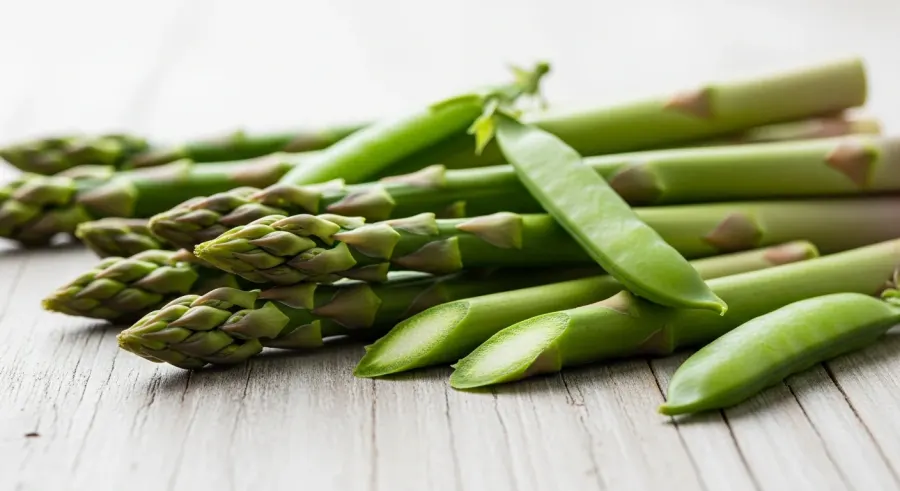
Sugar Snap Peas: When You Need Crunch
When you need a fast-cooking green vegetable that delivers a loud, satisfying crunch, grab sugar snap peas. They are a brilliant alternative when texture is your main priority.
They pack a bit more energy, coming in at about 42 calories and 7.5 grams of carbohydrates per 100g (USDA FoodData Central, 2019). That extra starch gives them a pronounced, highly noticeable sweetness.
Use about 1.5 cups of snap peas for every bunch of asparagus. You don't want to blindly match the volume because the high sugar content can easily shift the flavor profile of your whole meal. The taste is bright, green, and juicy, entirely missing the earthy sulfur notes of asparagus.
They shine in quick applications. Toss them into a hot skillet for exactly two minutes, or simply chop them and eat them raw in a salad. They keep their bright green color beautifully when barely cooked. Just remember to pull the fibrous string off the seam before you start chopping.
The major failure case here is prolonged heat. If you try to roast snap peas at 400 degrees for twenty minutes like you normally would with asparagus spears, they deflate into unappealing little pods. Keep them away from the oven entirely.
Fiddleheads: For That Earthy Spring Vibe
If you happen to be cooking in early spring, these tightly coiled young ferns are an amazing substitute. They are usually found foraging or at specialized farmers markets, making them a fun seasonal treat to replace asparagus.
They have a fascinating wild nutrition profile, with about 34 calories, 0.4 grams of fat, and a respectable 4.5 grams of protein per 100g (USDA FoodData Central, 2019). That is double the protein of asparagus.
You can substitute them 1-to-1 by weight. The flavor is a bizarre, wonderful intersection between asparagus, green beans, and fresh spinach. It has that exact same earthy, slightly metallic tang that makes asparagus so distinctive.
Fiddleheads are brilliant sautéed in brown butter, tossed with lemon juice, or folded into a light seasonal pasta. Their spiral shape looks gorgeous on a plate. You just have to rinse off the papery brown scales before cooking.
But there is a major catch. You can never eat them raw. Fiddleheads contain trace naturally occurring toxins that can cause severe stomach upset if not handled properly. The standard advice from health agencies is to boil them for 10 to 15 minutes before doing anything else (Health Canada, 2018). If your recipe calls for raw shaved asparagus, fiddleheads are completely off the table.
Leeks: Building Savory Depth
Asparagus is often used primarily to build a savory, vegetal backbone in a dish, like a quiche or a creamy soup. When you need a swap in a baked, soft context, leeks are a surprisingly strong choice.
Leeks provide about 61 calories and 1.5 grams of protein per 100g (USDA FoodData Central, 2019). They are denser in carbohydrates (14.1g), which gives them a lovely sweetness when they melt down in a pan.
Use about 1 cup of sliced leeks for every cup of chopped asparagus. Because leeks melt and reduce heavily when cooked, they won't provide the same visual bulk as asparagus, but they will deliver the savory flavor profile. They lack the grassy bite, offering instead a mild, sweet onion note.
They are fantastic in tarts, frittatas, or pureed soups where texture isn't the main goal. The way leeks soften and meld with eggs and dairy is unmatched. Just be sure to wash them thoroughly, as they notoriously trap dirt between their layers.
Do not use leeks if you need a standalone side dish. You cannot grill a pile of sliced leeks and serve it next to a steak the way you would with asparagus. They lack the physical structure to hold their own on a plate without acting as a supporting ingredient.
Zucchini: A Quick Roasting Alternative
We are straying further from the botanical family tree, but zucchini cut into long spears can mimic the geometry of asparagus when you just need to fill out a baking sheet.
A 100g serving is very light, containing just 17 calories, 0.3 grams of fat, and mostly water (USDA FoodData Central, 2019).
Use about a 1.25-to-1 ratio. That means use slightly more zucchini, because it shrinks significantly in the pan as the water cooks out. The flavor is highly neutral compared to the assertive taste of asparagus. Zucchini essentially acts as a sponge for whatever olive oil, minced garlic, or lemon juice you throw at it.
It works decently well on a grill or roasted alongside a piece of fish. If you cut the sticks thick enough, they can get a nice char on the outside. A good trick is to salt the spears for 15 minutes to draw out excess moisture, then pat them dry before roasting.
Never substitute zucchini in a braise or a slow-cooked stew. Asparagus can hold its shape in simmering liquid for a little while before giving up. Zucchini will dissolve into a watery paste in about ten minutes. Keep the cooking time short and the heat high.
Bottom Line
Substituting vegetables is rarely a perfect science. Sometimes you lose the metallic bite of asparagus, but you gain the bright sweetness of a snap pea or the hearty char of broccolini. Keep the cooking method in mind—matching a vegetable to the heat source is always more important than matching the exact shape.