In Short
Coriander, lemon, almonds, and rosemary are some of the best flavor pairings for blueberries, thanks to shared compounds like linalool and alpha-pinene. A quick pinch of the right spice can trick your brain into perceiving the berries as juicier and sweeter.
If you have ever baked a batch of blueberry muffins and felt like the flavor somehow vanished in the oven, you are not alone. Fresh blueberries have a delicate, complex chemical profile that easily gets bullied by flour and sugar. Finding the right match to bring them back to life is just a matter of lining up a few shared aromatic compounds. Once you understand what sits inside the fruit, building a better dish is easy.
A Quick Pinch of Coriander
Food chemists have relied on a very specific compound for decades when building synthetic berry flavors. They lean heavily on a terpene called (S)-(+)-linalool, which smells green, floral, and slightly citrusy.
It turns out this exact same molecule is one of the primary drivers of natural blueberry flavor.
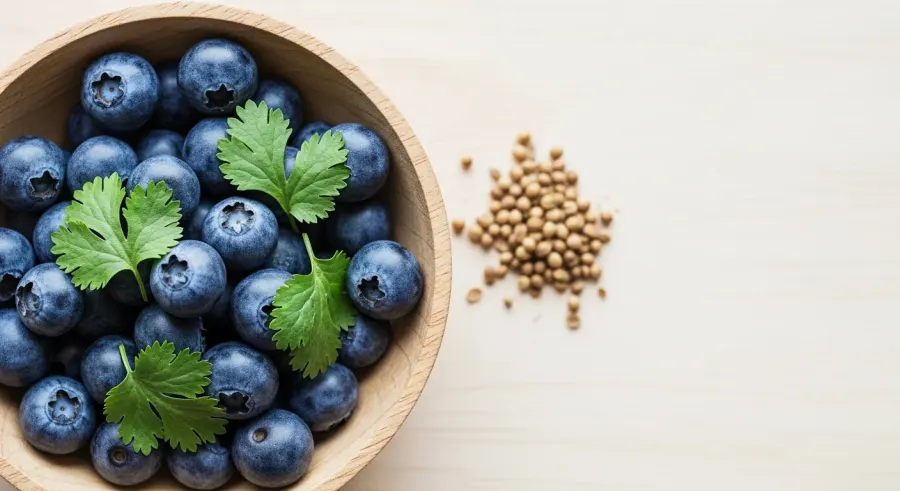
Coriander seeds happen to be packed with linalool. Because of this shared chemistry, folding ground coriander into a blueberry dish essentially tricks your palate into perceiving a much stronger, punchier berry flavor. It acts as an acoustic amplifier for the fruit. The spice does not make your scones taste like a savory curry. It just deepens the natural fruitiness.
People often get nervous when they see coriander listed in a baking recipe because they associate the word with the soapy, pungent leaves of fresh cilantro. The dried seeds of the plant carry a completely different aromatic profile. While the leaves are sharp and polarizing, the seeds are warm, dusty, and sweet. The heat of the oven helps those volatile oils permeate the surrounding fats in the butter, resulting in a muffin that tastes fiercely of blueberry without needing to add extra, soggy fruit.
Why Lemon Actually Works
Walking into almost any neighborhood bakery usually reveals a yellow lemon glaze on half the blueberry pastries. The mechanics behind this pairing are about chemical structure, not just baking tradition.
Blueberries naturally hover around a pH of 3.1 to 3.3. While this makes them chemically acidic, they often taste sweet and mild, completely lacking the aggressive, sharp tartness of a raspberry or blackberry. Lemon brings extra citric acid, along with a heavy dose of limonene from the zest, which sharpens the flat profile of cooked fruit.
It also fixes a major visual problem. Blueberries contain anthocyanins, which are the pigments responsible for their dark color. In an alkaline environment (like a batter with slightly too much baking soda), those pigments can turn an unappetizing greenish-gray. The citric acid from the lemon lowers the pH of the surrounding batter. That keeps the fruit looking bright and purple.
Lemon juice is mostly water and acid, meaning its flavor can degrade slightly when exposed to the high, sustained heat of an oven. The outer yellow skin of the lemon is packed with microscopic oil glands that easily survive the baking process, ensuring the bright notes carry all the way through to the final bite.
Pairing With Roasted Almonds
The sharp, distinct scent of marzipan or amaretto comes directly from benzaldehyde, a compound heavily present in almonds. Some specific varieties of California almonds carry enough benzaldehyde to cross over into fruity, cherry-like territory.
Blueberries love benzaldehyde. Combining the two allows the nutty aromas to anchor the fragile, fleeting floral esters of the berries.
The application really matters here. Raw almonds tend to be a bit too waxy and muted for a delicate berry. Dry-roasting them allows the Maillard reaction to introduce toasted, woody pyrazines. Those roasted compounds provide a bitter contrast to the natural sugars in the fruit. Scattering a handful of slivered, toasted almonds over a blueberry crisp gives you a necessary textural snap. It seamlessly bridges the gap between the dark fruit and the buttery pastry base.
If you do not have whole almonds in the pantry, a few drops of almond extract will achieve a similar chemical bridge. Commercial almond extract is highly concentrated, so a quarter teaspoon is usually enough to perfume an entire pie.
Wait, Rosemary and Thyme?
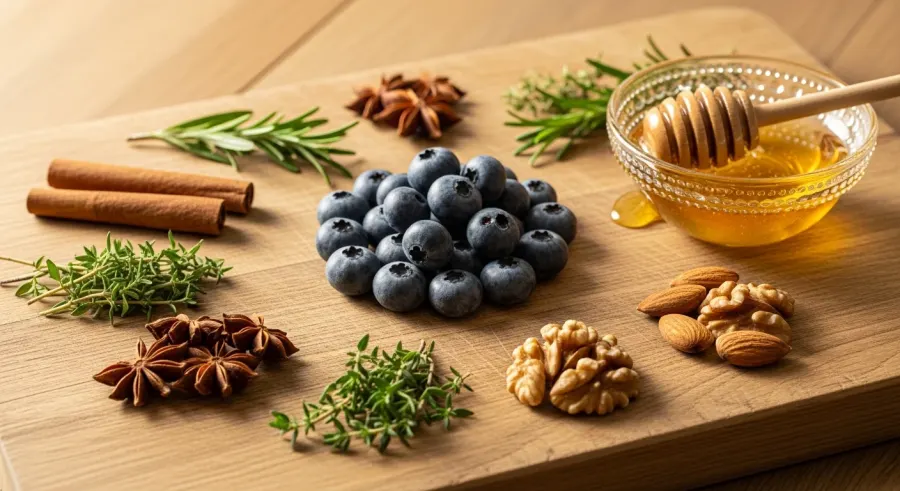
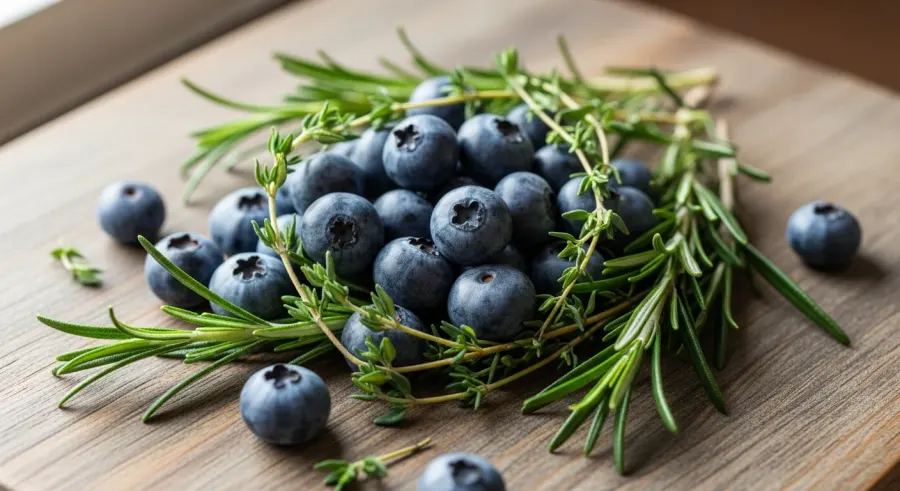
Taking a deep breath right after crushing a fresh blueberry reveals a hidden botanical note. That faint, almost imperceptible woodsy scent is alpha-pinene. This is the exact same terpene that gives pine needles, rosemary, and thyme their signature forest aromas (Journal of Agricultural and Food Chemistry, 2011).
Pairing blueberries with a hardy, woody herb works because it simply amplifies a note that already exists inside the fruit.
Restraint is the secret to pulling this off. Herb terpenes are highly persistent and can easily dominate a dish. Chopping raw rosemary and tossing it into a fruit salad usually just tastes like you dropped your breakfast in the dirt. Heat is required to soften the blow. Steeping a single bruised sprig of rosemary in a simmering blueberry compote for ten minutes is usually enough. It leaves a lingering, savory complexity without turning the dish into a roast chicken dinner. Lemon thyme is an excellent stepping stone if rosemary feels a bit too aggressive for your palate.
Sweet Corn in the Summer
This pairing looks like a seasonal novelty, but it succeeds purely on the contrast of textures and sugars. Both crops hit their peak harvest window in late summer, making them natural companions at local farm stands.
Sweet corn is packed with milky starches. Blueberries bring dark, acidic hydration. Cooking them together forces the berry juice to hydrate the coarse cornmeal as it bakes. The gentle, earthy sweetness of the corn acts as a neutral canvas. It allows the floral notes of the berries to stand out rather than getting buried under heavy cups of refined white sugar.
This structural pairing extends beyond just baked goods. A bowl of warm, creamy polenta topped with a quick blueberry compote makes for a brilliant breakfast. The slow-cooked cornmeal releases a massive amount of starch, creating a thick, comforting porridge. The acidity of the berries cuts right through that density, providing a perfect balance of savory grain and sharp fruit.
Adding Mascarpone or Yogurt
Sometimes cooked blueberries just taste like generic, one-dimensional sugar. Dairy is the easiest way to rescue the bowl.
Cultured dairy products like mascarpone, crème fraîche, or tangy Greek yogurt contain lactic acid. This is a much softer, rounder acid than the sharp citric acid found in lemons. Lactic acid binds with the sugars in the fruit, creating a creamy mouthfeel that extends the finish of the berry flavor on your palate.
Fat is the other crucial variable. Blueberries are essentially fat-free, made up of about 84% water and 14% carbohydrates (USDA FoodData Central). The milk fats in mascarpone act as a physical solvent for the fat-soluble aroma compounds in the berries. They grab onto the flavor and carry it across your tongue. A spoonful of unsweetened crème fraîche dolloped over warm blueberry cobbler provides a contrast in temperature and richness that does all the heavy lifting.
Swapping Cinnamon for Cardamom
Cinnamon is the default baking spice for almost everything. It is warm, familiar, and highly aggressive, which means it easily bullies delicate fruit.
Green cardamom is a much smarter choice for blueberries. It shares a subtle eucalyptus note with the berries, driven by a compound called cineole. This provides a menthol-like brightness that lifts the heavy, jammy notes of cooked fruit. The spice acts like a cold breeze cutting through a humid room.
Cardamom is notoriously potent, but fortunately, a microscopic amount changes the trajectory of a dish. Purchasing the whole pods rather than the pre-ground powder is the best approach. Ground cardamom loses its essential oils rapidly once exposed to oxygen, leaving behind a dusty, muted ghost of its original flavor. Toasting the whole pods in a dry skillet for sixty seconds before cracking them open wakes up those cineole compounds beautifully.
Bottom Line
Understanding flavor pairings is really just about noticing the quiet details in an ingredient. Blueberries might seem simple, but their chemical makeup connects them to pine forests, citrus groves, and spice cabinets. The next time a recipe calls for plain fruit and white sugar, you have the tools to pull those hidden notes forward.