In Short
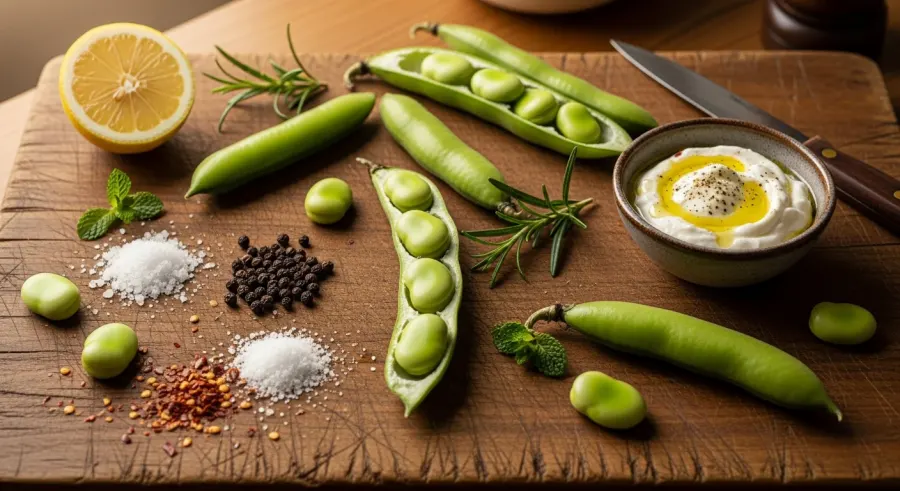
Fava beans bring a dense, buttery texture and grassy aldehydes that need a specific balance of salt, fat, and acid to shine. Classic pairings like Pecorino cheese and fresh mint work on a biochemical level to suppress the bean's natural bitterness, while unexpected matches like strawberries use acid to counteract their starchy weight. The full breakdown of why these flavor combinations work is below.
Fava beans have a reputation for being high-maintenance. You have to buy a massive pile of pods, shell them, blanch them, and then usually shell them a second time just to get to the good stuff. But once you get past that prep work, you are left with a legume that tastes exactly like spring—earthy, buttery, and slightly sweet.
The trick is knowing how to dress them. They carry a dense texture and a trace of natural bitterness that demands specific flavor companions to really open up. You cannot just treat them like a standard garden pea. Finding out what flavors pair with fava beans requires looking at textural contrasts and a little bit of food chemistry. These beans need aggressive seasoning, targeted fats, and bright acids to hit their full potential.
The Dairy Trick That Actually Works
Fava beans carry a faint, underlying bitterness. This comes from naturally occurring alkaloids and phenolic compounds in the plant. When you eat them plain, that bitter note can sometimes dominate the finish and hide the sweeter, nuttier flavors hiding underneath.
Salt is a natural bitterness suppressor. This mechanism makes Pecorino Romano the undisputed king of fava bean pairings. The cheese is deeply salty and rich in sheep's milk fat. When you combine the two, the fat physically coats your palate, masking any astringency from the beans. Meanwhile, the heavy sodium content binds to your taste receptors, dialing down the bitter notes so the bean's underlying sweetness comes forward.
The texture interaction matters just as much. Fava beans can be quite dense, while a 12-month aged Pecorino Romano has a crystalline, crumbly texture. Those little crystals in the cheese are actually concentrated tyrosine, an amino acid that delivers pure umami. The contrast of crystalline cheese against a soft, buttery bean is a textural perfect match.
Tossing a cup of double-shelled, blanched favas with a handful of shaved Pecorino, a drizzle of olive oil, and coarse black pepper creates a completely balanced dish with zero cooking required.
Mint Does Something Very Weird
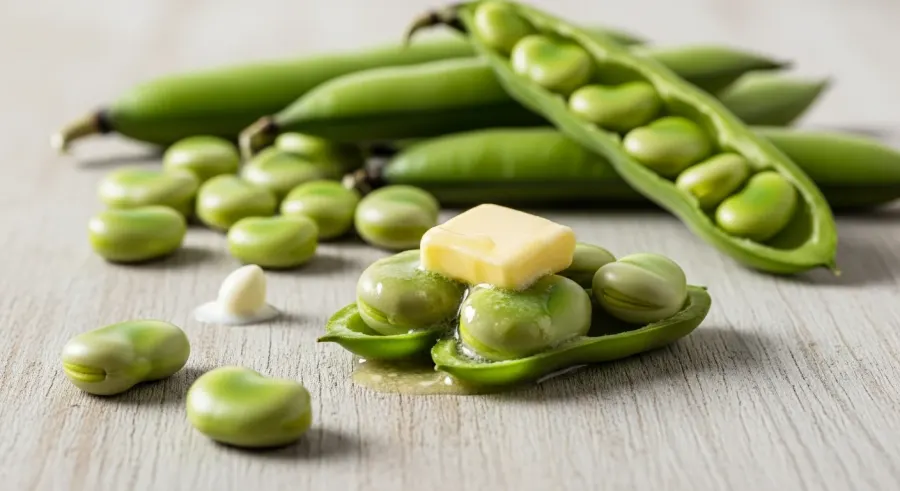
It always seems a bit strange that so many Mediterranean recipes throw a handful of fresh mint at these beans. The reason it works comes down to aroma compounds.
Fava beans are loaded with aliphatic aldehydes. According to research on pulse protein flavors (Journal of Agricultural and Food Chemistry, 2021), these specific volatile compounds are responsible for the distinct cut-grass, green-apple scent you get when you open a fresh pod. Menthol, the primary compound in mint, bridges these green notes perfectly.
More importantly, menthol physically alters how you experience the dish. The compound binds to the TRPM8 receptor in your mouth, which is the exact receptor that tells your brain something is cold. This artificial cooling sensation cuts right through the dense, starchy weight of the fava bean. It lightens the perceived weight of the food, giving it a much-needed lift.
Different mints yield different results. Peppermint provides a sharper, more aggressive bite, while spearmint offers a sweeter, softer background note. Folding chopped mint into a warm fava bean puree just before serving releases the essential oils without turning the delicate leaves bitter.
Why Cured Pork Makes Sense
When exposed to high heat, legumes naturally develop pyrazines. These are the exact same ring-shaped aromatic compounds responsible for the savory, roasted smells of brewing coffee or searing steak.
When you pair fava beans with cured, smoked pork, you are essentially stacking those pyrazines. Pancetta and guanciale work beautifully for this. Rendering diced pork at around 300°F initiates the Maillard reaction, browning the meat and creating complex, savory flavors. Water boils at 212°F, meaning boiled fava beans will never reach the temperature required to trigger the Maillard reaction on their own.
By tossing the blanched beans into the hot, rendered pork fat, you expose the exterior of the bean to higher heat. This accomplishes two things at once. It coats the starches to prevent a dry mouthfeel, and it layers the pork's intense savory notes directly over the bean's grassy profile. Guanciale is often the better choice here because it has a higher fat-to-meat ratio, leaving more lipid coating for the beans.
It is best to avoid standard American bacon if it is heavily maple-flavored, as the artificial sweetness competes too much with the legume. Sautéing the beans for a few minutes in crisp, rendered pancetta allows them to absorb the savory fat perfectly.
Wait, Do Strawberries Actually Work?
Fruit belongs on this list. It sounds wrong until you look at the physical mechanics of eating a fava bean.
These beans pack a significant amount of starch and protein. According to USDA FoodData Central, 100 grams of raw mature fava beans contain about 26 grams of protein and 58 grams of carbohydrates. When you eat something that dense, your mouth craves moisture. Fava beans also contain tannins that bind to the proline-rich proteins in your saliva. This causes those proteins to precipitate out, leaving your mouth feeling like it was just rubbed with sandpaper—a sensation known as astringency.
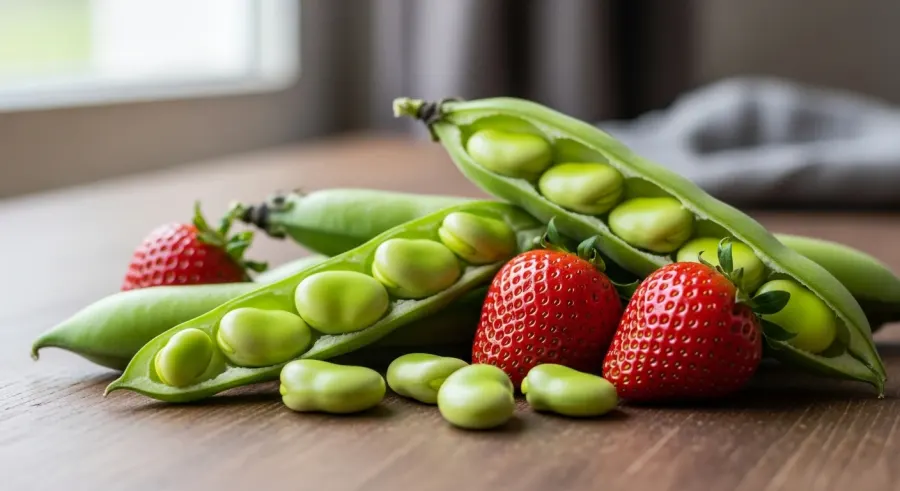
Strawberries bring a sharp punch of malic and citric acid. Acid immediately triggers your salivary glands. This rapid rush of saliva flushes the palate and replaces the depleted proteins, erasing the dry feeling instantly. The malic acid in the fruit also happens to pair beautifully with the bean's green aliphatic aldehydes, since malic acid naturally carries a green-apple flavor profile.
Slicing fresh strawberries and tossing them with blanched fava beans, a squeeze of lemon juice, and a pinch of flaky salt creates a highly effective, chemically balanced summer salad.
Garlic and Olive Oil Are Mandatory
Some combinations are foundational for a reason. Garlic and fava beans are practically inseparable in regional Italian and Middle Eastern cooking, and it is entirely due to how the compounds interact.
Raw garlic delivers allicin, a sharp, sulfurous compound that cuts right through the buttery texture of the beans. If you crush raw garlic, the enzyme alliinase converts alliin into allicin within seconds. Letting that crushed garlic sit for ten minutes before mixing it with the beans maximizes the pungency. If you prefer a milder flavor, heating the garlic in oil breaks the allicin down into diallyl disulfide, adding a deep, sweet savoriness without the sharp burn.
Introducing a high-quality extra virgin olive oil takes the pairing a step further. You want an early-harvest, robust oil here rather than a mild, buttery one. Early-harvest oils are high in oleocanthal, the compound that causes a peppery tickle in the back of your throat. Those peppery phenols lock onto the earthy sweetness of the bean. The oil also changes the release kinetics of the flavor compounds in your mouth, slowing them down so the flavor lingers longer.
Smashing garlic into warm olive oil and pouring it over the beans gives you a perfect rustic mash.
Using Starch to Tame Bitter Greens
Pairing bitter with bitter usually results in a culinary mistake. Yet, southern Italian cooking frequently pairs fava bean puree with wild chicory or dandelion greens (a dish known as Fave e Cicoria).
While fava beans have a mild bitterness, chicory is aggressive. The leaves contain lactucin, a highly bitter compound. This combination works exclusively because the fava beans are cooked down until their starches swell and burst. They release long chains of amylose and amylopectin that turn into a rich paste.
That dense starch acts as a physical buffer on your tongue. For lactucin to taste bitter, it has to physically make contact with your taste buds. The swollen fava bean starches block those bitter molecules from making full contact. It is a mechanical masking effect rather than a chemical one. The beans essentially become the sweet, creamy background, while the greens provide the necessary spike of flavor to keep the dish from becoming monotonous.
Simmering dried, peeled fava beans until they fall apart into a thick puree creates the ideal base for a pile of olive-oil-braised chicory.
Warm Spices Change Everything
Ground spices shift the entire profile of the bean from bright and grassy to deep and warming. This is especially true for dried fava beans, which are harvested late and have lost their green, springtime notes.
In Egyptian cuisine, fava beans are the star of ful medames, a slow-cooked stew. The secret to this pairing lies in a specific volatile compound called cuminaldehyde, found in cumin. This molecule has a warm, earthy profile that perfectly aligns with the mature fava bean's natural earthiness.
The chemistry of how you apply the spice matters. The flavor compounds in cumin are volatile and hydrophobic, meaning they dissolve in fat, not water. If you just sprinkle dry cumin over boiled beans, the flavor washes away in your mouth. Blooming the cumin in warm oil first allows the cuminaldehyde to dissolve into the lipids. When you toss the beans in that spiced oil, the fat clings to the starch, carrying the flavor evenly across every bite.
Stirring toasted, oil-bloomed cumin and a heavy splash of lemon juice into a pot of tender beans finishes the dish perfectly by using the acid to brighten the heavy spices.
Bottom Line
Finding the right companion for a fava bean is not about covering up its natural flavor. It is about understanding the simple balance of salt, fat, and acid needed to bring out the buttery, grassy qualities hiding inside that thick shell. Whether you rely on the heavy umami of a sharp cheese or the structural contrast of a bright fruit, a little targeted food science is all it takes to make the heavy prep work completely worth the effort.