In Short
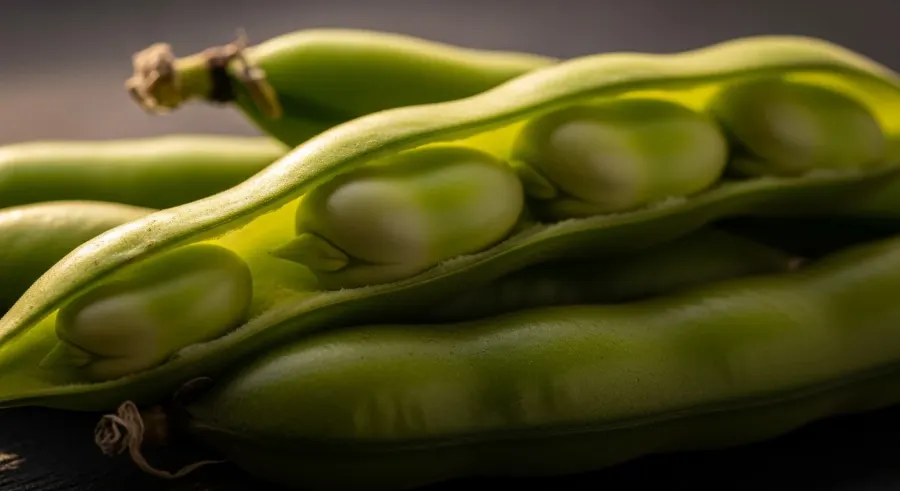
For most people, fava beans are perfectly safe — but for the estimated 400 million individuals with a genetic G6PD deficiency, eating them triggers a severe blood crisis called favism. The bizarre history of this condition (and why Pythagoras chose death over crossing a bean field) is below.
You’ve probably eaten fava beans in a spring salad or mashed them into a bright green dip without a second thought. For thousands of years, however, these ancient legumes carried a dark, almost supernatural reputation. Behind the folklore lies a fascinating biological reality. Fava beans possess a chemical defense system so precise that it alters human blood, shaped ancient philosophy, and is currently being studied as a neurological treatment.
The Philosopher Who Died Over a Bean
Pythagoras is famous for his mathematical theorem, but his devoted religious followers knew him for a strict set of esoteric lifestyle rules. At the very top of his prohibited list was an absolute terror of fava beans. The ancient Greek philosopher forbade his disciples from eating, touching, or even looking too closely at the legumes.
According to biographical accounts by the ancient historian Diogenes Laertius, Pythagoras actually lost his life because of this phobia. Around 495 B.C., angry locals in the city of Croton set fire to the Pythagorean meeting house. Fleeing from the mob, the aging philosopher managed to outrun his pursuers until he reached the edge of a blooming fava bean field. Rather than sprint through the crop to safety, he stopped dead in his tracks. He reportedly stated he would rather be captured than cross the field, and his attackers promptly cut his throat.
Historians have debated his reasoning for centuries. Some texts claim he believed the beans contained the souls of the dead. Because the hollow stems of the plant have no internal nodes, ancient Greeks speculated they acted as direct ladders to Hades, allowing spirits to travel up from the underworld. Another theory tied the beans to metempsychosis, the transmigration of souls, suggesting that burying a fava bean in manure for forty days would cause it to take on the appearance of a human fetus.
Modern researchers suspect something far less mystical drove the cultural taboo. Pythagoras lived in the Mediterranean, a region where a specific genetic profile made interacting with fava beans a genuine medical emergency. The ancient Greeks didn't have microscopes or a working knowledge of genetics. They just knew that occasionally, when a seemingly healthy person ate from the fava harvest, they would quickly grow pale, collapse, and sometimes die.
A Genetic Glitch Called Favism
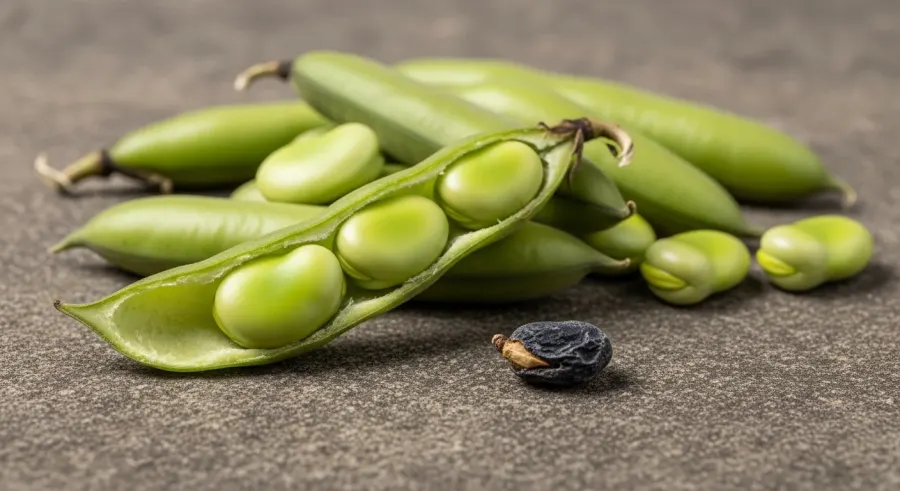
An estimated 400 million people worldwide carry a genetic mutation known as G6PD deficiency. For these individuals, the fava bean acts as a highly targeted biological weapon. The condition is an X-linked recessive trait, meaning it predominantly affects males, and it is heavily concentrated in populations with a historical exposure to malaria. This includes the Mediterranean basin, parts of Africa, and the Middle East.
The mutation survives in the human gene pool because it offers a distinct evolutionary advantage. Having red blood cells deficient in the glucose-6-phosphate dehydrogenase (G6PD) enzyme makes the body highly inhospitable to the malaria parasite (Cornell University Department of Animal Science). The parasite needs normal, healthy red blood cells to replicate. By maintaining a slightly compromised cellular environment, the host gains a natural resistance to one of the deadliest diseases in human history.
But that malarial protection comes with a harsh trade-off when it comes to diet. When someone with this genetic variant consumes fava beans, they experience an acute hemolytic crisis. Their red blood cells undergo massive oxidative stress, rupture, and break apart into the bloodstream.
Before the advent of modern blood transfusion technology, this reaction was entirely mysterious and highly fatal. Cornell University notes that historical mortality rates sat between 6 and 8 percent for G6PD-deficient children exposed to fava beans. The connection between the plant and the illness was so absolute that the medical condition itself was eventually named "favism." To a mother in ancient Greece watching her son turn jaundiced and weak after a spring meal, the beans truly did seem cursed.
The Two Chemicals Causing the Chaos
Fava beans contain two unique pyrimidine glycosides called vicine and convicine. In a person with normal enzyme levels, these compounds pass through the digestive system as minor antinutrients. They might cause a bit of flatulence or temporarily reduce protein absorption, but they are otherwise harmlessly metabolized.
Things change drastically in a G6PD-deficient body. When vicine and convicine enter the gut, local bacteria and enzymes break them down into their aglycone forms: divicine and isouramil. These secondary compounds are highly reactive oxidants. Once they enter the bloodstream, they begin seeking out electrons, aggressively interacting with the membranes of passing red blood cells.
A normal red blood cell defends against this type of attack by using the G6PD enzyme to produce reduced glutathione. You can think of glutathione as a biological fire extinguisher that neutralizes oxidants before they cause structural damage. People with favism lack the enzyme required to keep this protective supply replenished.
Without sufficient glutathione, the red blood cells are left entirely defenseless against divicine and isouramil. The oxidative stress ravages the lipid bilayer of the cell. The cell wall loses its flexibility, weakens, and ultimately bursts open, spilling hemoglobin directly into the blood plasma. This rapid destruction of cells leads to severe hemolytic anemia. The kidneys are suddenly forced to filter out the debris of millions of destroyed blood cells, which is why one of the hallmark symptoms of a favism crisis is urine that turns as dark as black tea.
Wait, Even the Flowers Are Dangerous?
A plate of cooked beans is the most common trigger for a hemolytic crisis, but the danger extends straight into the agricultural environment. For highly sensitive individuals, merely walking past a farm can initiate a medical emergency.
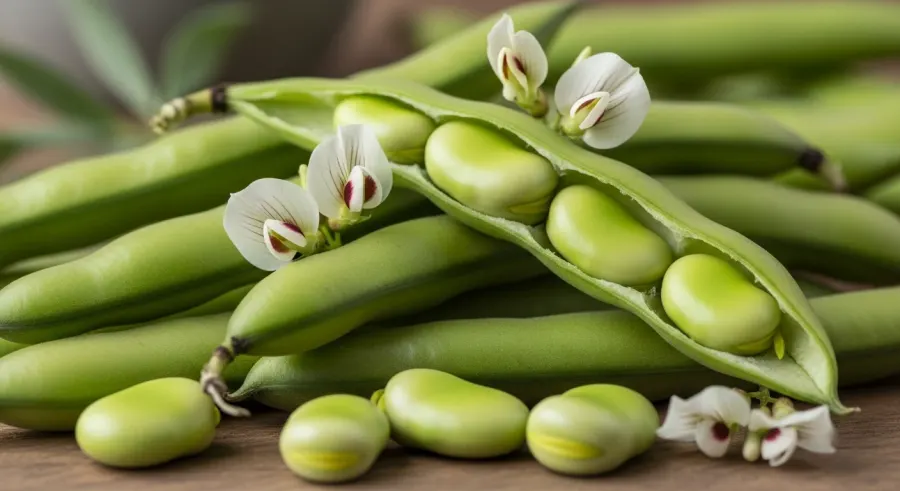
During the spring blooming season, fava bean flowers release pollen heavily laden with vicine and convicine. If a severely G6PD-deficient person inhales this pollen, the glycosides enter the bloodstream through the lungs, bypassing the digestive system entirely. Symptoms can appear within hours of inhalation, long before the plant has produced a single edible pod.
This intense environmental sensitivity likely contributed to the ancient superstitions surrounding fava fields. If people in your village mysteriously fell ill just by standing downwind of a blossoming crop, it would be easy to assume the very air around the plants was toxic.
The transmission pathways don't stop at pollen. Nursing mothers who consume fava beans can pass the reactive oxidants through their breast milk to a G6PD-deficient infant, triggering jaundice and anemia in the baby. There are even documented agricultural concerns regarding livestock. While cows can metabolize the compounds more efficiently than humans, Botanical-online reports that highly sensitive individuals have occasionally experienced symptoms after drinking milk from cattle that grazed heavily on raw fava bean plants.
Fixing the Bean for the Future
Agricultural scientists are now working to rewrite the fava bean's biological makeup. The plant is resilient, grows well in poor soil, and fixes its own nitrogen. It is also an absolute nutritional powerhouse. According to the USDA FoodData Central, 100 grams of mature raw fava seeds provide 341 calories, a massive 26.1 grams of protein, and 25 grams of dietary fiber. If the toxicity issue could be solved, the bean could serve as a vital global protein source.
The challenge lies in the fact that vicine and convicine likely evolved to protect the plant from pests and fungal infections. Removing them completely could leave the crop vulnerable. Agronomists have spent decades identifying the specific genetic markers that control the synthesis of these pyrimidine glycosides.
Through targeted selective breeding, international agricultural initiatives—such as the FEVITA project—have successfully cultivated new low-vicine varieties. These modern cultivars retain the high protein and fiber content of traditional fava beans but drastically reduce the accumulation of the dangerous oxidants.
Food scientists are also tackling the problem post-harvest. A 2016 study demonstrated that specific fermentation processes using lactic acid bacteria can naturally degrade vicine and convicine in fava bean flour. Boiling the beans also helps, as it inactivates the beta-glucosidase enzymes present in the raw seeds, which slows the conversion of the compounds into their toxic forms. Between advanced plant genetics and improved processing methods, the agricultural world is slowly neutralizing a poison that has haunted human diets since the days of ancient Greece.
Bottom Line
A simple vegetable can act as a deadly poison to one person and a neurological medicine to another. The long, strange history of the fava bean proves that food is rarely just passive fuel. It is a complex package of bioactive chemistry that interacts with our DNA, our environment, and our history in ways we are only just beginning to fully map out.