In Short
Okra pairs best with acidic ingredients like tomatoes, smoked meats like bacon, and warm spices such as cumin and coriander. How these specific pairings actually alter the plant's polarizing texture on a molecular level is below.
Okra tends to divide the dinner table. But once you understand the basic biochemistry of these green pods, they become one of the most versatile vegetables in the kitchen. The trick isn't just masking the texture, but knowing exactly how to match its grassy, slightly floral notes with compounds that make it sing.
Tomatoes and Citrus Fix Everything
Okra has this built-in trait that just happens to be its most famous feature. The dreaded "slime" is actually mucilage, a complex biological network of pectic polysaccharides. It is totally natural, existing to help the plant hold onto water in hot, arid climates. But in the kitchen, it dictates absolutely everything about how the vegetable feels in your mouth.
According to a 2020 review published in the Journal of Agricultural and Food Chemistry, these polysaccharides change their physical behavior depending on the pH of their environment. When okra is cooked in neutral water, the mucilage expands and forms long, viscous strands.
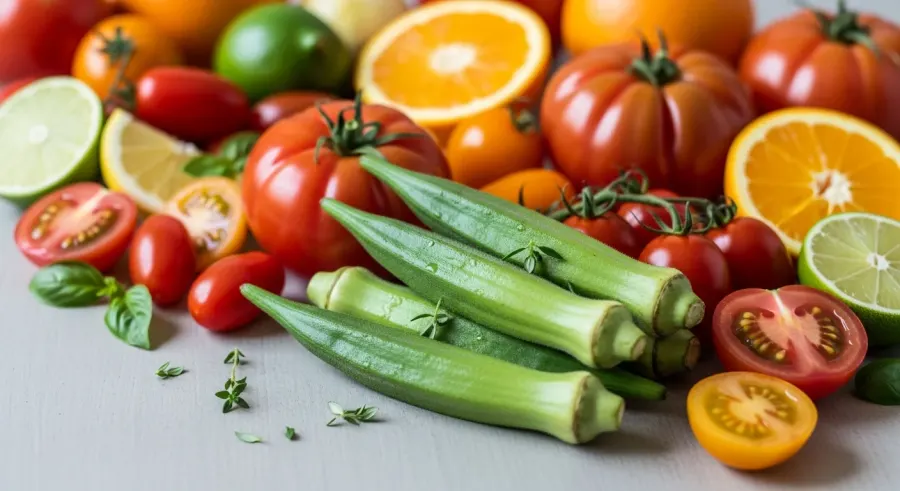
When you introduce a strong acidic ingredient—like crushed tomatoes, a squeeze of fresh lemon juice, or a splash of apple cider vinegar—the pH of the cooking liquid drops sharply. This acidic environment alters the structure of the mucilage, physically preventing it from forming those thick, cohesive gels. The perceived sliminess on the palate is significantly reduced.
Beyond the structural magic, tomatoes and citrus serve a crucial flavor purpose. Tomatoes provide a massive dose of glutamic acid, the amino acid responsible for umami. Okra's innate flavor profile is decidedly green, slightly grassy, and entirely lacks savory depth on its own. It needs that umami baseline to ground it. Citrus, on the other hand, provides high notes that cut through the earthy density of the pods.
This acidic approach works wonders for stews and braises, but skip the tomatoes entirely if your goal is crispy, pan-fried okra. The high water content of fresh tomatoes will immediately steam the pods, making a crisp exterior impossible. Acid is a tool for managing texture in wet cooking, not dry.
Smoked Pork and Cured Seafood
Why does a traditional Louisiana gumbo work so well? It mostly comes down to a brilliant manipulation of moisture and lipids.
Raw okra is roughly 90% water (USDA FoodData Central). It is almost entirely fat-free. When you have a vegetable this watery and lean, it acts like a sponge. It struggles to retain volatile flavor compounds on the palate and fundamentally needs heavy fats to carry its subtler notes.
Okra contains a variety of volatile aroma compounds, primarily oxygenated monoterpenes, which give it a subtle, earthy, and sometimes woody scent. Many of these aroma compounds are fat-soluble. When you introduce heavily smoked pork products—like bacon, tasso ham, or andouille sausage—or cured seafood like dried ground shrimp, you are providing a lipid delivery system.
As the animal fats render out into the pan, they coat the palate. This allows the smoky, savory flavors to linger in the mouth while the okra absorbs the surrounding broth. The heavy salt content of cured meats also permeates the high-water matrix of the okra, seasoning it from the inside out. Smoke, in particular, masks the slightly astringent raw notes of the pod, replacing them with a campfire warmth that feels much more robust.
This pairing shines in slow-cooked dishes or quick, high-heat sears. However, if you are deep-frying your okra in a cornmeal batter, avoid mixing bacon fat into your frying oil. The smoke point of unrefined animal fat is too low for a sustained deep fry and will leave the batter tasting acrid and burnt. Stick to neutral oil for the fry and save the pork for the pan-sear.
Warm Spices Like Cumin and Coriander
Putting okra in a hot oven completely rewires its chemical profile. When exposed to dry heat above 300°F, the Maillard reaction begins to brown the exterior of the pods. This minimizes the surface mucilage and creates deep, nutty, roasted flavors that you simply cannot get from boiling or steaming.
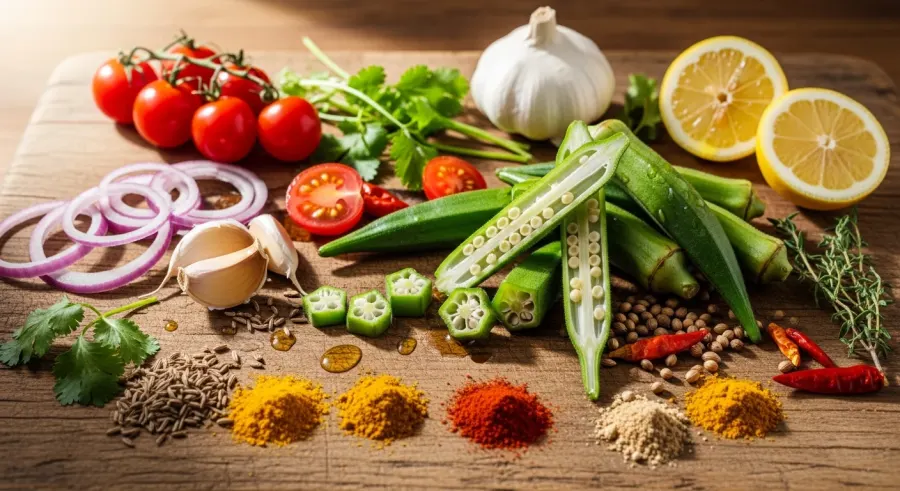
This roasted state is exactly when you want to introduce warm, earthy spices. Cumin and coriander are arguably the best candidates in your pantry.
At a molecular level, okra naturally contains oxygenated monoterpenes. These are the exact same classes of organic compounds that give coriander its bright, almost citrusy resonance, and they pair beautifully with the aromatic aldehydes and terpenes that give cumin its dusty, woody warmth. When you combine them, you are essentially matching compatible flavor molecules. Tossing the pods in these spices before they hit the oven creates a chemical bridge between the vegetable's natural floral notes and the savory depth of the hot roasting pan.
Turmeric and smoked paprika also play well in this space, adding color and a mild, earthy bitterness that complements the okra's green flavor.
Dry-roasting with warm spices is phenomenal for whole or halved pods. But if you are tossing these spices into a wet stew, be sure to bloom them in a little oil first. Raw cumin thrown directly into a simmering tomato-okra broth will taste dusty and flat. Blooming the spices in hot fat wakes up those oil-soluble flavor compounds before the okra is introduced.
Sweet Corn and Fresh Bell Peppers
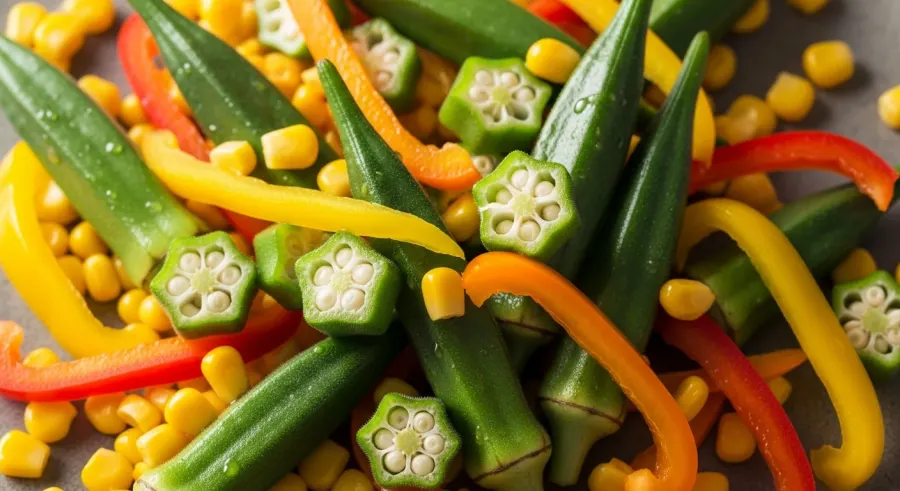
Some vegetables just seem to belong together simply because they reach their harvest peak in the exact same season. The classic late-summer pairing of okra, sweet corn, and red bell peppers—often found mixed together in a Southern succotash—is a perfect example of this timing.
But this combination is also a masterclass in flavor balancing.
Okra has a very specific finish on the palate. After the initial green, grassy notes fade, it leaves behind a faint, almost astringent bitterness on the back of the tongue. Sweet corn and fully ripe red bell peppers are packed with natural sucrose. When you sauté these three vegetables together, the natural sugars from the corn and peppers begin to caramelize in the pan.
This sweetness directly counteracts and softens the bitter edge of the okra. The peppers also bring a high amount of cellular water to the skillet, which gently steams the okra without turning it into a complete puree. Onions and garlic serve this exact same purpose. As onions cook down, their harsh sulfur compounds burn off, leaving behind a mellow sweetness that pairs perfectly with the earthy pods.
This sweet contrast is perfect for a quick, stovetop hash. It falters, however, if you try to slow-cook this trio. Corn and peppers lose their vibrant texture and taste muddy when simmered too long alongside okra. Keep the cook time short and the heat high.
The Peanut Butter and Coconut Trick
You probably don't reach for a jar of peanut butter when you are trying to figure out what to do with a basket of okra. In Western kitchens, we spend a lot of time trying to figure out how to eliminate the vegetable's texture entirely.
In West African, South Asian, and Caribbean cuisines, however, rich, fatty suspensions are standard pairings.
Instead of fighting the mucilage with high heat or harsh acids, these pairings use it as a structural tool. The pectic polysaccharides in the okra act as a highly effective natural hydrocolloid. When introduced to a stew, they bind with the water and the heavy fats of a peanut base or a coconut curry. This interaction emulsifies the liquid, creating a thick, velvety gravy without the need for a traditional flour-and-butter roux.
The heavy, roasted notes of ground peanuts provide a beautiful, grounding contrast to the bright, green flavor of the okra. Coconut milk does something similar, offering a sweet, creamy background that rounds out the sharp, grassy edges of the pods.
Using okra as a natural thickener is a brilliant technique for robust, heavily spiced stews. It is a terrible idea for delicate, clear broths. If you are making a light vegetable soup and want the broth to remain thin and translucent, you must cook the okra separately and add it at the very end, or the hydrocolloids will cloud the liquid.
Vinegar, Dill, and Mustard Seed
Sometimes the best way to handle okra is to serve it cold. Pickling is a time-honored preservation method, but it is also an exercise in extreme flavor pairing.
When you submerge okra in a standard brine of distilled vinegar and water, you are dropping the pH far below the threshold where mucilage can thicken. The slimy texture is entirely neutralized by the acid, leaving behind a firm, crisp pod. But vinegar on its own is sharp and aggressive. It needs botanical support.
This is where dill and mustard seed come in. Fresh dill contains carvone, a flavor compound that provides a cool, herbaceous brightness. This cuts through the harshness of the acetic acid in the vinegar. Mustard seeds bring a pungent, lingering heat that distracts the palate from the green, vegetal notes of the raw okra.
Garlic cloves thrown into the brine also play a major role. Over a few weeks in the fridge, the garlic mellows and permeates the high-water matrix of the pods, giving them a deep, savory backbone.
This botanical, highly acidic pairing is perfect for a charcuterie board or a bloody mary garnish. It does not translate well to hot applications. Boiling okra in a heavy vinegar and dill broth will leave you with a sour, unpalatable soup. Keep the vinegar cold and the crunch intact.
Bottom Line
A basket of fresh okra doesn't have to be a culinary puzzle. The plant's unique chemistry means it will readily adapt to whatever environment you put it in. By choosing ingredients that either lean into its natural thickening power or use acidity and heat to change its structure, the vegetable shifts from a polarizing ingredient into a highly adaptable staple.