In Short
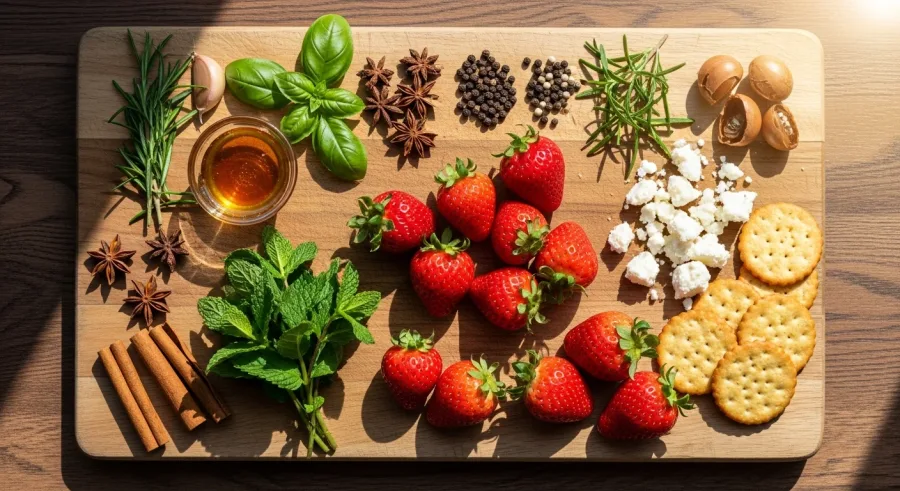
Strawberries pair best with ingredients that share their core aromatic compounds, like basil, dark chocolate, and tomatoes, or those that provide acidic contrast, like balsamic vinegar. The chemical reason why a dusting of crushed coriander seeds completely transforms them is below.
The moment you slice into a fresh strawberry, you are releasing a cloud of over 300 volatile aroma compounds into the air. Figuring out what to pair them with isn't just a matter of culinary tradition—it is literal chemistry.
Why Basil Makes Perfect Sense
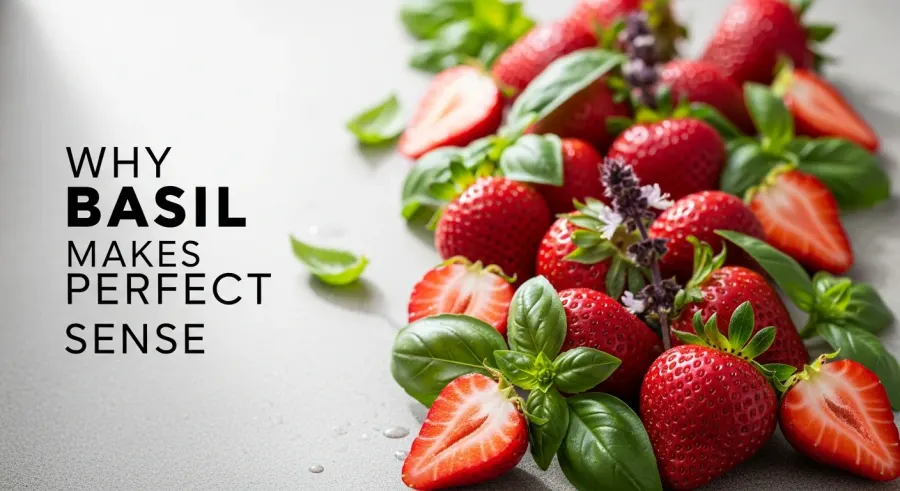
A bowl of berries with green leaves mixed in looks a bit like a salad mistake. But the connection between strawberries and basil happens strictly on a molecular level. Both ingredients contain methyl cinnamate, a volatile aroma compound that bridges the gap between fruity and herbal. When eaten together, the brain registers this shared chemical signature before the palate even processes the contrasting textures.
It is a pairing that relies heavily on variety selection. Sweet Genovese basil works beautifully because its secondary compounds include linalool, which adds a gentle floral note. Thai basil, on the other hand, leans heavily into anise territory due to its estragole content. That licorice flavor clashes aggressively with the malic acid in the berries, creating a harsh, medicinal aftertaste.
Extracting the flavor requires a bit of physical breakdown. Muddling a small handful of fresh basil leaves—maybe five or six—with a tablespoon of sugar creates an abrasive environment that ruptures the plant's cell walls. The sugar pulls water out of the leaves through osmosis, dissolving the essential oils into a fragrant paste. Tossing this mixture with two cups of halved strawberries and letting it sit for ten minutes allows the flavors to integrate completely. The resulting syrup carries the fat-soluble compounds directly across the tongue. It requires zero heat and serves remarkably well over a dense pound cake.
Vinegar Fixes the Sugar Problem
Raw strawberries are surprisingly low in sugar. A standard 100-gram serving contains only about 4.9 grams of total sugars and a mere 32 calories (USDA FoodData Central). The intense sweetness we perceive when eating a ripe strawberry is mostly an aromatic illusion created by compounds like Furaneol. Because the fruit isn't actually a sugar bomb, introducing a dark, aged acid brings its natural flavor profile into sharp relief.
Balsamic vinegar provides acetic acid, which lowers the pH of the dish and makes the fruity esters pop against the palate. The age of the vinegar changes the entire dynamic. Young, inexpensive balsamic is thin, sharp, and predominantly sour. It causes the taste buds to contract, effectively shutting down your ability to perceive the delicate floral notes of the berry.
A cask-aged balsamic operates differently. Over years of resting in wooden barrels made of oak, cherry, or juniper, the grape must undergoes continuous, slow Maillard reactions. This process develops dark melanoidins and heavy, roasted caramel notes. Those specific caramel aromas lock directly into the caramel-like Furaneol present in the strawberries.
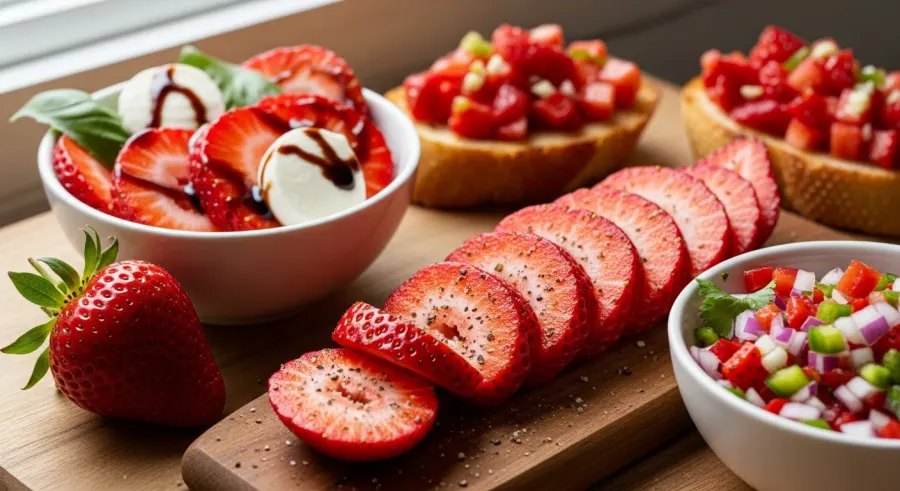
Cutting a pint of strawberries into quarters and drizzling them with exactly one tablespoon of aged balsamic and a pinch of flaky sea salt creates an ideal maceration environment. Leaving them at room temperature for 15 minutes before serving softens the fruit walls just enough. The salt suppresses any residual bitterness in the vinegar, highlighting only the complex sweetness of the paired compounds.
Wait, Coriander Seeds Actually Work
Who looks at a sweet summer berry and reaches for the spice rack? Flavor chemists, mostly.
This is one of those unexpected aromatic overlaps that sounds entirely wrong until it hits your palate. Both strawberries and coriander seeds share a key odorant called linalool. In the scientific community, this is recognized as a floral terpene alcohol. It is a highly volatile compound that smells distinctly floral and sweet. In coriander seeds, it provides a warm, slightly citrusy, and almost woody edge. In strawberries, it is a key compound responsible for the floral freshness of the fruit.
Combining them amplifies those shared notes. It grounds the berry, shifting the flavor profile away from a simplistic candy-like sweetness and turning it into a complex botanical experience. The warmth of the spice creates a structural contrast against the cool, acidic juice of the fruit.
Pre-ground coriander powder from the grocery store tends to lose its volatile oils within a matter of weeks, rendering it basically useless for this application. A better approach involves toasting one teaspoon of whole coriander seeds in a dry skillet over medium heat for two minutes. Heating them to around 300°F (150°C) volatilizes the essential oils without burning the delicate seed hull. Crushing the toasted seeds lightly in a mortar and pestle and dusting them over roasted strawberries right out of the oven captures the escaping floral notes perfectly.
Treating Berries Like a Tomato
Botanically, a tomato is a true berry, while a strawberry is an aggregate accessory fruit. In the kitchen, however, they behave like closely related siblings. They share a remarkably similar sugar-to-acid ratio and a structural reliance on green aldehyde notes. Both contain eugenol, a compound that imparts a subtle, clove-like spice profile to their flesh.
Because of this chemical overlap, strawberries can be successfully swapped into almost any savory context where a raw tomato usually shines. They both rely on a delicate, water-dense cellular structure that breaks down rapidly under heat or salt, quickly releasing their juices and pectin.
Cooking them together melds them into a seamless sweet-savory hybrid, but the application requires restraint. Simmering strawberries for too long destroys the delicate ethyl butanoate esters that give them their signature fruity aroma. Once those esters boil off, you are left with a flat, muddy-tasting pulp.
This pairing shines brightest in a raw salsa. A mixture of one cup of firm, diced strawberries, half a cup of cherry tomatoes, a quarter cup of finely diced red onion, and a single minced jalapeño provides an excellent balance of heat, acid, and sugar. Tossing the mixture with lime juice and a heavy pinch of salt draws out the shared eugenol notes. It works beautifully alongside grilled white fish or rich, fatty cuts of pork.
Dark Chocolate Needs the Roast
Milk chocolate-covered strawberries are usually a culinary disappointment. The excessive sugar and dairy in the coating overwhelm the delicate fruit, leaving the berry tasting watery and bland by comparison.
Dark chocolate—specifically anything containing over 70% cacao—relies on a completely different chemical mechanism. Strawberries are dominated by a molecule called 4-hydroxy-2,5-dimethyl-3(2H)-furanone. It is so crucial to the fruit's identity that food scientists simply refer to it as Furaneol. At low levels, it smells like fresh fruit. But at higher concentrations, it shifts dramatically, taking on the aroma of burnt sugar or roasting coffee.
High-quality dark chocolate is packed with roasted pyrazines formed during the fermentation and roasting of the raw cacao beans. The inherent bitterness of the dark chocolate suppresses the tartness of the berry, allowing those shared roasted, caramel-like furanones to link up and take center stage.
Dipping whole, wet strawberries into melted chocolate introduces unwanted moisture and often ruins the chocolate's temper. A more reliable method is roasting the fruit. Baking two cups of strawberries at 350°F (175°C) for 20 minutes evaporates a portion of their water—strawberries are roughly 91% water by weight (USDA FoodData Central). This process concentrates the Furaneol intensely. Serving the warm, roasted fruit alongside a square of solid dark chocolate highlights the shared roasted compounds without compromising the texture of either ingredient.
A Better Cheese Than Brie
Fat is a highly efficient solvent for flavor. Many of the most potent aroma compounds in strawberries, such as the ester ethyl butanoate, are highly lipid-soluble. This means they require a fat source to carry them smoothly across the palate and into the olfactory receptors.
While heavy cream is the traditional dairy pairing, fresh goat cheese offers a distinct structural advantage. Goat milk contains high levels of caprylic acid (also known as octanoic acid), which gives the cheese its characteristic earthy, slightly barnyard-like tang. This lactic sharpness perfectly mirrors the natural citric and malic acids present in the berries. The dense, chalky fat of fresh chèvre coats the mouth, trapping the volatile strawberry esters and prolonging the flavor experience significantly longer than a liquid cream ever could.
The interaction works best when a sharp temperature contrast is introduced. Cold cheese numbs the palate slightly, while warm berries accelerate the volatilization of the aroma compounds.
Spreading two ounces of cold, fresh goat cheese on a thick slice of toasted sourdough provides a sturdy, neutral base. Topping the cold cheese with sliced strawberries that have been warmed in a skillet for just three minutes creates a perfectly balanced bite. The heat from the berries gently softens the top layer of the cheese, allowing the lipids and the fruit esters to fuse instantly.
Black Pepper Creates a False Heat
Black pepper doesn't just add a background flavor; it physically alters how the mouth perceives temperature and sweetness.
The active alkaloid in black pepper is piperine. When consumed, piperine binds directly to the TRPV1 receptors in the mouth—the exact same nerve pathways that detect physical heat from hot liquids. By triggering a mild, localized burning sensation, the pepper increases blood flow to the palate. This heightened physical sensitivity temporarily amplifies the brain's perception of the strawberry's natural sweetness, making the fruit taste richer than it actually is.
Beyond the physical heat, black pepper contains terpenes like pinene and caryophyllene. These compounds introduce a sharp, woody, and almost pine-like aromatic backdrop. The woodiness grounds the high, floral notes of the berry, preventing the overall flavor profile from feeling too light or fleeting.
Grinding stale pepper from a shaker completely misses these volatile terpenes. Cracking fresh whole peppercorns over strawberries that are macerating in a splash of dry red wine creates a highly structured dessert. The wine provides shared tannins and its own fruity esters, while a thirty-minute resting period allows the piperine to fully infuse into the expelled berry juice. The result is a complex syrup that warms the back of the throat while delivering a concentrated hit of berry aromatics.
Bottom Line
Understanding the molecular overlaps between ingredients shifts cooking from a guessing game to a predictable science. A bowl of fruit stops being just a simple summer snack and becomes a foundation for matching volatile compounds. Once the underlying chemistry of a strawberry is apparent, the rigid boundary between sweet and savory applications mostly disappears.