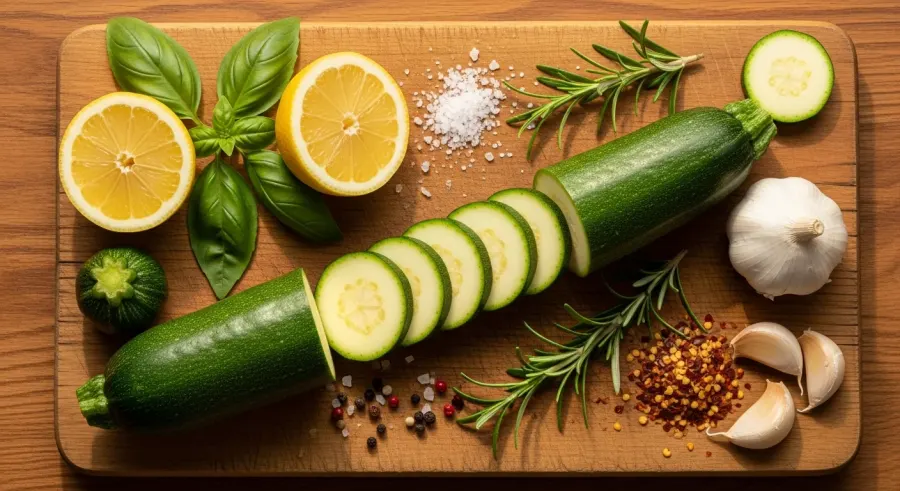
In Short
Zucchini’s high water content and mild flavor make it the perfect canvas for umami-rich ingredients like aged cheese and miso, high-quality fats like olive oil, and bright herbs like mint. The real secret to making these pairings work comes down to managing the water content before adding your flavors.
Zucchini gets a bad rap for being watery or bland, mostly because we treat it like a main character when it really wants to be a supporting actor. It is almost entirely water—about 95% of it, actually—which means it functions more like a sponge for other flavors than a standalone taste. Once you understand how it absorbs fat and reacts to heat, you can pair it with things that actually make sense.
Aged cheese fixes the umami problem
Zucchini is almost aggressively mild. It has very little natural protein—just 1.2 grams per 100g (USDA FoodData Central). That absence of protein means it lacks the savory depth that makes a vegetable dish feel satisfying.
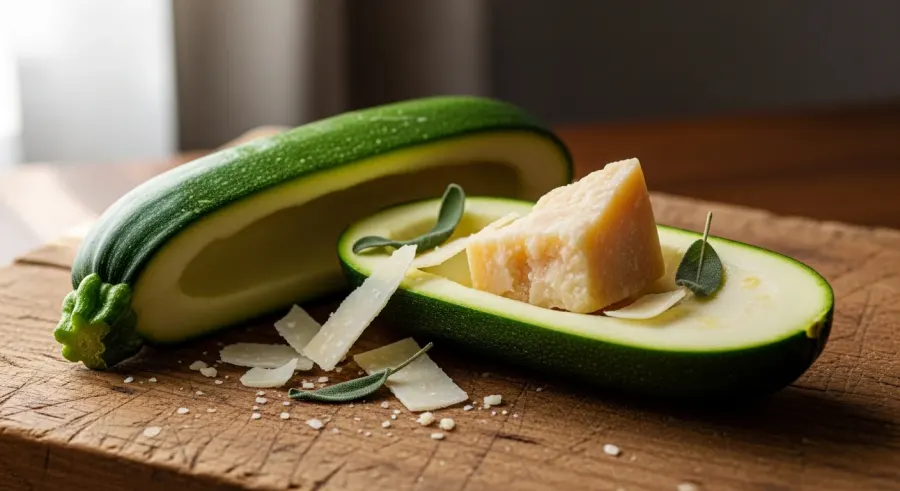
Aged cheeses like Parmigiano-Reggiano or Pecorino Romano step in to fill that void. During the aging process, enzymes called proteases break down the dairy proteins into savory, umami-rich peptides. Because the squash is so watery, it absorbs that salty, savory fat perfectly as the cheese melts.
There is a biological reason Parmesan and zucchini feel like an automatic pairing. When you bake zucchini with a heavy dusting of aged cheese (about a quarter cup for two squashes), you are actually triggering a chemical reaction. The cheese browns, creating a crust that protects the delicate squash underneath from turning to complete mush. If you prefer your squash raw, the cheese rule still applies, but you might want to pivot. Feta is a brilliant option for raw, thinly sliced zucchini. The harsh brine of the feta cuts through the raw, grassy notes of the squash, and the crumbly texture clings perfectly to the moisture on the surface of the vegetable.
Olive oil is basically mandatory
There are roughly 2,070 micrograms of lutein and zeaxanthin in a cup of cooked zucchini. Those are powerful antioxidants, but they are completely fat-soluble.
If you eat a bowl of dry steamed zucchini, your body just ignores the best nutrients. A heavy pour of good extra-virgin olive oil solves the absorption problem immediately. But it also does something interesting to the flavor profile.
Fresh, high-quality olive oil contains oleocanthal, a phenolic compound that creates a slight peppery catch in the back of your throat. This peppery note gently suppresses any trace bitterness from cucurbitacins, which are the chemical defense compounds that occasionally make larger, older squashes taste slightly off.
The type of oil matters depending on how you cook it. If you are grilling half-inch thick planks of zucchini at 450°F, a standard olive oil works fine because the smoke and char will dominate the flavor anyway. But if you shave it raw into ribbons, you want the grassy, pungent punch of an unfiltered extra-virgin oil. The oil wraps around the water content of the squash, carrying the flavor across your tongue instead of just washing away.
The miso and soy sauce shortcut
Have you ever tried to brown zucchini in a pan and ended up with a gray, steaming pile of mush? That happens because water limits the pan's temperature.
The Maillard reaction—the chemical process that makes browned food taste so good—needs heat, proteins, and sugars. It usually kicks in around 300°F. Zucchini has plenty of natural sugar, but because it is 95% water, it constantly cools the cooking surface down to 212°F (the boiling point of water).
Adding miso paste or soy sauce changes the math. Both of these ingredients are packed with free amino acids. Brushing a miso glaze over the flesh of a scored zucchini introduces those amino acids directly to the surface. This kickstarts the browning process much faster, meaning you can get deep, roasted flavors under a hot broiler in just five minutes—long before the internal structure of the vegetable collapses.
It works brilliantly for thick wedges. By scoring the flesh in a crosshatch pattern—about a quarter-inch deep—so the glaze sinks in, and then blasting it with direct overhead heat, you get the savory depth of an all-day roast in a fraction of the time.
Wait, fresh mint actually works?
Sometimes the best way to handle the water content is to just embrace it. Raw zucchini has a grassy, slightly sweet profile that completely changes the moment it hits heat.
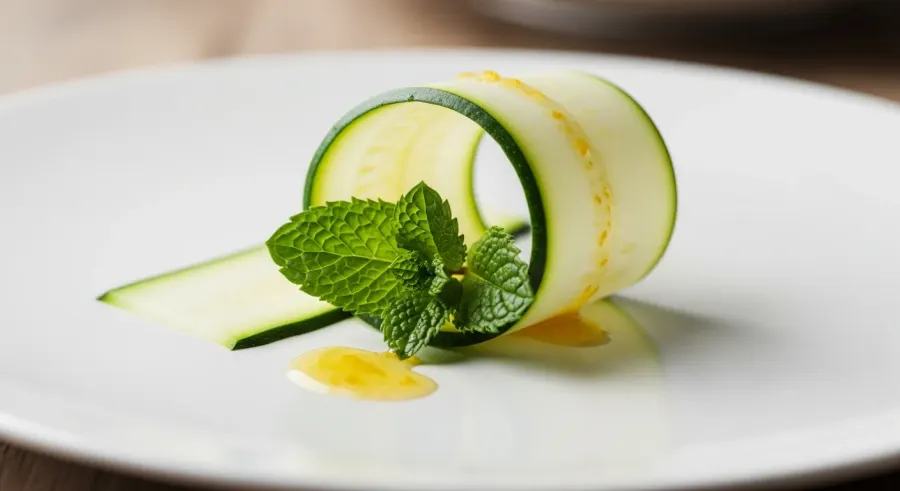
Tossing thin raw ribbons with a splash of lemon juice or apple cider vinegar does something very specific to the cellular structure. The acid actually firms up the pectin network in the cell walls, ensuring the vegetable stays crisp. Throwing in fresh mint provides a cooling aromatic contrast that cuts right through the earthiness of the squash. Mint contains menthol, a volatile compound that literally tricks the TRPM8 temperature receptors in your mouth into feeling a cooling sensation.
It sounds like a strange pairing on paper, but tossing a raw zucchini salad with torn mint leaves, a squeeze of lemon, and a pinch of salt tastes surprisingly bright.
This is a highly situational pairing, though. Mixing mint into a heavy, slow-cooked zucchini stew is usually a mistake. The delicate cooling volatiles cook off in the simmering liquid, leaving behind a muddy, vaguely medicinal flavor. Mint belongs strictly with fast, raw, or barely warm preparations.
Adding almonds for the crunch
Cooked squash gives you exactly zero resistance when you bite into it.
Flavor science often looks at how ingredients overlap. Researchers mapping flavor networks (Ahn et al., 2011) found that Western cuisines generally pair ingredients that share many flavor compounds, while Asian cuisines pair ingredients that share almost none. Almonds and zucchini fall heavily into that contrasting camp.
They share almost no chemical flavor compounds. What almonds offer is dense fat and a rigid snap. Tossing a handful of toasted slivered almonds into a pan of sautéed zucchini right before serving creates a physical texture boundary. It keeps the dish from feeling too soft or uniform.
Walnuts work nicely too, though their slight astringency means they pair better if you also have a sweet element in the pan, like caramelized onions. Almonds are neutral enough to work with just garlic and olive oil. Raw almonds will just absorb the squash liquid and turn rubbery, so toasting them first in a dry pan is essential.
Garlic needs high heat to help
Garlic and zucchini are paired together so often it feels like a culinary reflex. But the exact timing of when you add the garlic changes everything.
If you throw minced garlic into a pan with watery zucchini right at the start, the garlic just boils in the squash juice. It never sweetens, and you miss out on the aromatic bloom. Cooking the zucchini first allows the water to evaporate so the edges can pick up a little color.
Once the pan is relatively dry, pushing the zucchini to the edges to make a hot spot in the oil changes the dynamic entirely. Dropping two minced cloves of garlic into that dry heat for just thirty to sixty seconds allows it to actually fry. The allicin in the garlic mellows out, turning fragrant and sweet rather than sharp and pungent. You get the aromatic punch of the garlic without the harshness of boiling it.
Alternatively, if you are roasting zucchini in the oven, skipping the minced garlic entirely is usually the smarter move. Tossing whole, unpeeled cloves onto the baking sheet protects the garlic from burning. The insides soften into a sweet paste that you can squeeze directly over the roasted squash right before eating.
Tomatoes provide the missing acid
Zucchini and tomatoes grow in the exact same season, which is convenient because they solve each other's problems perfectly. Zucchini is very low in acidity, resting at a pH of around 5.8 to 6.1. Tomatoes, on the other hand, are highly acidic (usually around a pH of 4.3 to 4.9).
When you cook them together, the acid from the tomatoes breaks down the squash just enough to make it tender, but the high water content of the zucchini dilutes the sharpest edges of the tomato juice. This biochemical balancing act is the entire foundation of classic vegetable stews like ratatouille.
You do not have to slow-cook them for hours to get the benefit. Blistering a handful of cherry tomatoes in a dry pan until they burst, then tossing them with lightly sautéed zucchini cubes, gives you a fast pan-sauce effect. The gelatinous seed pulp of the tomatoes mixes with the olive oil to coat the zucchini, creating a cohesive dish rather than just two vegetables sitting awkwardly next to each other.
Bottom Line
Figuring out what to serve with zucchini is really just an exercise in balance. It brings the water and the mild sweetness, which means the rest of the plate has to supply the fat, the salt, and the crunch. Once you stop expecting it to carry a meal on its own, it becomes one of the most reliable ingredients in the kitchen.