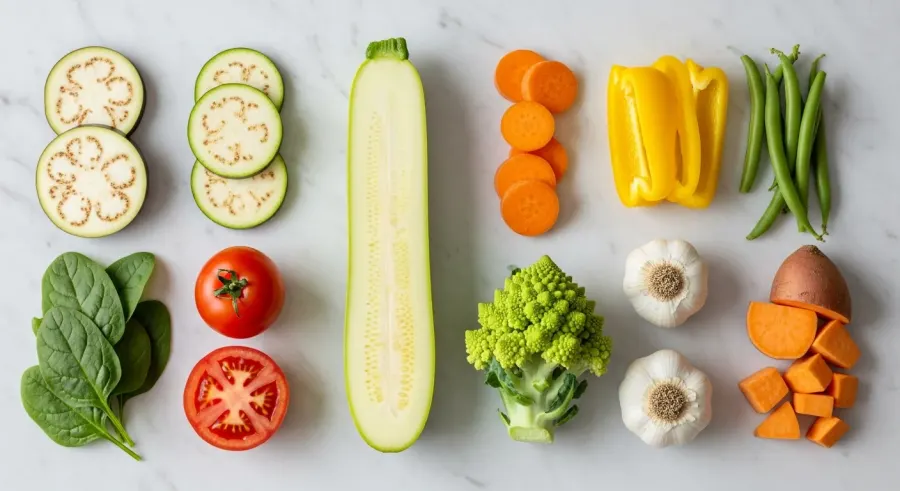
In Short
Yellow squash is the only true universal 1:1 substitute, while carrots and eggplant step in beautifully for baking and casseroles respectively. Finding the right swap depends entirely on matching moisture and heat tolerance (and why you should never cook cucumbers is explained below).
I learned the hard way that you can't just toss any green vegetable into a skillet and expect it to behave like zucchini. It has a very specific moisture content—hovering around 94% water—that melts beautifully into breads but turns to absolute mush if you look at it wrong. Finding the right swap isn't about matching the color, it is entirely about matching the job. Whether you are making a quick stir-fry, a heavy lasagna, or a spiced loaf of bread, you likely already have something in your crisper drawer that will work. The trick is knowing how heat and salt will interact with the cellular structure of your backup vegetable. Some substitutes need to be sweated out with salt first. Others need a longer cooking time to soften up. And one of them should never, under any circumstances, touch a hot frying pan. Knowing which vegetable to grab comes down to understanding the recipe's end goal. We have broken down the best options below, ranked by how closely they mimic the real thing.
Yellow Squash Is Basically an Identical Twin
If you close your eyes, you probably couldn't tell the difference between these two summer squashes. They both belong to the exact same botanical species (Cucurbita pepo). The main variance is literally just the pigment in the skin and the slight bulbous shape of the yellow squash's neck.
Because they are so genetically similar, they behave identically under heat. They both have thin, edible skins, tender flesh, and a high moisture content that releases quickly when cooked in a pan.
You can swap yellow squash for zucchini in a strict 1:1 ratio for any application.
From a nutritional standpoint, the swap is seamless. According to the USDA, a 100-gram serving of yellow squash carries about 16 calories, 3.4 grams of carbohydrates, 1 gram of protein, and 0.2 grams of fat. Zucchini sits at roughly 17 calories and 3.1 grams of carbs for that same amount. They are, for all culinary intents and purposes, the exact same vegetable.
The flavor difference is exceptionally minor. Yellow squash tends to be just a tiny bit sweeter and sometimes has slightly larger seeds if left to grow too long on the vine.
Best uses: Sautéing, roasting, grilling, and raw salads. It works beautifully for zoodles if you have a spiralizer.
When to skip it: There really isn't a failure case here, unless you are baking a zucchini bread and specifically want those little green flecks in the crumb for aesthetic reasons. Otherwise, it is a perfect match.
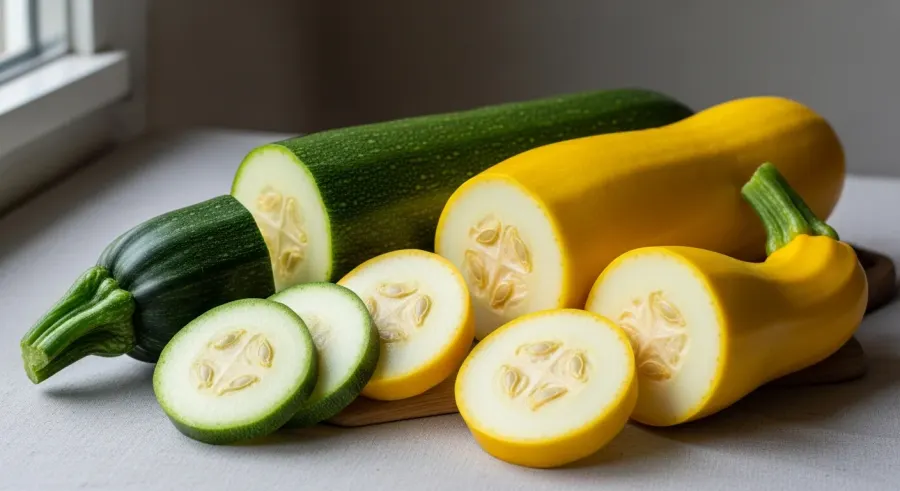
Eggplant Makes a Better Lasagna Anyway
I actually prefer using eggplant in heavy Italian dishes. While it looks completely different from a green summer squash, the way it behaves in a hot oven makes it an excellent replacement in casseroles.
Eggplant has a spongy, porous flesh. While zucchini tends to release water and shrink when cooked, eggplant acts like a sponge, absorbing olive oil, tomato sauce, and garlic. This makes it a structurally sound choice for layered dishes where you need the vegetable to hold its shape while taking on the flavors of the dish.
Use a 1:1 ratio by volume, but you need to manage the moisture first.
Raw eggplant is a bit more substantial. The USDA logs 100 grams at 25 calories, 5.9 grams of carbs, 1 gram of protein, and 0.2 grams of fat.
To get the best results, slice the eggplant, salt it heavily, and let it sit for twenty minutes. This draws out the bitter liquid and slightly collapses the spongy cells so it doesn't drink up all the oil in your pan.
The flavor is earthy, savory, and slightly bitter if not salted, lacking the grassy freshness of zucchini.
Best uses: Lasagna, parmigiana, heavy casseroles, and grilling over charcoal.
When to skip it: Do not attempt to grate an eggplant and fold it into a muffin batter. It will not melt into the crumb, and the savory, earthy notes will completely clash with sugar and cinnamon.
Cucumbers Are Only for Raw Recipes
Have you ever accidentally cooked a cucumber thinking it was a zucchini? It is a common mistake that ruins dinner.
Cucumbers and zucchini look like twins in the produce aisle, but their internal structure is vastly different. The water content in a cucumber is extreme. When heated, the cell walls completely rupture, turning the vegetable into a weeping, translucent mess.
However, if your recipe calls for raw zucchini, cucumber is the ultimate replacement. It provides the exact same fresh, hydrating crunch.
You can use a strict 1:1 ratio for any raw preparation.
The USDA reports 100 grams of cucumber contains just 15 calories, 3.6 grams of carbs, 0.7 grams of protein, and 0.1 grams of fat. More importantly, it is over 95% water.
The flavor is much more distinct than zucchini. Cucumber has a bright, almost melon-like profile, whereas zucchini is very neutral and grassy. You will notice the taste difference, but in a fresh salad, that is usually a welcome upgrade.
Best uses: Cold pasta salads, crudité platters, or sliced into thin ribbons with a vegetable peeler to replace raw zucchini ribbons.
When to skip it: The failure case is any application involving heat. Never sauté, bake, roast, or grill a cucumber.
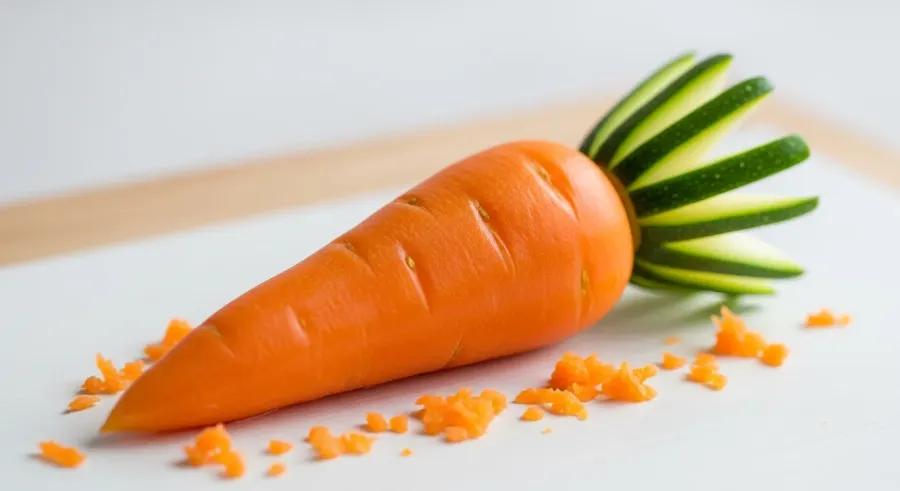
Carrots Will Save Your Baking Projects
Carrots contain roughly 88 grams of water per 100-gram serving, whereas zucchini hovers around 94 grams (USDA). This slight dip in moisture makes carrots a highly reliable substitute when you are turning on the oven.
Baking recipes like zucchini bread or muffins rely on the grated vegetable to provide ambient moisture to the crumb without making the batter too wet. Carrots perform this exact same chemical function—which is why carrot cake is so universally loved.
Substitute grated carrots for grated zucchini in a 1:1 ratio, measuring them lightly packed in your measuring cup.
Nutritionally, carrots bring more natural sugar to the table. A 100-gram serving gives you 41 calories, 9.6 grams of carbs, 0.9 grams of protein, and 0.2 grams of fat (USDA).
That extra sugar aids in browning and caramelization, giving your baked goods a beautiful dark crust. The flavor will be sweeter and earthier, but the texture of the bread will be practically identical.
Best uses: Sweet baking (muffins, breads, cakes) and dense vegetable fritters.
When to skip it: Avoid using carrots as a direct swap in fast, savory sautés where you want a neutral green vegetable. The sweetness and dense crunch will overpower a delicate garlic and olive oil pasta.
Chayote Holds Its Shape in a Stir-Fry
This pale green, pear-shaped vegetable is a staple in Latin American and Asian cuisines, and it deserves a spot in your kitchen rotation.
Chayote works exceptionally well because it maintains a firm, crisp texture under high heat. Zucchini has a bad habit of turning to mush in a hot wok if you look away for ten seconds. Chayote solves that problem by keeping its structural integrity no matter how fiercely you cook it.
You can swap it in a 1:1 ratio. You will need to peel the tough outer skin and slice it in half to remove the flat, soft seed in the center before chopping.
A 100-gram serving provides 19 calories, 4.5 grams of carbs, 0.8 grams of protein, and 0.1 grams of fat, plus a solid 1.7 grams of dietary fiber (USDA).
The flavor is extremely mild. It tastes a bit like a cross between a cucumber and a very green apple, without any of the sweetness. Because it is a blank canvas, it absorbs soy sauce, ginger, and garlic beautifully.
Best uses: High-heat stir-fries, curries, and brothy soups where you want a vegetable to maintain some bite.
When to skip it: Do not try to spiralize chayote into zoodles. The flesh is too firm and brittle, and it will snap rather than forming long, continuous noodles.
Pattypan Squash Brings a Nutty Flavor
You know those little vegetables that look like flying saucers at the farmers market? They are actually brilliant functional substitutes.
Pattypan is just another variety of summer squash. The skin is fully edible, and the interior flesh is slightly denser and less watery than a standard green zucchini.
You can use it in a 1:1 ratio by weight or chopped volume.
You can expect about 18 calories, 3.8 grams of carbs, 1.2 grams of protein, and 0.2 grams of fat per 100 grams (USDA), keeping it right in line with its cylindrical cousins.
The flavor is a bit nuttier and more buttery, which adds a nice depth to simple weeknight dinners. You do not need to peel them; just trim the stem and the rough blossom end.
Best uses: Roasting whole (if they are small enough), dicing for rustic stews, or slicing into thick wedges for the grill.
When to skip it: Layering in a lasagna. The scalloped edges and awkward shape make it annoying to slice into wide, flat planks for stacking.
Butternut Squash Works if You Adjust the Time
Sometimes a soup recipe calls for a zucchini at the very end, but you only have winter squash sitting on the counter.
While they come from the same broader botanical family, winter squashes like butternut are much denser, starchier, and sweeter. They provide excellent body to heavy winter meals, melting into broths to thicken them naturally.
Use a 1:1 ratio by chopped volume.
Because it is a denser vegetable, 100 grams of raw butternut delivers 45 calories, 11.7 grams of carbs, 1 gram of protein, and 0.1 grams of fat (USDA). It is significantly heavier and more filling than a summer squash.
The flavor is distinctly autumnal and sweet, which will slightly alter the profile of your dish. More importantly, the cooking time is vastly different.
Best uses: Pureed soups, hearty stews, and slow roasting.
When to skip it: Quick weeknight skillet meals. Zucchini softens in four minutes. Butternut squash needs twenty to thirty minutes to become tender. If you throw diced butternut into a fast sauté, you will end up eating hard, raw squash.
Bottom Line
Cooking is mostly about understanding how water and heat interact. Once you realize that zucchini is essentially just a sponge made of water and mild green flavor, replacing it becomes a lot less intimidating. You don't need a special trip to the store. You just need to look at what you are making and decide if you need crunch, moisture, or bulk. A dense winter stew can handle the heavy sweetness of butternut. A delicate muffin needs the ambient moisture of a carrot. And a fast weeknight sauté just needs a yellow squash. The next time you find yourself missing an ingredient, take a second to look at the other vegetables in your fridge. Chances are, one of them is ready to do the exact same job.