In Short
Eggplant is a culinary sponge with a naturally savory, slightly bitter baseline that pairs best with acidic, fat-heavy, or sweet-tart counterparts. Why it bonds so effortlessly with lamb, tomatoes, and even dark chocolate (yes, really) comes down to some fascinating food science below.
Eggplant doesn't just sit peacefully next to other ingredients on a plate; it actively absorbs, amplifies, and occasionally fights them. Once you understand the basic biochemistry of its spongy texture and slightly bitter notes, figuring out what to pair with it becomes entirely intuitive. Whether you are dealing with a quick weeknight sauté or a slow weekend roast, matching this vegetable with the right fats and acids changes the entire profile of the dish.
Tomatoes Bring The Missing Acid
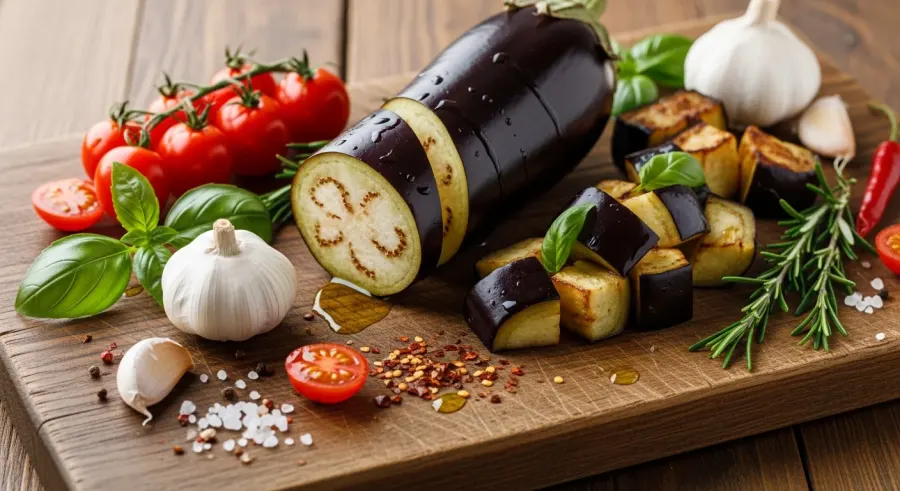
Ever wonder why almost every Mediterranean culture has some version of an eggplant and tomato stew? It comes down to structural balance. Raw eggplant is largely composed of microscopic air pockets, known as parenchyma tissue, making it a famous culinary sponge. When you cook it in oil, it drinks up the fat, which can make the final dish feel quite heavy on the palate.
Tomatoes bring a necessary sharp contrast. The citric and malic acids in tomatoes cut right through that absorbed fat, brightening the entire dish. Because both are members of the nightshade family, they share some underlying grassy, volatile compounds like hexanal, meaning their flavors align perfectly without clashing. As the tomatoes break down in the pan, their juices combine with whatever oil the eggplant has released, creating a natural emulsion that coats every bite.
This works beautifully for hearty stews or braises, but skip the tomato if you want a crispy, deep-fried eggplant dish—the excess moisture will turn your carefully crafted crust soggy in seconds. A simple approach involves sautéing diced eggplant until browned, then folding in crushed tomatoes, garlic, and olive oil for a quick stovetop side dish.
Why Lamb Works So Well
If you are cooking with lamb, eggplant should be somewhere nearby. The two ingredients are biochemical soulmates.
When you roast or char eggplant over an open flame, the high heat causes the lignin in the plant's skin to break down. This thermal degradation produces volatile phenols like guaiacol—the exact same chemical compound responsible for the smell of woodsmoke. Lamb is a deeply earthy, fat-rich meat that thrives alongside smoky flavors.
As the lamb fat renders out during cooking, it drips into the porous flesh of the vegetable. The plant's natural glutamic acid also binds with the lamb's savory profile, creating a dish that feels far more complex than the sum of its parts. Alternating chunks of lamb shoulder and eggplant on a skewer, brushed with olive oil and grilled over high heat, allows those rendering fats to move straight into the vegetable.
Tahini and Walnuts Fix The Bitterness
Raw eggplant carries a subtle, earthy bitterness that catches right at the back of your throat. This comes primarily from chlorogenic acid, a powerful phenolic compound found in the plant's flesh that functions as a natural defense mechanism while it grows.
Instead of trying to mask that bitterness with heavy doses of sugar, you can neutralize it with astringency and fat. Walnuts and tahini (ground sesame paste) both contain heavy, coating fats that literally blanket the taste receptors on your tongue, muting the perception of those bitter tannins. Their natural nuttiness complements the earthy side of the chlorogenic acid rather than fighting it.
This pairing shines in dips, purees, and stuffed rolls, but it can feel overly heavy and cloying if you try tossing it with a delicate pasta. Classic baba ganoush relies on this exact principle, blending the flesh of one charred eggplant with a few spoonfuls of tahini, lemon juice, and a clove of garlic to achieve a smooth, perfectly balanced dip.
Miso Paste Multiplies The Savory Notes
A single spoonful of miso paste can completely change how eggplant behaves in a pan.
To understand this, look at its baseline. According to USDA FoodData Central, a 100g serving of raw eggplant contains 25 calories, 1g of protein, 0.2g of total fat, 5.9g of carbohydrates, 3g of fiber, 3.5g of sugar, and 2mg of sodium. It is a very lean canvas on its own. But it contains naturally occurring nucleotides, specifically guanylate.
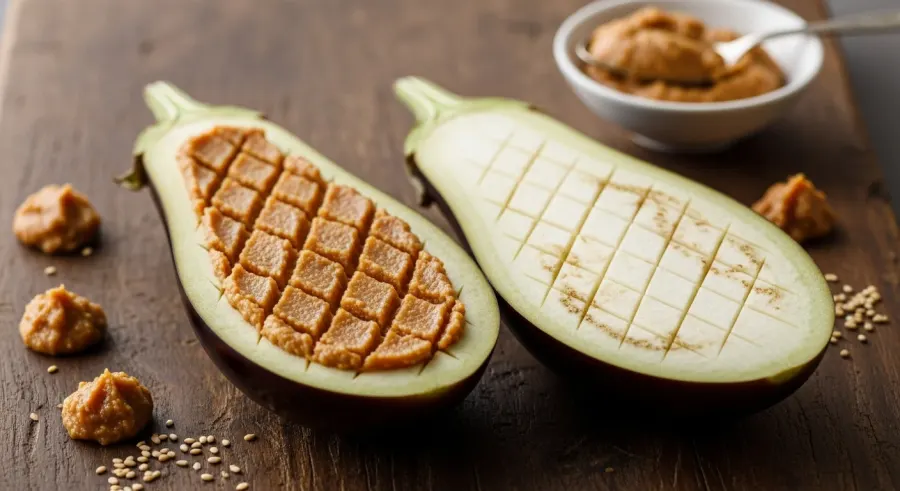
When these plant compounds meet the high levels of glutamate in fermented miso or soy sauce, they trigger a phenomenon known as umami synergy. The savory taste receptors on your tongue don't just add the two compounds together; they perceive the combination as exponentially meatier than either ingredient on its own. This works brilliantly for glazed, broiled dishes where the sugars in the miso can caramelize, but skip this pairing if you are making a delicate, clear broth—the aggressive fermented notes will overpower the vegetable. In the Japanese dish Nasu Dengaku, the flesh is scored in a crosshatch pattern, brushed with a mix of white miso and mirin, and broiled until bubbling.
A Drizzle of Pomegranate or Honey
Sometimes you need to pull this vegetable out of its heavy, savory comfort zone. Because those spongy cells absorb so much oil during the cooking process—whether you are frying, roasting, or sautéing—the resulting texture and mouthfeel can sometimes feel overly dense.
A sharp spike of sugar and acid jolts the palate awake. Pomegranate molasses, fresh pomegranate seeds, or even a light drizzle of high-quality honey introduces a sweet-tart contrast that cuts right through the richness. The brain craves contrast in heavy foods, and the sugars help highlight the natural, very subtle sweetness of the eggplant flesh that usually gets buried under heavy handfuls of salt and garlic.
Roasting half-moons of eggplant in a hot oven and finishing them with a drizzle of pomegranate molasses and fresh mint leaves provides a bright, acidic finish that keeps the palate from getting fatigued.
Wait, Dark Chocolate?
In the Campania region of southern Italy, specifically around the Amalfi Coast, pairing this purple vegetable with chocolate is not a modern chef's gimmick. It is a centuries-old tradition.
It sounds unusual until you look closely at the flavor science. Both cocoa and fried eggplant share earthy, roasted aroma compounds called pyrazines, which develop during high-heat cooking and roasting. When you fry the vegetable in oil, its natural sugars caramelize and its slightly bitter notes align beautifully with the dark, fruity astringency of the chocolate.
The shared pyrazines bridge the gap on your palate, making the transition from a savory vegetable to a sweet dessert surprisingly seamless. The traditional dessert Melanzane al Cioccolato features thin, fried slices layered with a rich, dark chocolate sauce, sweetened ricotta cheese, and candied orange peel.
Bottom Line
When you stop looking at eggplant as a standalone vegetable and start treating it as a canvas for flavor and fat, cooking with it becomes second nature. You don't have to memorize a rigid list of recipes. You just need to balance its heavy, savory tendencies with something bright, rich, or unexpectedly sweet to make it work.