In Short
Most modern eggplants aren't actually bitter, but when they are, it is due to high levels of chlorogenic acid and mature seeds full of defensive plant alkaloids. The popular culinary trick of salting doesn't actually draw out the bitter juices—it simply collapses the spongy cells and masks the bitterness on your tongue.
I used to brace myself whenever I cooked eggplant, meticulously slicing, salting, and pressing the rounds just to banish some phantom bitter flavor. Then one night, rushing to get dinner on the table, I skipped the entire hour-long ritual. The dish tasted completely fine. It turns out we treat this particular nightshade like it's hiding a dark secret, mostly because recipes written decades ago told us we had to. The actual chemistry happening inside that glossy purple skin is fascinating, and much of what we believe about taming its flavor is rooted in pure folklore.
The Ghost of Eggplants Past
We are essentially cooking with a vegetable that no longer exists. If you open a mid-twentieth-century cookbook, the authors treat eggplant like a hostile ingredient that needs to be subdued. You were instructed to sweat it, salt it, press it under heavy plates, and rinse it just to make it palatable. The reality is that agricultural science has spent the last fifty years breeding the bitterness right out of commercial varieties.
To understand why it was ever bitter in the first place, you have to look at its origins. Eggplants are native to tropical regions in South and East Asia. In the wild, they had to defend themselves against fungal infections, hungry insects, and grazing animals. Their defense mechanism was chemical warfare. They produced high levels of steroidal glycoalkaloids, which taste sharp and astringent to mammals. It was nature's way of hanging a bright purple warning sign on the vine.
When the vegetable first made its way to Europe centuries ago, it was viewed with deep suspicion. Botanists in the sixteenth century even called it "Mala Insana," which translates to "mad apple," reflecting a genuine fear that eating it would cause insanity due to its nightshade family connections. Early varieties grown in the United States by figures like Thomas Jefferson were often treated merely as ornamental curiosities. Today's grocery store globe eggplants, long Japanese varieties, and striped heirloom hybrids are genetic shadows of those defensive ancestors. Modern commercial breeding programs have specifically selected for low-alkaloid profiles. If you buy a firm, glossy eggplant from a modern supermarket today, you are battling a ghost. The intense bitterness that your grandmother's cookbooks warned you about has mostly been erased from the DNA of the plant.
No, Your Eggplant Doesn't Have a Gender
Next time you are in the produce aisle, watch closely and you might spot someone inspecting the bottom of an eggplant. They are looking for a specific shape in the dimple at the blossom end—either a round dot or a long dash. A highly persistent internet rumor claims that eggplants with a round dimple are "male," meaning they contain fewer seeds and taste sweeter.
Botanically speaking, this is complete fiction. Eggplant fruits do not have genders. The plant itself produces perfect flowers, which means a single blossom contains both the male reproductive organ (the stamen) and the female reproductive organ (the pistil). The fleshy purple vegetable we eat develops entirely from the female ovary after pollination has occurred. Because the fruit is just a swollen ovary holding seeds, applying human gender concepts to it simply doesn't map to how plant biology works.
The shape of the dimple is nothing more than a cosmetic variation, formed simply by the scar left behind when the flower detached from the fruit as it grew. It is the botanical equivalent of a human having a widow's peak or attached earlobes. A dash-shaped dimple does not indicate a "female" fruit, nor does it guarantee a dense, bitter core of seeds. The actual number of seeds inside depends on the specific variety of the plant, the environmental conditions during pollination, and how long the fruit was left on the vine. Sorting through a bin of produce based on dimple shape is a great way to skip over perfectly good vegetables while stubbornly hunting for a biological impossibility.
The Chemistry of the Brown Slices
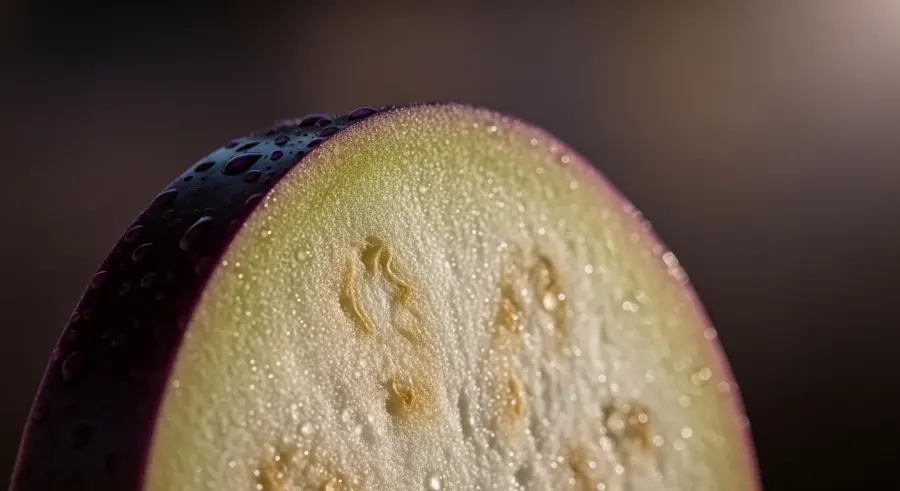
Cut an eggplant open and walk away from the cutting board for ten minutes. When you come back, the pale, spongy interior will have started to turn a muddy, rusty brown. That rapid discoloration and the sharp, astringent flavor that sometimes accompanies it share the exact same chemical source.
The dominant phenolic compound inside the plant's tissue is chlorogenic acid. According to a 2021 review in the MDPI journal on the biochemical composition of eggplants, this acid is actually a highly beneficial antioxidant and the primary driver of the fruit's health properties. But it is also highly reactive. When your knife slices through the cell walls, it exposes the chlorogenic acid to oxygen in the air and to a plant enzyme called polyphenol oxidase. They react instantly, creating those dark brown pigments on the surface.
Chlorogenic acid is inherently bitter. In a young, freshly harvested vegetable, the concentration is low enough to provide a pleasant, earthy complexity. But the plant uses this acid as a stress response. If the eggplant experienced a severe heat wave, an unseasonal cold snap, or drought while it was growing, it panics. It pumps out more of these defensive phenolic compounds to protect itself from the harsh environment. That is exactly when the flavor crosses the line from complex to unpleasant. This is why late-summer produce from a dry, hot farm might have a much sharper bite than the exact same variety grown during a mild, rainy spring.
What Salting Actually Does
If modern varieties are mostly mild, why do chefs and home cooks still religiously salt their slices? The classic culinary advice claims that a heavy coating of kosher salt draws out the bitter, brown juices. This is a complete misunderstanding of the physics happening on your countertop.
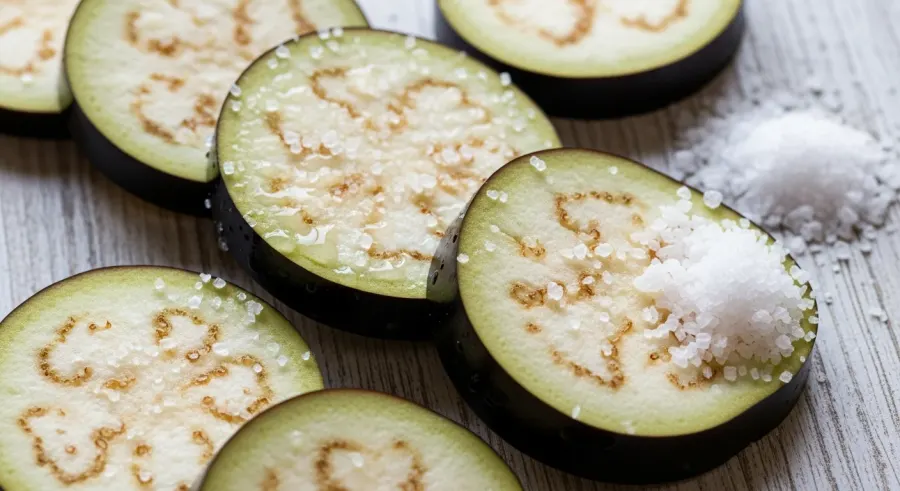
When you coat a slice in salt, a process called osmosis begins. The salt pulls liquid out of the plant cells to balance the solute concentration. Notice that it pulls out pure water, not bitterness. The complex alkaloid compounds are large molecules that largely remain trapped behind in the flesh. That puddle of brown liquid at the bottom of your colander is mostly just oxidized water.
However, the salting ritual achieves two completely different things that genuinely make the final dish taste better. First, sodium is a powerful sensory masking agent. When salt hits your tongue, it actively interferes with the specific taste receptors that register bitterness. The eggplant doesn't actually contain less chlorogenic acid after salting; your brain simply stops noticing it.
Second, pulling water out of the cells causes the spongy physical structure of the flesh to collapse. Unsalted eggplant is basically a matrix of microscopic air pockets. If you fry it raw, it acts exactly like a dry kitchen sponge, sucking up a massive amount of cooking oil before turning greasy and heavy. Salted eggplant has already collapsed those air cells. It hits the hot pan dense and wet, meaning it absorbs a fraction of the oil and fries up creamy instead of heavy. If you are roasting or grilling, you can usually skip the salt entirely. But if you are frying, the salt trick is strictly a textural maneuver.
The Seed Trap and Vine Stress
Bitterness is highly concentrated within the seeds themselves. If you have ever cut into a large globe eggplant and found a dense network of dark, hard, prominent seeds instead of pale, almost invisible ones, you have found the real source of the sharp flavor.
We eat eggplants when they are botanically immature. The agricultural goal is to harvest them while the flesh is tender and the seeds are soft and undeveloped. If a farmer leaves the fruit on the vine too long, the plant shifts its energy from expanding the fleshy tissue to maturing its seeds for reproduction. As those seeds harden and turn brown, they accumulate much higher levels of solasonine and other defensive alkaloids to protect the next generation of plants.
An overripe eggplant gives itself away before you even cut it. It will feel noticeably lightweight for its size because the spongy flesh is beginning to dry out inside. The glossy, tight skin will start to look dull and slightly wrinkled. You cannot fix an overripe, seedy eggplant with an elaborate salt water soak because the alkaloids in the mature seeds are simply too developed. If you slice into one and see mature brown seeds, your best option is physical removal. Cut the seedy core away with a paring knife, use the firm outer flesh for your stew, and compost the center. The sharp flavor isn't a permanent flaw in the vegetable; it just means the biological clock ran out.
The Skin's Defensive Barrier
That glossy, deep purple exterior isn't just for visual appeal. The skin is the plant's first physical line of defense against the outside world, and naturally, it holds a high concentration of chemical armor to ward off pests.
The striking purple color comes from a specific anthocyanin called nasunin, which is heavily studied for its antioxidant properties. But right alongside that pigment in the epidermal layer are other defensive phenolic compounds that can taste highly astringent. For a young, small Japanese or Fairy Tale eggplant, the skin is so thin that the bitter load is entirely negligible. You can chop, cook, and eat them whole without a second thought.
But on a massive, fully mature globe eggplant, the skin grows thick and leathery, carrying a distinctly bitter edge that can ruin a delicate sauce. If you find yourself with an older, larger vegetable, the quickest way to guarantee a milder flavor is taking a vegetable peeler to the outside. Peeling physically removes the highest density of these astringent compounds in one quick motion. You lose the structural integrity that the skin provides during cooking, but you instantly solve the flavor problem without waiting an hour for salt to do its work.
Bottom Line
Bitterness was never a flaw in the eggplant. For thousands of years, it was a highly effective survival strategy that kept the fruit safe in the wild until its seeds were ready. We have spent decades breeding that chemical armor out of existence, replacing it with the mild, creamy vegetable we buy today. So the next time you slice into one, you can probably skip the heavy coating of salt. The battle against its bitter edge was won a long time ago.