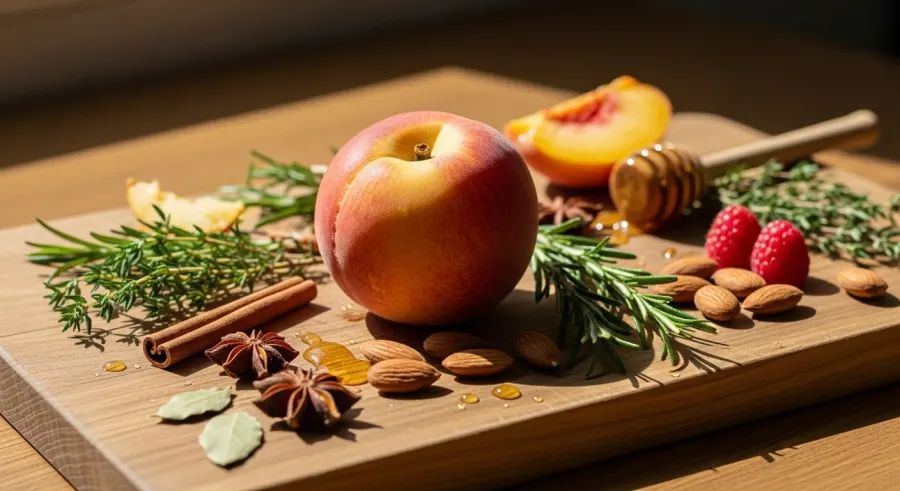
In Short
Pork, bourbon, blue cheese, and basil all pair exceptionally well with peaches. Why a moldy cheese and a smoky whiskey actually match the fruit's chemical profile is below.
You slice a ripe peach, eat a wedge over the sink, and wonder what else you could do with the rest of the basket. Most of us default to cobblers or eating them plain. The chemical makeup of a peach—packed with specific aromatic compounds and a surprisingly sharp acidity—makes it a highly versatile ingredient. If you are looking for foods that pair with peach, it holds its own next to heavy meats and pungent cheeses.
The Dairy Trick That Actually Works
When figuring out what goes well with peach, cream and stone fruit is a classic combination. But the biochemical reason it tastes so harmonious is a bit of a marvel. Peaches naturally produce a class of organic compounds called lactones. Specifically, gamma-decalactone is the primary molecule responsible for that distinct, velvety aroma you immediately recognize when walking past a farm stand. This compound is heavily concentrated in yellow varieties, which tend to have a more robust flavor profile compared to the floral subtlety of white flesh fruit.
Lactones are inherently creamy. Variations of these exact same molecules are found in milk, butter, and heavy cream. When you combine fresh fruit with dairy, you are stacking identical flavor families on top of each other. The brain registers the similarities and interprets the combination as exceptionally rich. Adding vanilla takes it further. The vanillin compound actually masks any harsh, metallic edges the fruit's natural lactones might carry. It smooths out the entire bite.
If you want to test this at home, slice two medium yellow peaches. Fold them into one cup of heavy cream that has been whipped with a teaspoon of pure vanilla extract. Serve it immediately without any cooking. The fat in the cream coats the tongue, trapping the volatile aromas of the fruit so the flavor lasts long after you finish chewing.
Pork and the Science of Smoke
Grilling a peach next to a pork chop seems like a modern restaurant trend. Really, it is rooted in basic thermal dynamics. When pork hits a hot skillet or grill grate around 300°F (150°C), amino acids and reducing sugars undergo the Maillard reaction. This chemical process produces hundreds of new flavor compounds, resulting in the savory, browned crust we associate with roasted meats.
Peaches hold their own against this heavy profile because of their high natural sugar content and acidity. A typical peach has a pH hovering between 3.4 and 4.0. This mild acid gently cuts through the dense fat of the pork, acting as a palate cleanser between bites. It also acts as a natural tenderizer if the fruit is pureed and used as a marinade beforehand. If you cook over an open flame or use smoked salt, the sticky surface of the fruit easily absorbs guaiacol. This phenolic compound found in wood smoke mirrors the savory depth of the meat, creating a bridge between the sweet fruit and the salty pork.
You can try searing two thick-cut pork chops in a cast-iron skillet for five minutes per side. Once you remove the meat to rest, drop one diced peach into the rendered pork fat left in the pan. Let it blister for three to four minutes until the natural sugars begin to caramelize and turn deeply golden. Spoon the resulting pan sauce directly over the chops.
Wait, Bourbon is a Perfect Match?
Whiskey and summer fruit might sound cloying. Yet they share a deep structural affinity. During the barrel-aging process, bourbon extracts chemical compounds from charred oak barrels. These molecules translate on the human palate as vanilla, toasted spice, and dark caramel.
A raw peach contains over 100 volatile aroma compounds. The mix is primarily esters and lactones. Instead of fighting the heavy, woody notes of the spirit, these fruity esters slide right into the empty aromatic spaces left by the bourbon. The result is a layered drink where the liquor retains its structural heat and oakiness, but with a much softer, rounded finish. Alcohol is also an exceptional solvent. It extracts essential oils and flavors from organic matter much faster than water or sugar syrups can. This works beautifully with bourbon or rye, but skip peaty scotches—the heavy iodine and smoke will completely overpower the delicate lactones of the fruit.
For a simple application, muddle half a peeled peach in the bottom of a heavy glass until it breaks down into a rough puree. Pour in two ounces of your favorite bourbon, add two dashes of Angostura bitters, and stir gently over one large ice cube for about thirty seconds. The alcohol will immediately pull the fruit's aromatic compounds into the liquid, creating a complex cocktail with minimal ingredients.
The Tomato and Basil Connection
Pairing a sweet dessert fruit with basil and tomatoes can feel counterintuitive. That changes once you look at their shared botanical traits. Basil contains high levels of eugenol, an aromatic phenol that gives the herb its slightly spicy, clove-like warmth. Peaches often carry faint, warm undertones beneath their primary sweetness that bridge perfectly to that eugenol.
Tomatoes, meanwhile, are botanically fruits that balance high water content with sharp acidity. When you combine them with a ripe peach, the physical textures blend seamlessly. Both have a tender, fleshy structure that gives way under light pressure. The naturally occurring fructose in the stone fruit mellows the sharp, acidic bite of a raw summer tomato without requiring any added sugar or heavy dressings. It is an exercise in balancing acid with sugar using only whole foods.
You can build a raw, refreshing salad using two large, chopped peaches, two quartered heirloom tomatoes, and a quarter cup of torn fresh basil leaves. Toss them together in a wide bowl with a heavy splash of quality olive oil and a pinch of flaky sea salt. Give the mixture ten minutes to sit on the counter. The salt draws the natural juices out of both the tomatoes and the peaches, creating a natural vinaigrette right in the bowl.
Blue Cheese (The Unexpected Winner)
Strong, pungent cheeses often overwhelm delicate ingredients. This usually leads to dishes that taste entirely like dairy and nothing else. Blue cheese is aggressive, salty, and sharp, yet it pairs brilliantly with yellow peaches.
The mechanics behind this combination rely heavily on contrast and fat-binding. The intense saltiness of the mold-ripened cheese amplifies our tongue's perception of the fruit's natural sweetness. This is the exact same principle behind putting coarse sea salt on a dark chocolate tart. Simultaneously, the dense butterfat in the blue cheese physically coats the inside of your mouth. Volatile aroma compounds in the peach are fat-soluble. This means the cheese physically traps the peach flavor on your palate, making the taste linger significantly longer than if you ate a slice of fruit by itself.
A great way to serve this is to take one firm, slightly under-ripe peach and cut it into thick wedges. Press a small crumble of gorgonzola or roquefort into the center of each slice. Roast them on a parchment-lined baking sheet at 400°F (200°C) for about five minutes. You just want the cheese to soften slightly and the fruit to warm through, releasing its aromatics into the air. This method works perfectly for firm fruit that holds its shape. Skip this if your peaches are soft and bruised, as the heat will turn them into mush before the cheese even begins to melt.
The Botanical Cousin Connection
It is no accident that almond extract and amaretto taste wonderful alongside stone fruit. Peaches and almonds belong to the exact same botanical genus, Prunus. If you have ever cracked open the hard, woody pit of a peach, you might have noticed the small kernel inside smells remarkably like bitter almond.
This happens because both plants share a chemical compound called benzaldehyde. This molecule is responsible for the distinct, slightly cherry-like marzipan flavor we associate with baked goods. When you combine the flesh of the fruit with toasted nuts or almond liqueur, you are reinforcing a peach flavor profile that the fruit already possesses in its genetic code. It brings out a deeper, almost baked-cherry resonance in the peach.
For a fast dessert, you can slice two peaches in half and remove the pits. Place them cut-side up in a baking dish. Sprinkle with a quarter cup of toasted sliced almonds, and drizzle a tablespoon of amaretto liqueur over the top. Bake at 350°F (175°C) for fifteen minutes until the fruit collapses slightly.
Bringing the Heat With Ginger
Fresh ginger root provides a distinctly sharp, pungent heat that cuts through the heavy sweetness of summer produce. The chemical responsible for this sensation is gingerol. Unlike capsaicin in chili peppers, gingerol provides a warming, aromatic spice that hits the back of the throat rather than burning the tongue.
When paired with the cooling, high-water content of a peach, you create a pleasant sensory contrast. The physical temperature of the fruit cools the palate while the gingerol provides a mild, chemical heat. Additionally, the bright, almost citrus-like zing of raw ginger lifts the heavy, velvety lactones of the fruit. This prevents dessert dishes from feeling overly dense or cloying, making it one of the most reliable peach flavor pairings on a hot afternoon.
A versatile topping for pancakes or yogurt involves peeling and grating a one-inch piece of fresh ginger. Toss it into a small saucepan with three diced peaches and a quarter cup of water. Simmer the mixture over low heat for ten minutes until it reduces into a thick, fragrant compote.
Bottom Line
A peach is a lot more structurally complex than just sugar and water. Once you understand the underlying compounds—the lactones, the mild acidity, the shared botanical traits—it becomes much easier to treat it as a flexible ingredient rather than just a dessert. A basket of fruit on the counter is just an opportunity to experiment with whatever else you have sitting in the fridge.