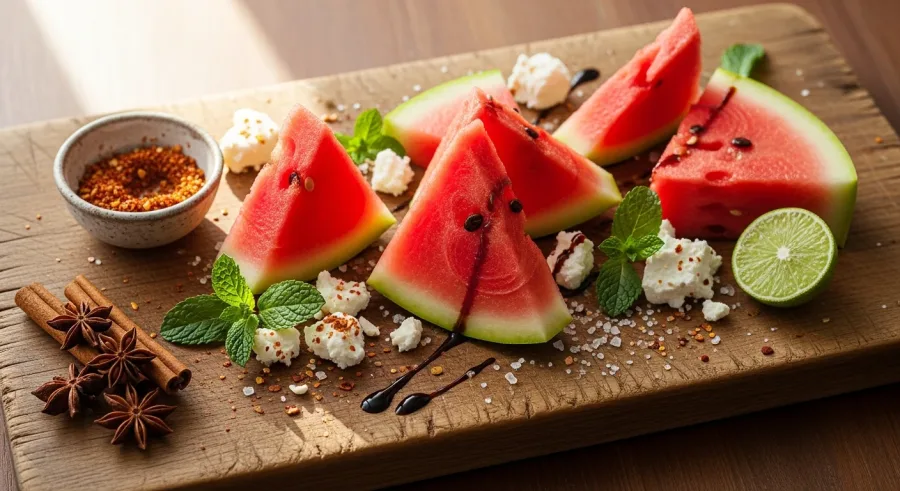
In Short
Feta and mint are just the beginning. Watermelon's high water content and specific aroma compounds make it a surprisingly brilliant match for spicy ginger, aged balsamic, and even briny seafood. The biochemical reasons why these contrasts work are detailed below.
Watermelon is essentially a beverage disguised as food, composed of roughly 92% water. Because it is so dilute and mildly sweet, figuring out what goes with watermelon requires thinking about strict contrast rather than trying to match its delicate profile. The fruit demands ingredients that actively push back against its sheer volume of liquid with heavy salt, sharp acid, or aggressive heat.
Why Feta Makes Sense
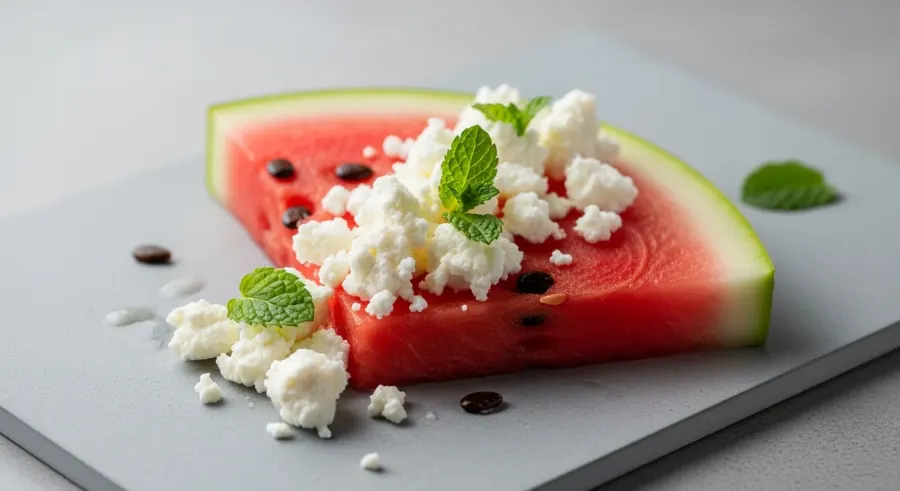
At just 30 calories and 6.2 grams of sugar per 100-gram serving (USDA FoodData Central), watermelon is a very light ingredient. It needs a heavy anchor. Feta provides that dense, salty contrast. Salt inherently amplifies our perception of sweetness by interacting with the sodium-glucose cotransporters in our taste buds, making the melon taste richer than it actually is. There is a chemical link at play, too. The fatty aldehydes present in cheeses like feta and mozzarella bridge perfectly with the green, fresh aromatic notes of the fruit.
There is also the mechanical aspect of eating them together. Feta is crumbly and relatively dry, requiring moisture to properly dissolve on the tongue and release its tangy flavor. The melon provides an instant rush of hydration, essentially creating a self-saucing effect in your mouth. You get the rich, acidic bite of the cheese followed immediately by a sweet, palate-cleansing wave of water. The rind can also be pickled to serve alongside the feta. Pickled watermelon rind has a crunch similar to cucumber, but it holds onto vinegar and spices beautifully, adding a completely different textural experience that makes use of the entire fruit.
Keeping it in the Family
Sometimes the best combinations happen within the exact same botanical family. Cucumber and watermelon both belong to the Cucurbitaceae family. They share a crisp, water-logged cellular structure that makes them feel almost identical when you bite into them. Cucumber brings a slight vegetal bitterness that grounds the sweetness and prevents the melon from feeling like candy.
Adding fresh herbs to this mix elevates the experience. Mint is the traditional choice because it introduces menthol to the palate. Menthol chemically tricks the thermal receptors in your mouth into perceiving a cold sensation. This false coldness makes the high water content of the fruit feel even more refreshing, especially on a warm afternoon. Cucumber and melon together provide essentially two different textures of water. The cucumber has a firmer, more fibrous crunch, whereas the melon fractures and bursts instantly. When you chew them together, the varying rates at which they release their juices keep the palate guessing. A thin slice of jalapeño introduced to this mix provides a tiny prick of heat that the mint and cucumber immediately cool down.
Seafood is the Real Surprise
Would you serve fruit with oysters? Raw bars often pair oysters with a watermelon mignonette, and it works flawlessly because of the intense salinity of the shellfish. Brine demands a sweet, syrupy counterbalance. The fruit acts as a palate cleanser after the rich iodine punch of an oyster or the dense flesh of crab and shrimp.
The aroma compounds play a major role here. Shellfish possesses a subtle, almost floral sweetness that aligns beautifully with the C6 and C9 alcohols—specifically (Z,Z)-3,6-nonadien-1-ol—that give the melon its signature scent. Acid-cooking seafood in lime juice (ceviche) traditionally uses mango or pineapple for sweetness, but watermelon offers a less cloying, more refreshing alternative. The delicate esters of the melon do not overpower the sweet, oceanic flavor of fresh raw shrimp or white fish. A quick ceviche of diced snapper, lime juice, red onion, and watermelon relies on the acid to denature the fish proteins while the melon softens the sharp bite of the raw onion.
The Balsamic Vinegar Trick
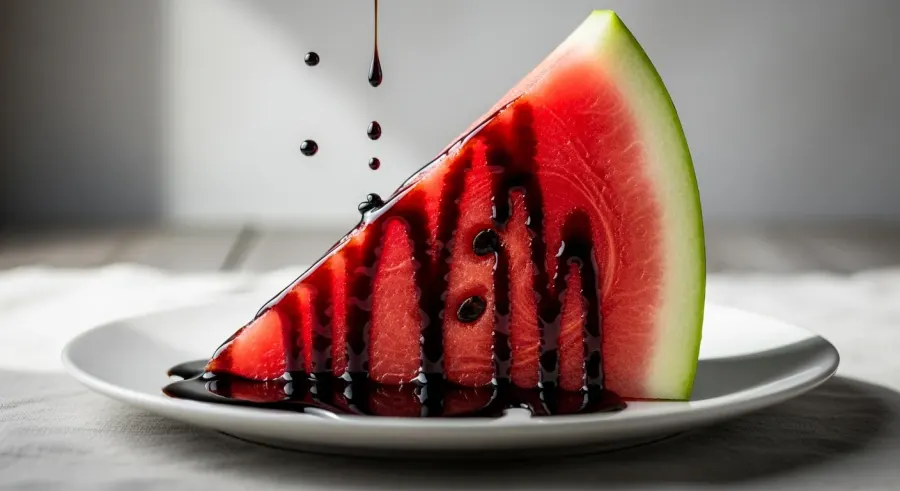
A single drip of dark, aged balsamic over a slice looks a little strange at first. Watermelon has practically zero acidity on its own, resting at a pH of around 5.2 to 5.6. It is mostly water, sugar, and trace amounts of fiber (0.4 grams per 100g, per the USDA). An aged balsamic vinegar brings complex, woody acidity that immediately cuts through the flat sweetness.
Acidity plays a crucial role in human digestion and taste perception by increasing the production of saliva. When you eat entirely sweet foods, the palate can suffer from flavor fatigue, making each subsequent bite taste a little less vibrant. Acidity from the vinegar resets the palate, ensuring the second bite tastes just as sweet as the first. True traditional balsamic vinegar is aged in wooden barrels for years, absorbing tannins that provide a dry, puckering sensation perfectly counteracting the dripping wet nature of the fruit. A standard grocery store balsamic can be transformed by simmering it slowly until the excess water evaporates, concentrating the acetic acid and sugars into a thick glaze that clings to the wet fruit.
Adding Fire to the Ice
Walking past any street fruit vendor in Mexico reveals carts piled high with spears of fruit heavily dusted with a red chili-lime seasoning. The mechanics of this pairing rely entirely on sensory confusion and temperature contrasts. Capsaicin, the active component in chili peppers, does not actually trigger taste buds. It triggers the trigeminal nerve, simulating a physical burning sensation and signaling to the brain that the mouth is on fire.
The sheer volume of liquid in the fruit rushes in right behind the spice to extinguish that fire. The high thermal capacity of water absorbs the simulated heat, creating a thrilling push-and-pull effect. Meanwhile, the citric acid from the lime powder brightens the melon's esters. The salt in the blend suppresses any lingering bitterness in the chili powder, pushing the melon's natural sugars to the forefront. This interplay of chili, lime, and salt is a masterclass in flavor balancing, essentially using the fruit as an edible, hydrating spoon for the spices.
Smoke and the Maillard Reaction
High heat changes the chemistry of this fruit in fascinating ways. When a thick slice of melon is seared over hot charcoal, the water at the immediate surface evaporates. This allows the small amount of natural sugars to undergo caramelization, while the trace proteins and amino acids trigger a mild Maillard reaction.
This browning process creates new, savory flavor compounds that mimic the charred edges of roasted vegetables or meat. To properly grill watermelon, it requires a ripping hot cast iron skillet or direct charcoal heat. You only want it on the heat for about sixty seconds per side, otherwise the cellular structure collapses entirely, turning the fruit into a mushy soup. That quick sear develops a beautiful crust without destroying the crisp interior. The smoke from the wood or charcoal adheres to the fruit's damp surface, pulling deep, savory barbecue flavors directly into the sweet flesh. Serving a slice of smoked pork with a side of lightly seared watermelon provides a stark contrast in temperature and fat content, scrubbing the palate clean after a heavy bite of meat.
Ginger Changes Everything
Fresh ginger contains a pungent, spicy compound called gingerol. When introduced to melon, this warm compound links up with the fruity, floral esters in the flesh. It gives a sharp, aromatic bite that easily cuts through the sheer volume of water, pulling the flavor profile away from simple sweetness and into something much more complex.
Because the fruit is so buoyant and light, grounding it with an earthy, spicy ingredient balances the overall experience. Ginger is a rhizome known for its sharp, volatile oils that begin to oxidize the moment they are grated. Mixing freshly grated ginger with a fat, like a high-quality extra virgin olive oil, traps those volatile compounds and stabilizes them. When this ginger-infused oil is tossed with cold melon cubes, the fat coats the tongue. The spicy, floral warmth of the ginger lingers in your mouth long after the sweet water from the fruit has washed down your throat.
Bottom Line
Pairing watermelon is mostly an exercise in restraint. Because the fruit is so delicate and heavily composed of water, aggressive techniques can easily crush its subtle aromatic notes. The most memorable combinations usually rely on just one contrasting element—whether that is a pinch of flake sea salt, a drizzle of dark acid, or the sharp bite of raw ginger—to bring the quiet sweetness forward.