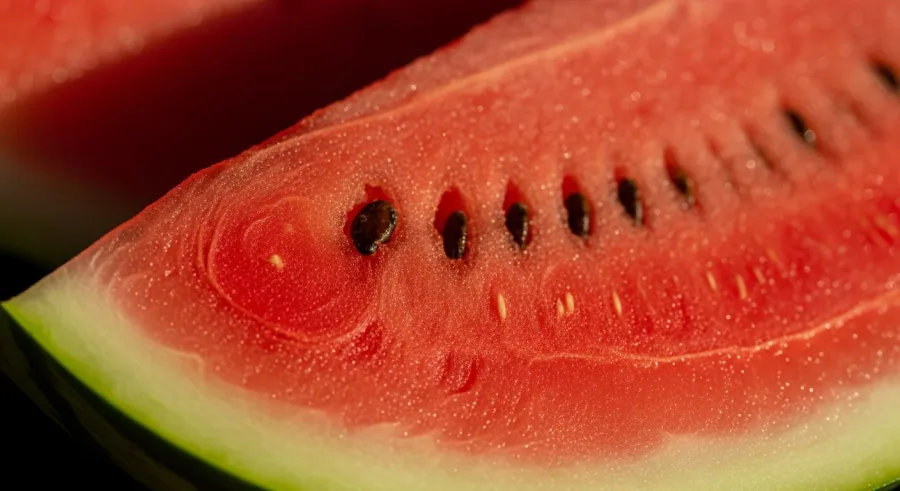
In Short
Botanically, it is a giant berry. Legally (at least in Oklahoma), it is a vegetable. The answer depends entirely on whether you ask a botanist, a farmer, or a politician. The ancient history of its bitter ancestor, the legal battles over its classification, and why farmers treat it exactly like a cucumber are below.
Most of us bite into a sweet, dripping slice of summer produce without overthinking its identity. But the moment you look past the picnic table, this plant's classification gets complicated. The battle over the question—is watermelon a fruit or vegetable—has involved botanists, agronomists, and even state lawmakers.
Wait, Is It Actually a Berry?
Botany has a funny way of ruining our assumptions about the produce aisle. To a scientist, the answer to this debate is rigid and non-negotiable. A fruit is the mature ovary of a flowering plant, and its primary biological purpose is to house and distribute seeds. By that strict biological rule, tomatoes, pumpkins, and eggplants are all classified as fruits. But watermelon takes the taxonomy a step further. It belongs to a very specific sub-category of botanical berries called a "pepo."
According to the Encyclopedia Britannica, a pepo is a fleshy fruit with a thick, leathery rind that forms from the inferior ovary of a plant. This type of fruit is the hallmark of the Cucurbitaceae family, a sprawling plant family that includes over 900 different species. If you grow luffa sponges, bitter melons, or chayote squash, you are growing pepos.
The anatomy of the plant is fascinating. A standard vine can stretch up to twenty feet across the dirt. The plant produces separate male and female flowers. The female flower contains an inferior ovary, which sits tucked beneath the yellow petals. Once a bee transfers pollen from a male flower, that tiny green ovary begins to swell, eventually expanding into the massive green orb we bring to summer barbecues.
The strict watermelon botanical definition requires it to develop exactly this way. So if someone asks, is a watermelon a berry? Structurally speaking, the answer is yes. When you sit on the porch and spit out a black seed, you are participating in the classic definition of fruit consumption. The plant relies on animals (and humans) to eat the sweet center and distribute the seeds somewhere else. It is doing the exact same biological job as a tiny wild blueberry, just scaled up to a massive size.
Why Oklahoma Made It a Vegetable
In 2007, the state of Oklahoma decided to throw out the science textbook and make their own rules. They passed House Bill 1669, a piece of legislation officially declaring the watermelon as the oklahoma state vegetable.
The push for this law came primarily from State Senator Don Barrington. He pointed out that watermelons belong to the gourd family. This makes the massive sweet fruit a direct cousin to cucumbers, pumpkins, and zucchini. Because we universally treat its direct cousins as vegetables in the kitchen, Oklahoma lawmakers argued it deserved the title.
It wasn't purely a matter of agricultural taxonomy. Barrington’s home district included the town of Rush Springs. Since 1948, Rush Springs has hosted an enormous annual watermelon festival that attracts over 20,000 visitors to a town of around 1,200 residents. The local economy relies heavily on the crop. Barrington himself had a personal connection to the festival, having won a seed-spitting contest there back in 1994.
The bill caused a massive uproar and plenty of political theater. During the debates, State Senator Nancy Riley pushed back, pointing out that her dictionary clearly defined the watermelon as a fruit. The Oklahoman newspaper even ran a poll showing that 89 percent of residents actively disagreed with classifying it as a vegetable.
Despite the backlash and the angry letters from botanists, the bill passed the House by a vote of 78-19. It cemented the watermelon's legal status as a veggie in the Sooner State. (Oklahoma already had a designated state fruit anyway, the strawberry, so this legislative maneuver ensured the Rush Springs cash crop still got a spot on the state's official symbol list).
How Farmers View the Crop
Ask someone who actually grows them, and you get a completely different perspective on the debate. In the agricultural world, classification often comes down to how a plant behaves in the dirt, rather than what it looks like on a plate.
Fruits generally grow on woody, perennial plants. You plant an apple orchard, a peach tree, or a grape vine once, and you harvest from it for decades. The plants enter a state of dormancy during the winter and come back to life in the spring. Managing a fruit crop involves years of pruning, grafting, and long-term soil planning.
Vegetables are typically herbaceous annuals. You plant the seed in the spring, the plant grows, you harvest the crop, and the plant dies with the first frost. The field is then cleared entirely, leaving bare dirt for the next season.
Watermelons fit the vegetable growth cycle perfectly. They are planted from seed every single spring, often in raised dirt rows covered in black plastic mulch to trap the heat. By the time autumn arrives, the vines are dead and cleared away. Because of this "one and done" lifecycle, farmers manage them exactly like vegetables. They use the same crop rotation schedules, soil treatments, and pest management protocols as they do for zucchini or cucumbers.
The government agrees with the farmers on this front. For statistical and economic tracking, the USDA officially classifies watermelon production under "Vegetable Crops." To an agronomist planning out field usage, the sugar content doesn't matter. It behaves like a vegetable in the soil, so it is treated like one on paper.
The Ancestor Nobody Wanted to Eat
The sweet, dripping red flesh we expect today is actually a modern human invention. If you traveled back 5,000 years to northeast Africa, you would not recognize the plant at all.
For decades, scientists debated where the plant actually originated. Some believed it came from the South African citron melon, while others pointed to the West African egusi melon. But Harry Paris, a horticulturalist at the Agricultural Research Organization in Israel, spent years tracing the plant's history through genetic clues, Egyptian tomb paintings, and ancient Hebrew texts.
Paris concluded that the true wild ancestor (sometimes called the ur-watermelon) was native to northeast Africa. It was small, pale green, hard, and exceptionally bitter. The bitterness came from a dominant genetic compound called cucurbitacin, which is toxic in high amounts and designed to deter animals from eating the wild fruit.
Why would ancient people bother growing a bitter, unpalatable melon? It was entirely for water storage. These wild melons possessed a thick rind that allowed them to be kept in the shade for months in the blistering desert heat without rotting. They acted as living, natural canteens. During dry seasons, traders and travelers would crack them open and pound the bitter flesh just to extract the hydration.
Tomb paintings in Egypt show these early watermelons being served alongside other crops, and seeds were even preserved in the tomb of King Tutankhamun around 1323 BC. Over thousands of years, early agriculturalists selectively bred the crop. They kept the seeds from rare genetic mutants that lacked the bitter compound. Slowly, generation by generation, they increased the sugar content and the red lycopene pigment until the living canteen morphed into a dessert.

The Rind Is Basically a Cucumber
What we do in the kitchen only adds layers of confusion to the classification. Most people eat the red center and throw the rest into the compost bin, treating it strictly like a sweet fruit. But historically and globally, the entire plant is utilized exactly like a savory vegetable.
The rind is thick, crisp, and completely edible. Across the American South, pickled watermelon rind has been a traditional preserve for generations. The tough green skin is peeled away, and the pale white flesh is boiled with vinegar, cloves, and sugar. If you ask me, making pickled rind is a massive amount of sticky work for a snack that mostly just tastes like a standard sweet pickle, but during the Great Depression, it was a crucial way to stretch food budgets and avoid waste.
In parts of Asia, the white rind is treated as a standard cooking vegetable. It is often peeled, sliced, and stir-fried with garlic, sesame oil, and soy sauce. When cooked this way, it softens and absorbs flavors, acting almost exactly like a summer squash or a cucumber.
Even the seeds are utilized in savory applications. In Egypt and the Middle East, the seeds are a highly popular street snack. Just like pumpkin seeds, they are roasted, heavily salted, and cracked open with the teeth. They are naturally high in magnesium and folate. You cannot roast an apple core or salt a peach pit for a midday snack. The physical structure of the plant lends itself entirely to savory, vegetable-like preparations the moment you step away from the sugary core.
Why the Taste Test Fails
Sweetness is usually the deciding factor when we load up our grocery carts. The entire reason we argue about this taxonomy is because our culinary system is based almost exclusively on flavor profiles. If it is sweet, we call it a fruit. If it is savory, we call it a vegetable.
According to the USDA FoodData Central, a 100-gram serving of raw watermelon contains about 6.2 grams of total sugars and roughly 30 calories. That sugar content naturally pushes it to the dessert menu. You serve it at the end of a barbecue, not alongside the grilled chicken.
But using sugar to define a vegetable is a heavily flawed and inconsistent system. Sweet potatoes and sugar beets are universally accepted as root vegetables, despite the fact that their sugar content is high enough to process into commercial sweeteners. Rhubarb is highly acidic and acts exactly like a leaf vegetable—which it technically is—but we bake it into pies with strawberries and treat it entirely like a fruit.
We don't struggle with the identity of corn. Corn is eaten on the cob as a vegetable, popped as a snack, and milled as a grain, and we accept its versatility without debate. Watermelon is trapped by its vibrant red color and its association with summertime treats. It sits in that strange middle ground where its biology screams gourd, but its sugar content forces it into the fruit category on our menus. The culinary definitions we use every day are completely made up, and watermelon is simply the most famous victim of this flavor-based sorting system.
When the Supreme Court Got Involved
The legal system has actually weighed in on this exact type of botanical identity crisis before, and the results explain why the grocery store labels things the way it does.
In 1893, the United States Supreme Court heard the landmark case of Nix v. Hedden. The case was specifically about tomatoes, but the legal precedent directly affects how we classify crops like watermelons today. At the time, the Tariff Act of 1883 required a 10 percent tax on imported vegetables, but fruits were allowed to be imported duty-free. John Nix, a Manhattan produce wholesaler, sued the port customs collector, arguing that his imported tomatoes were botanically fruits and should not be taxed.
Justice Horace Gray wrote the unanimous opinion for the Court. He freely admitted that tomatoes are botanically the fruit of a vine. However, he ruled against the importer anyway. Gray stated that in the "common language of the people," tomatoes are eaten with dinner, alongside meat or fish, rather than as a dessert. Therefore, for the purposes of trade and commerce, they are legally vegetables.
Watermelons flip this exact precedent on its head. Botanically, they share a family with savory gourds, and agriculturally they grow like vegetables in the soil. But the common person eats them for dessert. So legally and economically, outside of Oklahoma's specific state law, the government taxes and treats them as fruits based entirely on how the average person consumes them. The law cares about the dinner plate, not the DNA.
Bottom Line
The label we stick on a watermelon doesn't change how it tastes on a hot afternoon. Whether you respect the botanical classification of the pepo berry, side with the Oklahoma farmers who treat it as a vegetable, or just view it as a massive dessert, the fruit has earned its complex identity. It survived the ancient deserts of northeast Africa, mutated through thousands of years of human cultivation, and sparked legal debates across the country. The next time you slice one open, you are cutting into 5,000 years of agricultural history.