In Short
Sweet corn relies heavily on a sulfur compound called dimethyl sulfide for its signature smell. Pairing it with specific herbs like basil and tarragon works because of overlapping aroma molecules, while ingredients like parmesan and shellfish create brilliant structural contrasts.
You might think sweet corn is just a blank canvas for butter and salt. The actual flavor profile of a fresh ear of corn is wonderfully complex, built on a delicate balance of natural sugars and volatile sulfur compounds. Understanding what happens on a molecular level makes figuring out what to pair with it a lot more fun.
The Chemistry of That Corn Smell
If you strip away the butter, a steamed ear of corn has a very specific, slightly milky scent. That aroma is mostly driven by a molecule called dimethyl sulfide (often shortened to DMS). According to early research in the Journal of Agricultural and Food Chemistry (1968), and confirmed by decades of food science since, DMS is the primary factor in cooked sweet corn aroma. It smells sulfurous, a little like cooked tomatoes, and undeniably fresh.
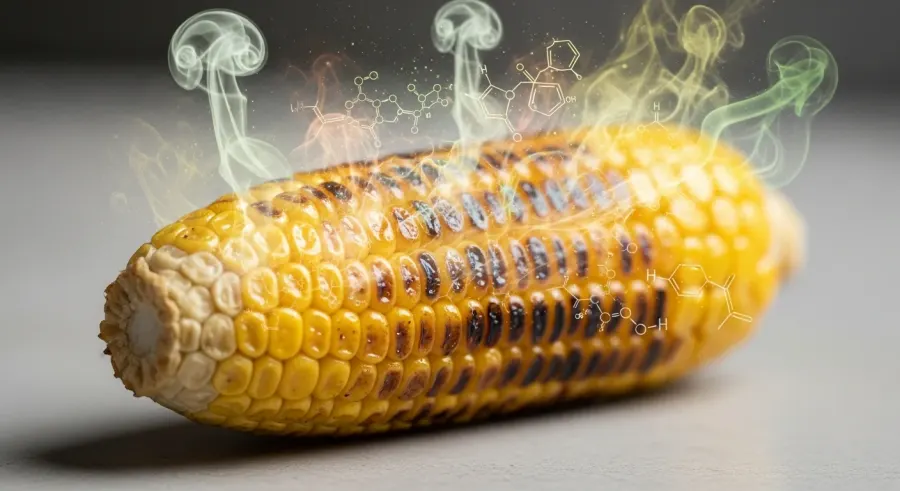
When you change how you cook the corn, you change the chemistry. Grilling or roasting corn triggers the Maillard reaction. This creates pyrazines, specifically 2,5-dimethyl-pyrazine, which is responsible for that toasted, nutty, corn-chip smell. Meanwhile, the cobs and husks contain ferulic acid, which can degrade into vanillin under heat. You are essentially working with sulfur, roasted nuts, and vanilla notes all at once.
Basil and the Science of Sweet Herbs
Sweetness usually needs an anchor. Fresh basil is one of the most reliable herbal companions for sweet corn because it contains eugenol, an aroma compound that carries a sweet, almost clove-like scent. Basil loves both the natural sugars in the corn and the creaminess of whatever fat you are using to cook it.
Making a basil-corn dish requires a bit of timing. You never want to cook fresh basil for twenty minutes. The volatile oils degrade quickly under high heat, leaving you with bruised, bitter leaves. Instead, fold shredded fresh basil into hot, buttered corn kernels right before serving so the heat just barely wilts the leaves.
To make a quick compound butter, soften one stick of unsalted butter on the counter until it hits room temperature (around 68°F is perfect for mashing without breaking the emulsion). Mash it with a quarter cup of finely chopped basil and a pinch of coarse sea salt. The fat encapsulates the eugenol, carrying that sweet herbal flavor evenly across every kernel.
Tarragon, Dill, and the Grassy Contrast
Licorice and corn sound like a strange combination until you actually taste it. Tarragon brings a heavy dose of estragole to the table, which gives it a distinct anise flavor. Dill relies on a compound called carvone for its grassy, tart punch. Both of these herbs provide a sharp contrast to the starchy, sugary bite of the corn.
Raw sweet corn packs a surprising amount of sugar. USDA FoodData Central notes that raw yellow sweet corn contains roughly 6.26 grams of sugar per 100-gram serving. That sweetness can easily become cloying if you do not balance it properly.
Dill and tarragon cut right through that sugar. Whisking half a cup of cultured buttermilk with a tablespoon of olive oil, a pinch of black pepper, and a generous handful of chopped dill creates a dressing that works beautifully poured over raw, freshly shucked corn kernels. The tartness of the buttermilk and the carvone in the dill keep the dish bright instead of heavy. (Just be careful with tarragon if you are making a delicate soup, as it can easily overpower the entire pot if left to simmer too long).
Thyme’s Woodsy Resistance to Heat
Some herbs crumble under heat, but thyme thrives in it. The primary aromatic compound in thyme is thymol, which gives it a woodsy, slightly medicinal scent. Because thymol is highly stable at high temperatures, you can add thyme early in the cooking process without destroying its flavor.
When you are roasting corn in the oven or sautéing kernels in a skillet, tossing in a few whole sprigs of thyme allows the herb to infuse the cooking fat. Heating a cast iron skillet to medium-high and rendering down a small amount of bacon fat gives the thyme a perfect medium to release its oils before the corn kernels hit the pan.
Remove the woody stems before serving. The leaves will have softened and darkened, leaving behind a savory, earthy background note that makes the corn taste less like a dessert and more like a savory vegetable side dish.
The Shellfish Bridge Nobody Thinks About
You might not expect ocean brine to belong in this conversation. But scallops and crab share a surprising molecular link with sweet corn. Both shellfish contain measurable amounts of DMS, the exact same sulfur compound that gives corn its signature smell.
In the culinary world, pairing two foods that share a dominant aroma molecule is called flavor bridging. The overlap makes the pairing taste seamless on your palate.
To make this work practically, sear sea scallops in a very hot pan (around 400°F) to trigger a deep brown crust. Serve those seared scallops over a smooth puree of sweet corn. Blending the cooked corn with a splash of heavy cream and passing it through a fine mesh sieve gives you a silk-like texture that mirrors the delicate nature of the scallop. The shared DMS connects the two ingredients, while the sweet, marine salinity of the scallop contrasts the earthy sweetness of the corn.
Smoke, Heat, and Roasted Pyrazines
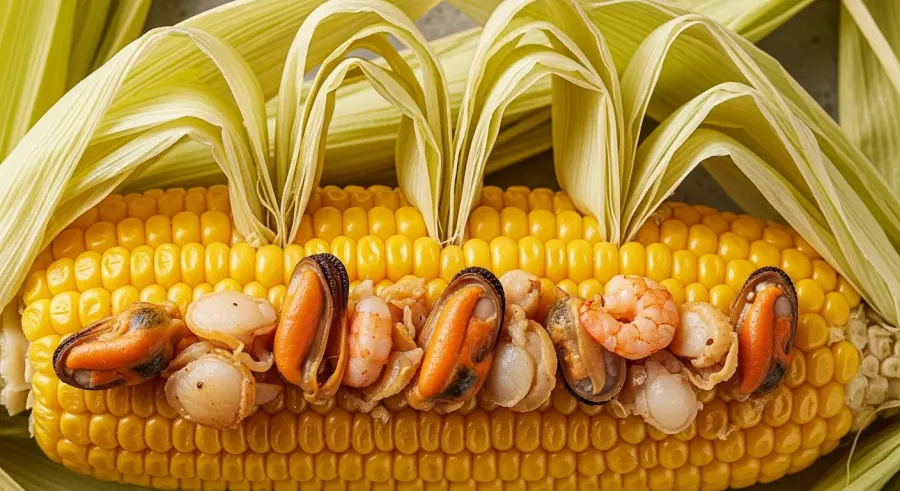
Roasting an ear of corn changes its chemical structure, making it crave heavier flavors. When those nutty pyrazines develop on a charred cob, they create a natural affinity for smoke and spice.
Chipotle powder and smoked paprika contain guaiacol, a compound directly responsible for smoky aromas. Dusting grilled corn with smoked paprika creates a synergy between the charred kernels and the spice. Ancho chiles offer a raisin-like sweetness, while chipotle provides aggressive smoke, and both lock into the pyrazines perfectly.
Heat plays a role, too. Capsaicin (the chemical that makes chiles hot) needs sweetness to keep it in check. The natural sucrose in the corn tempers the burn of cayenne or jalapeño, which is why spicy, mayonnaise-slathered elote (Mexican street corn) works so perfectly. The sugar puts out the fire, while the smoke elevates the roasted notes.
The Parmesan Rind Umami Hack
Throwing a block of hard cheese into a soup is an old Italian grandmother trick. It works exceptionally well with corn because of the intense concentration of glutamic acid found in aged cheeses like Parmigiano-Reggiano.
Glutamic acid is the building block of umami. When you have a vegetable as aggressively sweet as summer corn, you need a heavy dose of savory umami to balance the scale.
Drop a leftover parmesan rind into a simmering pot of corn chowder. As the rind softens in the hot broth, it slowly releases glutamic acid and salt into the liquid. It grounds the soup, preventing it from tasting like a bowl of melted sweet corn ice cream.
Matching Sulfur With Alliums
Garlic and onions are the default starting point for most dinners. They have a specific chemical reason for pairing so well with corn. Alliums are packed with sulfur compounds, like alliin, which convert into pungent aromatics when crushed or heated.
Since corn already relies on sulfur (via DMS) for its flavor, adding garlic or shallots just reinforces that existing profile.
Sautéing finely diced shallots in butter at a low temperature (around 300°F) mellows their sharp bite and brings out their natural sugars. Once they are soft and translucent, adding fresh corn kernels creates a side dish where the flavors melt together so seamlessly it is hard to tell where the onion ends and the corn begins.
When Acid Fails and When It Works
Acid is a powerful tool, but it requires situational awareness. A heavy squeeze of lime juice is standard practice on grilled street corn. The citric acid cuts through the rich mayonnaise and highlights the charred kernels.
If you are making a cream-based corn dish, however, heavy acid is a mistake. Corn contains soft, creamy flavor compounds called lactones. When you add heavy cream and butter to a corn puree, you amplify those lactones.
Squeezing lemon or lime into that environment will curdle the dairy and violently clash with the soft, round flavors of the corn. Keep your acid reserved for dry-heat cooking methods like grilling or roasting, and skip it entirely when dairy is involved.
Bottom Line
The best meals happen when you look past the standard butter and salt shaker. Whether you are matching sulfur compounds with a handful of crushed garlic or contrasting the natural sugars with fresh tarragon, you are simply playing with the chemistry that was already there. Cooking gets a lot easier when you let the ingredients do the heavy lifting.