In Short
You aren't actually passing whole kernels — you're passing empty cellulose wrappers filled with feces. Why your body lacks the enzyme to digest the outer skin, but completely absorbs the inside, is below.
Oh, we have all been there. You look down into the bowl the morning after a summer barbecue and see what appears to be a perfectly intact kernel of sweet corn staring back at you. It feels like a biological glitch, as if your stomach just threw its hands up and sent the food straight to the exit. But what you are looking at is actually a masterclass in plant biology and human digestion.
The kernels aren't actually whole
We should just get the biggest myth out of the way first. You are not passing whole kernels of corn. It is an optical illusion.
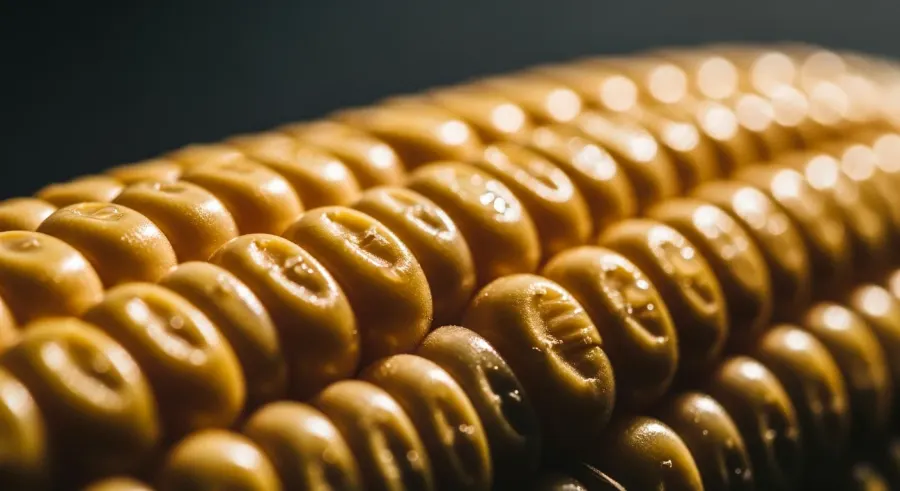
When you see those bright yellow dots in your stool, you are looking at empty wrappers. The outer skin of a corn kernel is called the pericarp. It is a tough, waxy layer designed by nature to protect the genetic material inside the seed from weather, pests, and the digestive tracts of passing animals.
During digestion, your stomach acids and intestinal enzymes successfully breach this wrapper (provided you chewed at least a little bit). They hollow out the inside, absorbing all the starches, proteins, and vitamins that make up the endosperm. The empty pericarp then continues its journey down your gastrointestinal tract. As it moves through your large intestine, it acts like a microscopic net, scooping up passing fecal matter. By the time it exits, it has reinflated like a tiny yellow water balloon, tricking you into thinking it passed completely undigested.
What that yellow casing really is
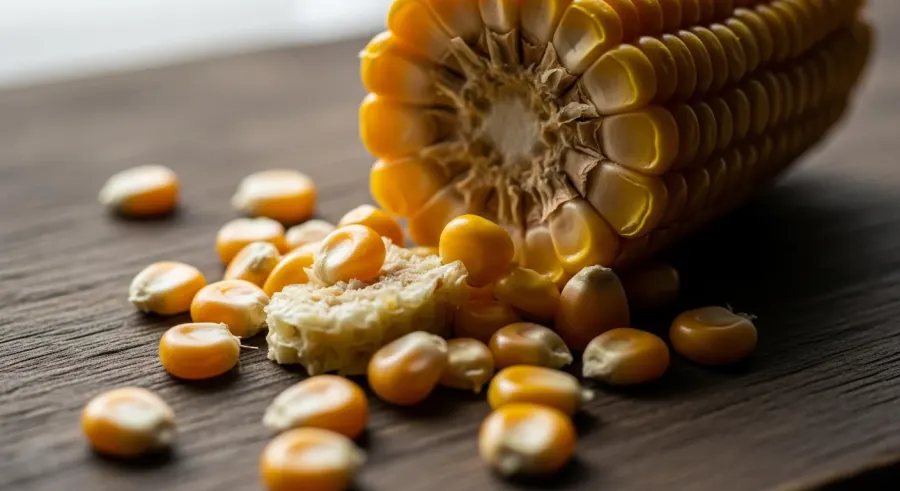
To understand why this happens, you have to look at the architecture of the kernel itself. That yellow pericarp is primarily composed of cellulose and hemicellulose.
Cellulose is a complex carbohydrate and a major structural component of plant cell walls. It is the same material that gives wood its strength and celery its crunch. According to the USDA FoodData Central database, a 100-gram serving of sweet corn contains about 2 grams of dietary fiber. A significant portion of this is the insoluble fiber making up those outer skins.
Insoluble fiber does not dissolve in water. It acts like a biological broom. Instead of breaking down into a gel like soluble fiber does, it retains its rigid structure and absorbs water, adding substantial bulk to your stool. This physical bulk presses against the mechanoreceptors in the walls of your intestines. The pressure stimulates peristalsis—the wave-like muscle contractions that move waste through your system.
This is the exact mechanism behind why corn makes you poop. The sheer physical presence of those cellulose wrappers commands your digestive tract to keep things moving. Your gut senses a solid object and squeezes to push it along.
The one enzyme we lack
You might wonder why human stomach acid, which is strong enough to break down dense animal proteins, cannot melt a thin plant skin. The answer comes down to enzymes, not acidity.
To break down cellulose, a digestive system requires a specific enzyme called cellulase. Herbivores like cows, sheep, and horses have multi-chambered stomachs equipped with symbiotic bacteria that produce cellulase in massive quantities. Humans do not. Somewhere along our evolutionary timeline, we traded the ability to break down raw plant walls for other metabolic advantages, like a shorter, faster digestive tract.
Because we lack cellulase, the beta-glycosidic bonds holding the cellulose in the corn pericarp together are functionally invisible to our digestive enzymes. Our biological keys simply do not fit those specific chemical locks. The enzymes wash right over the outer skin without leaving a scratch. This isn't a flaw in your digestion; it is a feature of human biology. We use the nutrient-dense inside for calories, and the indigestible outside for plumbing maintenance.
The chewing math most people fail
There is a catch to this whole physiological process. Your body can only digest the sweet, starchy inside of the kernel if your enzymes can actually reach it.
Digestion begins in the mouth, not the stomach. When you eat corn on the cob, you are usually outside, talking, and eating quickly. Corn requires a lot of mechanical mastication to process. If you swallow kernels whole without piercing the pericarp with your teeth, the inner endosperm remains locked inside an impenetrable cellulose vault.
Your stomach enzymes (like amylase, which breaks down starches) are too large to pass through the microscopic pores of an intact pericarp. In this specific scenario, a whole kernel really will travel through your entire digestive tract completely untouched, taking all of its nutritional value with it. If you want the dietary benefits of corn, mechanical digestion is your only key. You have to physically crack the shell.
How ancient cooks beat the system
Thousands of years ago, Mesoamerican cooks realized this plant was highly resistant to human digestion and often led to nutritional deficiencies if relied upon too heavily. They invented a biochemical workaround that completely bypasses our lack of cellulase.
The process is called nixtamalization. By soaking and cooking dried corn in an alkaline solution—traditionally water mixed with wood ash or calcium hydroxide (slaked lime)—they found they could literally melt the pericarp away. The high pH of the alkaline solution dissolves the hemicellulose glue holding the outer skin together, effectively peeling the kernel chemically.
This didn't just make the corn easier to grind into masa for tortillas. It fundamentally changed the nutritional profile. Nixtamalization frees up bound niacin (Vitamin B3) hidden inside the corn, making it bioavailable to humans. When European colonizers brought corn back to the Old World, they ignored this crucial processing step. As a result, populations that relied on untreated, un-nixtamalized corn suffered from pellagra, a severe and sometimes fatal niacin deficiency. The ancient cooks knew exactly how to dismantle corn's defenses.
Using corn as a gut timer
Because that yellow skin is so structurally resilient, it serves a highly practical medical purpose. You can use it to track your own internal motility.
Gastroenterologists and researchers frequently use what is known as the "sweet corn transit time test." In clinical studies, such as those published in the journal Frontiers in Nutrition in 2021, researchers use corn to measure Intestinal Transit Time (ITT). It is a cheap, reliable, non-invasive alternative to swallowing radio-opaque markers or tracking expensive wireless motility capsules.
To check your own pacing, simply eat a generous portion of sweet corn and write down the time. Then, watch for its first appearance in the toilet. A healthy transit time is generally anywhere between 14 and 58 hours. If it shows up in under 14 hours, your system is moving unusually fast, which might mean you aren't absorbing all the nutrients from your food. If it takes three days, your system is sluggish. It is a surprisingly elegant way to check in on your internal pacing, provided you are willing to look.
Bottom Line
The next time you see a yellow kernel in the bowl, you don't need to wonder if your digestive tract is failing you. It is actually a sign that your system is working exactly as it should—absorbing the nutrients it can access, leaving behind the structures it cannot, and using the remaining insoluble fiber to keep the whole operation moving on schedule. It is just plant biology doing its job.