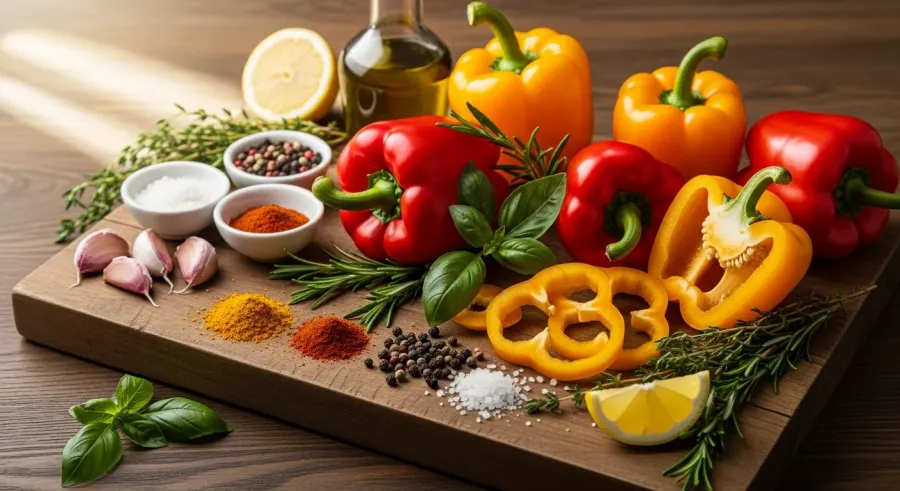
In Short
Pork, feta, peaches, and dark cocoa all pair brilliantly with bell peppers, depending on the pepper's ripeness. Why a green pepper requires a completely different culinary approach than a red one comes down to a few fascinating flavor compounds.
I always used to treat bell peppers like culinary wallpaper. They were just sort of there, diced into background noise for soups and stir-fries to provide a bit of color and water weight. Then I started paying attention to the way a raw green pepper smells completely different from a roasted red one, and the chemistry hiding inside this vegetable completely changed how I cook.
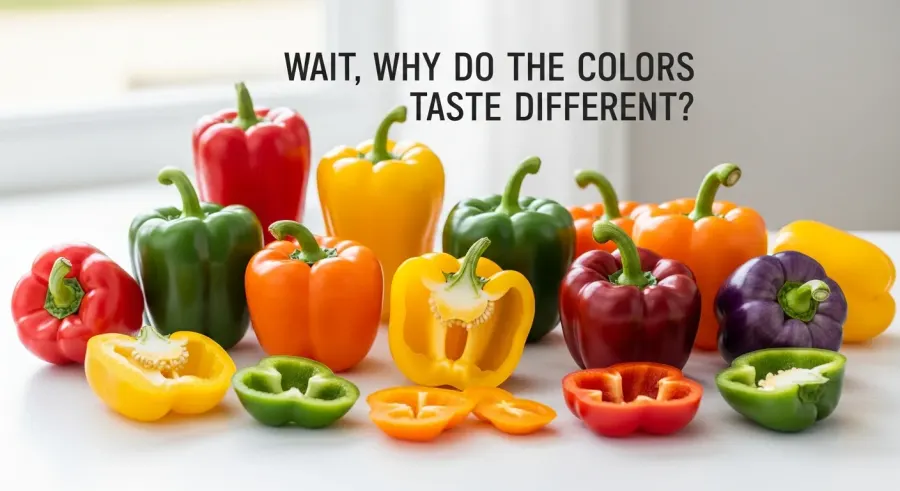
Wait, Why Do the Colors Taste Different?
A green bell pepper is just an unripe red, yellow, or orange pepper. That single fact completely dictates what you should pair it with.
In green peppers, a specific aroma compound called 2-isobutyl-3-methoxypyrazine (often just called "bell pepper pyrazine") dominates. Our noses are deeply sensitive to it. Studies on odor thresholds show we can detect it at vanishingly low concentrations. It smells like freshly cut grass, damp earth, and sharp green stems.
As the pepper ripens and turns red, those pyrazines diminish. The plant produces carotenoid pigments like capsanthin, and the vegetable develops a much fruitier, sweeter profile with significantly less bitter bite. You are dealing with two different chemical landscapes.
If you are making a delicate white wine sauce, a green pepper will completely overpower it with methoxypyrazines. A fully ripe yellow pepper will blend smoothly without turning the dish bitter.
Why Onions and Garlic Always Work
Cooking onions, garlic, and bell peppers together is a global foundation for a reason. It is all about how heat changes the molecular structure of the vegetables.
When you roast or sauté a red bell pepper alongside onions, you trigger the Maillard reaction. Even with low overall carbohydrates (about 6g per 100g) and virtually zero fat (0.3g) according to the USDA, the naturally occurring sugars in the pepper are enough to create magic. As the temperature rises in the pan, those reducing sugars react with the amino acids in the garlic and onions.
The sharp, pungent notes of raw alliums mellow out, while the pepper's flesh caramelizes. You end up with a sweet, deeply savory base that works in almost any context. Slow-roasting them together at 375°F for about 40 minutes until the edges just start to blacken is an easy way to build a pasta sauce from scratch.
This works beautifully for a robust braise. Skip this heavy roasting step if you are making a quick summer salad, though. The soft, caramelized texture of the cooked pepper will turn mushy and get lost among fresh greens.
What to Do With Green Peppers
Green peppers get a lot of hate for being bitter. The trick is to pair them with ingredients that can stand up to those aggressive pyrazines.
Fat and fresh herbs are the answer. Ground pork has a rich, fatty mouthfeel that coats the palate, softening the perceived bitterness of the green pepper. If you throw cilantro into the mix, you create a flavor bridge. Cilantro shares some of the fresh, herbaceous compounds found in the pepper, making the green flavors taste intentional rather than harsh.
A reliable approach is to thinly slice one green bell pepper and toss it into a hot wok with a pound of ground pork. Cooking it fast—maybe five minutes total—preserves the crunch. Tossing a massive handful of chopped cilantro in right at the end ties it all together.
This works perfectly for fast stir-fries. Skip green peppers in long, slow cooks like marinara sauce. Prolonged heat destroys the fresh crunch but doesn't eliminate the pyrazines, leaving you with a flabby, bitter vegetable that ruins the tomatoes.
The Dairy Trick That Actually Works
Dairy and bell peppers might seem like a heavy combination, but specific cheeses perform a very useful job here. Tangy, salty cheeses like feta or young goat cheese are ideal matches.
Red and yellow bell peppers have a gentle sweetness but lack acidity. Feta brings a sharp lactic acid tang that wakes up the pepper's natural fruitiness. At the same time, the milk fat in the cheese binds to the volatile aroma compounds in the pepper, carrying the flavor across your tongue for a longer finish.
A simple salad of charred red peppers, crumbled feta, and a drizzle of olive oil feels complete for this exact reason. The salt and fat from the cheese are doing all the heavy lifting.
This pairing is flawless for a cold mezze platter, but avoid it if you are melting cheese for a hot dish. Feta doesn't melt well, and the high water content of the peppers will just make everything soggy. You have to rely on the raw or pre-roasted textures.
Hear Me Out: Fresh Peaches
Most people instinctively reach for jalapeños when making a fruit salsa. Bell peppers actually offer a better foundation if you want to focus on flavor rather than just adding capsaicin heat.
Yellow and orange bell peppers share several fruity ester compounds with stone fruit. When you pair a yellow bell pepper with a ripe peach, the two ingredients echo each other. The pepper provides a satisfying, watery crunch that the soft peach lacks, while the peach amplifies the pepper's subtle floral notes.
For a quick side, you can dice one yellow pepper and two firm but ripe peaches. Tossing them with lime juice, a pinch of salt, and a very small amount of finely minced red onion takes ten minutes. It is a very easy pairing that completely changes the profile of grilled chicken or fish.
This works wonderfully as a raw topping. If you try to cook the peach and pepper together, however, the pectin in the peach breaks down and you end up with a watery, confusing jam.
The Magic of Aged Balsamic
Balsamic vinegar is essentially concentrated grape must. It brings complex, woody sweetness and acetic acid. Since red and yellow bell peppers are biologically fruits, treating them almost like a dessert ingredient makes a lot of sense.
The acid cuts through the water weight of the pepper, while the grape notes amplify the pepper's natural sugars. When these two ingredients sit together, they create a deep, jammy flavor profile that tastes much more complicated than it actually is.
This works best for a room-temperature antipasto. Skip pouring balsamic into a hot pan of sautéing peppers. The acid will aggressively reduce and turn sticky, completely overpowering the delicate floral notes of the pepper. Instead, roast the peppers, let them cool, and drizzle the vinegar over them right before eating. A teaspoon of decent quality aged balsamic per red pepper is the sweet spot.
Adding a Pinch of Dark Cocoa
Red bell peppers have a hidden talent for deep, earthy dishes like chili and braised beef. The key is to pair them with unsweetened cocoa powder.
When you roast a red bell pepper, the sugars caramelize and develop complex, slightly smoky notes. Dark chocolate or cocoa powder has a natural bitterness and an earthy depth. The caramelized sugars in the red pepper act as a bridge, mellowing the bitter edge of the chocolate while highlighting its rich, roasted qualities. This interaction makes the entire dish taste richer.
The next time a beef stew or chili is on the stove, adding two diced red bell peppers and a tablespoon of unsweetened cocoa powder to the pot is worth trying. After simmering for an hour, the cocoa doesn't make it taste like dessert. It just makes the savory flavors taste darker and more complex.
This technique shines in slow-cooked braises, but skip it for fast pan-sauces. The cocoa needs time to hydrate and meld with the pepper's caramelized juices, otherwise it just tastes dusty and bitter on the palate.
Bottom Line
Thinking about ingredients as collections of flavor compounds changes the way you cook. A bell pepper stops being just a crunchy filler vegetable and becomes a tool for balancing fat, sweetness, and earthy bitterness. Whether you use a green pepper to cut through rich pork or a red one to bridge the gap between beef and cocoa, paying attention to specific colors and ripeness opens up a lot of quiet possibilities on the cutting board.