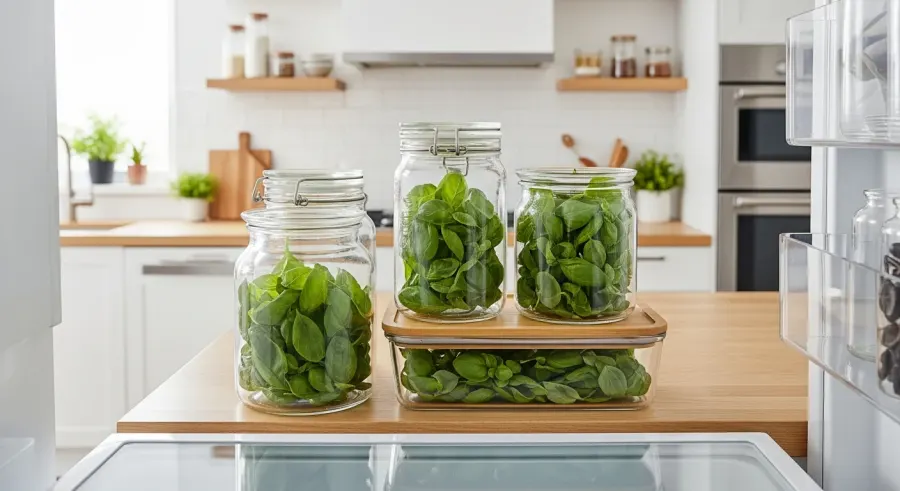
In Short
Keep stems in a jar of water at room temperature, loosely covered with a plastic bag. Never put fresh basil in the fridge unless you want black, slimy leaves. Why this popular herb is so allergic to the cold (and exactly how to freeze it for winter) is below.
Buying fresh basil feels like a ticking clock. Those beautiful, fragrant green bunches from the grocery store always seem to have about forty-eight hours of life in them before turning into a wilted mess. Getting this delicate herb to last doesn't require specialized vacuum containers, just a slightly better understanding of how the plant actually functions.
Treat It Like Cut Flowers
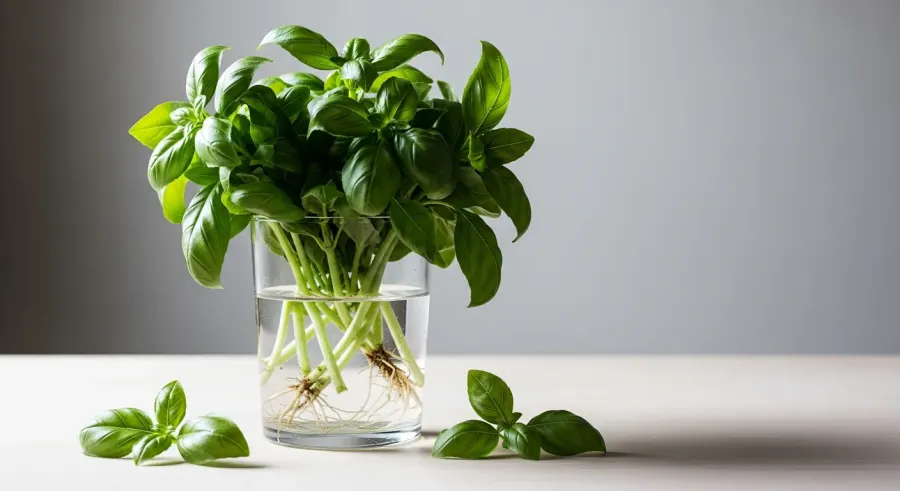
The absolute most effective method for keeping fresh basil vibrant involves treating it exactly like a dozen roses. Trimming about half an inch off the bottom of the stems at a 45-degree angle is the crucial first step. Using sharp kitchen shears or a chef's knife prevents the stem from getting crushed. This fresh cut opens up the vascular tissue of the plant, giving it a much wider surface area to pull up moisture. Dropping the trimmed bunch into a heavy glass mason jar or highball glass filled with two inches of cool water provides everything the plant needs to stay hydrated.
One critical detail is ensuring that absolutely no leaves dip below the water line. Submerged foliage rots almost overnight. It turns the water murky and introduces bacteria that will rapidly kill the entire bunch. Plucking off the lowest leaves prevents this entirely.
Once the stems are resting in the water, draping a thin plastic produce bag loosely over the top of the leaves creates a miniature greenhouse. Basil transpires, meaning it constantly releases moisture into the air. The plastic bag catches that moisture and maintains a humid microclimate right around the leaves, preventing them from drying out and getting crispy.
Keeping this makeshift terrarium on the kitchen counter, out of direct, harsh sunlight, yields the best results. Changing the water every two to three days keeps the stems clean and prevents fungal growth. When handled this way, a fresh bunch regularly lasts up to three weeks on the counter.
Wait, Is The Fridge Banned?
Most leafy greens and soft herbs thrive in the crisper drawer, which makes it feel entirely natural to toss a plastic clamshell of basil right in next to the spinach. This is the single most common storage mistake people make. Basil is a tropical plant with virtually no cold tolerance.
According to research published by the USDA Agricultural Research Service, sweet basil suffers severe chilling injury when it is stored anywhere below 50°F (10°C). Since a standard home refrigerator is calibrated to sit right around 37°F (3°C), the environment is actively hostile to the herb. At those low temperatures, the cell walls of the plant rapidly degrade and collapse. When the cell walls burst, the phenols inside oxidize and turn dark. This chill damage causes the leaves to turn black, shrivel, and lose their signature aromatic oils within just two or three days. It is exactly why supermarkets always display their fresh basil on regular ambient shelves rather than in the refrigerated produce cases.
There is only one highly specific exception to this rule. If your kitchen is enduring a massive summer heatwave and the indoor temperature is hovering above 85°F (29°C), the countertop method might cause the water in the jar to breed bacteria too quickly. In that narrow scenario, placing the jarred basil on the top shelf of the fridge near the front door—which is usually the warmest spot in the refrigerator—might buy you an extra day or two compared to a sweltering kitchen counter. Otherwise, keeping it far away from the cold is mandatory.
How To Freeze It In Oil
Sometimes a garden harvest or a bulk grocery purchase leaves you with far more foliage than you can reasonably consume in three weeks. Freezing is an excellent long-term storage solution, though tossing bare, raw leaves straight into a freezer bag usually ends in disaster. The fragile leaves quickly succumb to freezer burn, turning into flavorless, brittle shards.
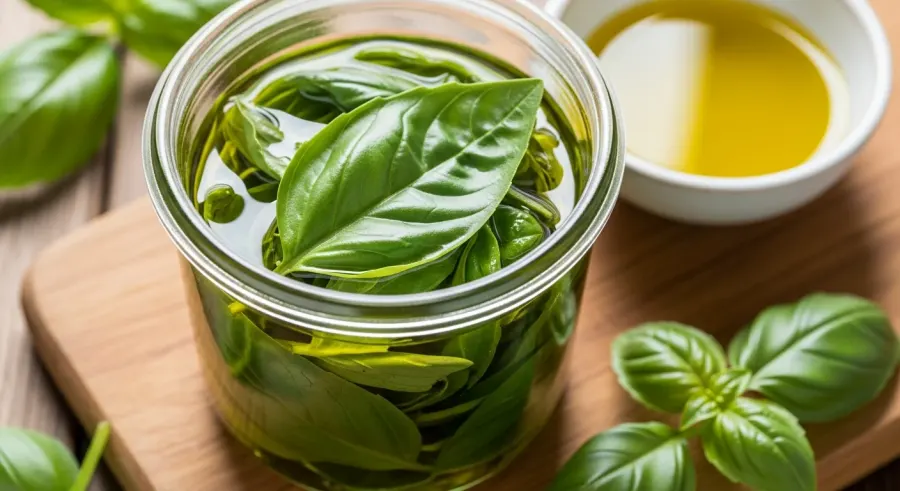
A far better approach involves finely chopping the leaves, packing them tightly into clean ice cube trays, and pouring high-quality olive oil over the top until the greens are entirely submerged. The oil creates an impenetrable protective barrier against both oxygen and the harsh sub-zero air. More importantly, many of basil's most prominent flavor compounds are fat-soluble. The oil captures and holds onto those volatile aromatic oils while the cubes freeze. Each compartment roughly yields one tablespoon of oil and one tablespoon of chopped basil, making portioning incredibly easy.
There is a persistent myth that basil needs to be blanched in boiling water before freezing to preserve its bright green color. Plunging this particular herb into boiling water instantly destroys its delicate, heat-sensitive flavor profiles. It leaves the plant tasting muted and slightly grassy. Submerging raw chopped leaves in oil skips the heat damage entirely.
Once those oil blocks are frozen solid, they can be popped out of the tray and transferred to a sealed freezer bag. They easily retain their quality for up to 12 months. When dinner rolls around, dropping a frozen cube directly into a hot pan of marinara or a warm skillet of vegetables works beautifully.
What About Drying It?
Drying is another viable storage option for long-term preservation, though it fundamentally changes the nature of the herb. When basil dehydrates, it loses certain highly volatile flavor notes, resulting in the deeper, earthier taste associated with dried pantry spices rather than the bright bite of a fresh Caprese salad.
Air-drying requires tying a few stems together with kitchen twine and hanging them upside down in a warm, dry, well-ventilated room for about two to three weeks. Direct sunlight strips the color and essential oils from the plant, so a dark pantry or shaded corner is ideal.
Alternatively, laying the washed and thoroughly patted-dry leaves flat on a dehydrator tray at its lowest setting—usually around 95°F (35°C)—removes the moisture in just a few hours without cooking the plant. The process is complete when the leaves shatter easily between your fingers. Storing the crumbled remains in an airtight glass jar in a dark cabinet keeps them potent for about six months before the remaining oils finally dissipate.
Signs It Has Gone Bad
Even with careful attention and perfect hydration, time eventually wins out. Recognizing spoilage is usually pretty straightforward because delicate herbs do not hide their age well.
The first place to look is the water line in the jar. If the stems feel slimy, soft, or mushy to the touch, bacterial rot has set in. Sometimes, simply snipping off the rotting bottom inch of the stem and replacing the water with fresh, cool tap water can save the upper leaves for a few more days.
Foliage changes are the next clear indicator. A slight wilting or drooping is totally normal as the plant ages. Those tired leaves are still perfectly safe to chop into a quick weeknight pesto or fold into a simmering soup. However, when the leaves develop large, black, necrotic spots or turn entirely translucent, the cell structure has completely failed. The difference between cold damage and old age is subtle, but the result is the same. Any foul, swampy odor or the appearance of white fuzzy mold around the rim of the jar means it is officially time for the compost bin.
Bottom Line
Keeping a jar of vibrant green leaves on the counter adds a nice splash of color to the kitchen anyway. It turns out the easiest way to store this particular herb is also the one that looks the nicest right next to the cutting board.