In Short
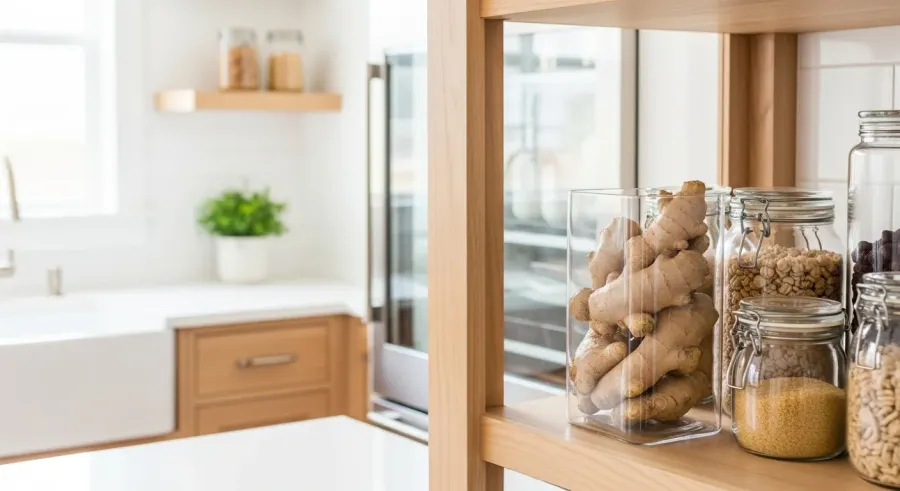
Keep whole ginger in a zip-top bag in the fridge for a month, or freeze it whole for six months to make grating infinitely easier. Why peeling it first is a mistake (and how to spot the difference between harmless dehydration and actual rot) is below.
You buy a knobby hand of ginger for a stir-fry, use exactly one inch, and toss the rest into the crisper drawer. Two weeks later, you find a shriveled fossil. Fresh ginger is a dynamic little rhizome, packed with volatile oils that evaporate quickly once the skin is breached, but keeping it fresh isn't difficult once you understand what it actually needs.
The Countertop Window
Most people assume ginger has to be refrigerated immediately. That is not entirely true. If you plan to use a whole root within a week or two, room temperature is perfectly fine. The skin acts like a natural humidor, protecting the moisture inside from evaporating into the air. Keeping it on the counter away from direct sunlight or the heat of the stove in a dark pantry basket works perfectly.
Once you slice into it, however, the clock accelerates. The exposed flesh will start to dry out and oxidize almost overnight. So if you are a daily ginger tea drinker, the counter works beautifully because you are moving through the root quickly. If you only make a curry or stir-fry once a month, you need a colder strategy to prevent the ginger from drying out. And remember, the baseline for your ginger root shelf life depends entirely on what you buy. Always look for a piece with taut, slightly shiny skin, because if it already looks dull and wrinkled at the grocery store, no storage method will reverse that damage.

The Damp Paper Towel Trick
Tossing ginger loosely into the refrigerator is a guaranteed way to ruin it. Modern fridge environments are highly dehydrating, pulling moisture straight out of the root. This is why loose ginger turns into a woody, ungrateable lump after just a few days.
To get three to four weeks of shelf life at a standard 38°F (3°C), you have to manage the humidity. You just need a paper towel. Get it barely damp—not dripping wet, just slightly humid—and wrap it around the unpeeled ginger. Place the bundle into a plastic zip-top bag, press out as much air as possible, and seal it tightly before placing it into the crisper drawer.
This method creates a controlled micro-climate. The damp towel provides just enough ambient moisture to prevent the root from shriveling, while the plastic bag traps it inside. If the towel is too wet, though, you risk creating a swampy environment that breeds mold. You want it to feel like a wrung-out sponge that has been sitting on the counter for an hour. Check it every week or so, and if the towel dries out completely, mist it with a few drops of water.
Your Freezer Is Actually Best
Freezing ginger sounds like a compromise. It is actually an upgrade. Cold storage halts the enzymatic breakdown of the rhizome completely, extending its shelf life for up to six months. You do not even need to chop it first. Washing the whole unpeeled root, scrubbing away any residual dirt, drying it thoroughly, and dropping it into a freezer bag is all it takes.
When you need some for a recipe, grab a microplane and grate it straight from frozen. The texture changes into a fine snowy powder, completely bypassing those tough, stringy fibers that usually get stuck in the grater teeth. As an added bonus, this frozen ginger dust melts instantly into sauces, marinades, and cookie doughs without leaving awkward fibrous chunks behind.
You can also pre-portion it if you prefer. Some people like to blend fresh ginger with a tiny bit of water in a food processor, spoon the paste into an ice cube tray, and freeze it. Once solid, pop the ginger cubes into a bag. This is wonderfully convenient for tossing straight into a hot pan for a stir-fry, though grating it whole remains the absolute lowest-effort method for freezing fresh ginger.
What About Peeled Pieces?
Sometimes you end up with a naked knob of ginger left over from meal prep. Without its protective skin, peeled ginger is highly vulnerable to both moisture loss and fridge odors. It acts a bit like a sponge for whatever else is sitting in your crisper drawer.
If you want to keep cut ginger fresh, wrap the exposed piece tightly in plastic wrap, or drop it into a tiny airtight container. You will only get about a week out of it this way before the surface becomes rubbery and pale. If you notice the cut end looking a little dry and cloudy after a few days, simply slice off a millimeter to reveal the fresh yellow flesh underneath. (Storing peeled ginger at room temperature is generally a bad idea, as it will dehydrate into a hard pebble within forty-eight hours.)
For slightly longer fridge storage, some cooks submerge peeled ginger in a small jar of dry sherry or vodka. The alcohol preserves the ginger for weeks and takes on a fantastic spicy flavor you can use in cocktails or deglazing pans. Just keep in mind this alters the raw flavor of the ginger, making it less ideal for morning smoothies or delicate teas.
How to Spot Bad Ginger
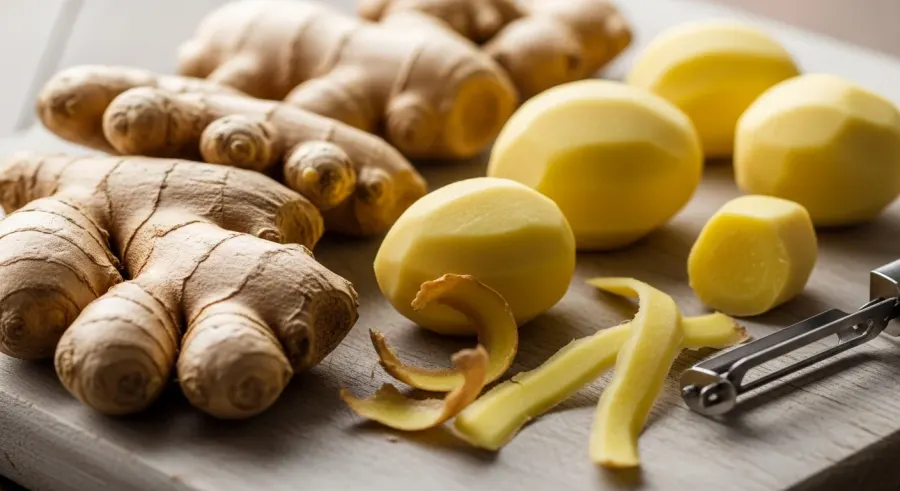
A little bit of wrinkling is normal. As ginger sits, it slowly loses water, causing the outer skin to shrivel slightly. You can still cook with dehydrated ginger without any issues—you might just need to use a slightly sharper knife to peel past the wrinkles.
Real spoilage looks very different, and knowing the signs of bad ginger saves you from ruining a meal. If the root feels mushy or spongy when you squeeze it, the internal cell structure has collapsed and rotting has begun. Any visible blue, green, or black fuzzy mold means the ginger belongs in the trash. Trimming away mold is risky because the porous, fibrous flesh allows microscopic mold spores to travel much deeper than your naked eye can see.
You might occasionally cut into a fresh ginger root and see a faint blue or grey ring inside the flesh. This is actually a completely harmless reaction between the root's natural anthocyanin pigments and cold temperatures. If the ginger is still rock hard and smells bright and peppery, a blue tint inside is safe. But if the outside is squishy, let it go.
The Old-School Sand Method
Before modern refrigeration, people relied on the earth to keep root vegetables dormant but alive. Some cooks still swear by storing whole ginger buried in a small pot of dry sand or soil kept in a cool, dark corner of the kitchen or basement.
Because ginger is a rhizome—essentially an underground stem—it naturally wants to exist in the dark, insulated by dirt. Burying it prevents moisture loss while blocking out light that might trigger sprouting. You simply brush off a piece, snap off what you need, and rebury the rest. This can maintain firmness for several months.
The drawback here is convenience. Keeping a bucket of sand in a modern kitchen is messy, and washing grit out of your ginger every time you want to make dinner adds an annoying prep step. While it is a fascinating nod to historical food preservation, the freezer achieves the exact same preservation of firmness and flavor without requiring indoor landscaping.
Does the Nutrition Change?
We rarely think about how temperature affects the chemistry of our spices. Fresh ginger has a solid baseline nutritional profile. According to USDA FoodData Central, a 100g serving contains 80 calories, 1.82g protein, 0.75g total fat, 17.77g carbohydrates, 2g fiber, 1.7g sugar, and 13mg sodium. Those basic macronutrients stay relatively stable regardless of where you keep the root.
The real shift happens with the invisible flavor compounds. Research published in the Journal of Food Science (1994) showed that gingerol—the specific compound responsible for the root's bright, zippy heat—gradually degrades during long-term room temperature or fridge storage. As the ginger ages, gingerol converts into shogaol. Shogaol has a sharper, slightly harsher burn that lacks the nuanced citrusy high notes of fresh ginger.
This is why old fridge ginger often tastes flat but aggressively spicy. Freezing the rhizome effectively pauses this degradation, locking those volatile gingerols in place and preserving that clean, fresh-cut flavor for months. The nutritional fiber and trace minerals are unaffected by the deep freeze, making it a clear winner for both flavor and function.
Bottom Line
Storage is mostly about understanding what an ingredient wants before you close the fridge door. Give ginger a little humidity control and a cold environment, and it will quietly wait until you are ready to use it.