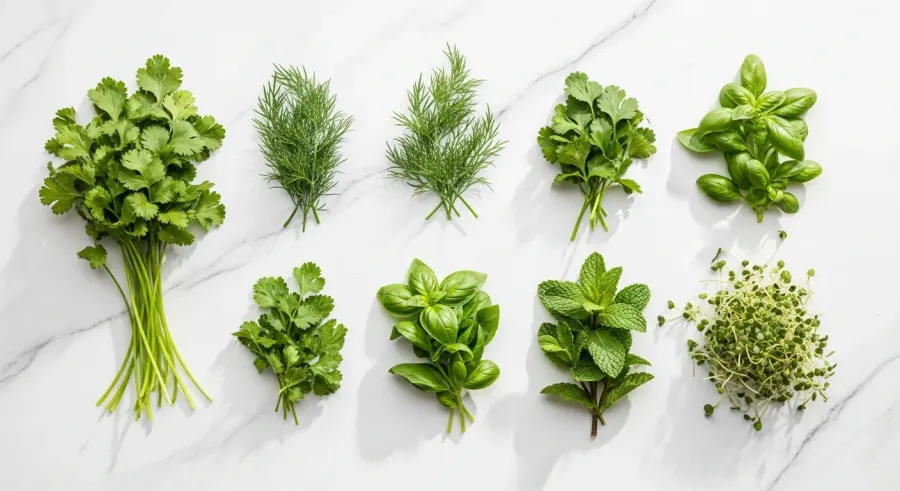
In Short
Culantro is the closest botanical match for cooked dishes, while a mix of flat-leaf parsley and fresh lime juice is the easiest raw swap. The right choice depends entirely on whether your recipe relies on the herb for a bright garnish or a simmering flavor base.
You are likely reading this because you ran out of the one green thing your recipe desperately needs, or you are cooking for someone who thinks it tastes like dish soap. Both are highly common kitchen scenarios. Finding a replacement isn't about finding an exact clone. It is about matching the job the herb is supposed to do in your specific pan.
Culantro Is The Botanical Twin
Finding culantro in a standard American grocery store might take a bit of looking. When you do track it down, you are holding the closest botanical match available. This herb (Eryngium foetidum) belongs to the same plant family, but it looks entirely different. Instead of delicate, lacy stems, culantro has long, tough leaves with serrated edges that look a bit like dandelion greens.
A paper published in the Journal of Horticulture and Postharvest Research (2021) notes that culantro contains 63.5% of the aldehyde E-2-dodecenal, compared to just 26% in cilantro. That specific chemical is what gives both plants their signature aroma. Because culantro has more than double the concentration, it can survive the heat of a simmering pot without its flavor breaking down. You will want to use about one-quarter to one-half as much culantro as you would its more famous cousin.
It is a workhorse in cooked dishes. Think about a rich Puerto Rican sofrito or a steaming bowl of Vietnamese pho. Dropping it into hot broth allows the thick cell walls to soften and release their oils slowly. It also stores better; wrapped in a damp paper towel, the sturdy leaves easily outlast delicate herbs by a full week in the crisper drawer.
The failure case here is raw applications. This is not something you want to chop up raw for a quick pico de gallo. The physical texture is unpleasantly rough against soft tomatoes, and the raw flavor is simply too aggressive without heat to mellow it out.
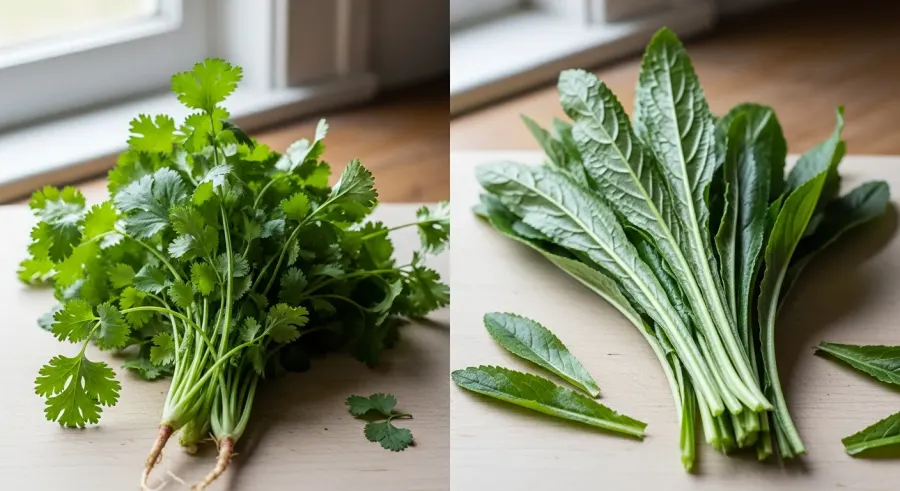
The Parsley And Citrus Trick
Most people reach for flat-leaf parsley first when they need to replace fresh cilantro. Visually, the two herbs are nearly indistinguishable once chopped. They both belong to the Apiaceae family, which explains the structural resemblance, but the flavor profiles diverge pretty sharply.
Parsley leans earthy and mildly bitter. It is missing the volatile, citrusy top notes that make its cousin so polarizing. You can bridge this gap with a very simple kitchen trick: for every cup of chopped parsley, toss it with a teaspoon of fresh lime or lemon juice before adding it to your food. The citric acid mimics that missing high note perfectly.
If you care about the granular nutrition differences, USDA FoodData Central shows these greens are in the same ballpark, though parsley is slightly denser. A 100g serving of raw parsley carries 36 calories, 2.97g of protein, and 0.79g of fat. The same amount of raw cilantro sits at 23 calories, 2.1g of protein, and 0.5g of fat. In the amounts you actually eat as a garnish, these differences are mathematically invisible.
Use a straight 1:1 ratio. This is your best option for raw applications where the herb needs to look right and provide a fresh, green crunch. It works beautifully scattered over tacos, blended into chimichurri, or folded into guacamole. Always insist on flat-leaf (Italian) parsley rather than the curly variety, which is scratchy and holds trapped grit.
This swap fails completely in Southeast Asian coconut curries. Parsley has a distinctly European earthiness that clashes badly with ingredients like lemongrass, galangal, and fish sauce.
Why Celery Leaves Actually Work
You probably throw the best part of the celery stalk in the compost bin. If you look past the dark green, fibrous outer stalks, the very center of the bunch hides a cluster of pale yellow-green leaves. These tender inner leaves carry a surprising amount of flavor overlap with the herb you are trying to replace.
Celery and cilantro share a savory, mildly peppery backbone. The difference is that celery leaves lack the specific aldehydes that trigger the soap-tasting gene. This makes them one of the best alternatives when cooking for a crowd with mixed genetic palates. Nutritionally, celery leaves are about 95% water (USDA FoodData Central), making them incredibly light on the palate and easy to digest.
You can use a 1:1 ratio, treating the chopped leaves exactly as you would any other fresh green. They thrive in wet, savory environments. Fold them into a chicken tortilla soup right at the end of cooking, or stir them into a pot of black beans. The residual heat softens them perfectly while pulling out their savory oils.
The catch is that you have to be selective about which leaves you use. The dark green leaves on the outside of the celery bunch are thick and deeply bitter—a natural defense mechanism the plant uses to deter insects. Using those will ruin a delicate dish. Stick exclusively to the soft, pale foliage in the heart of the celery.
Thai Basil For Noodles And Broth
Swapping ingredients across entirely different cuisines requires a bit of care. Thai basil is not going to fool anyone into thinking they are eating the original herb, but it fills the same structural role in a recipe by providing a sharp, aromatic contrast to rich or heavy foods.
The flavor profile of Thai basil is built on compounds like methyl chavicol, which gives it a distinct licorice and anise quality. There is a sweet, almost spicy warmth to it that you do not get from standard Italian sweet basil. Because the flavor is so pronounced, you should only use about half the amount your recipe originally called for.
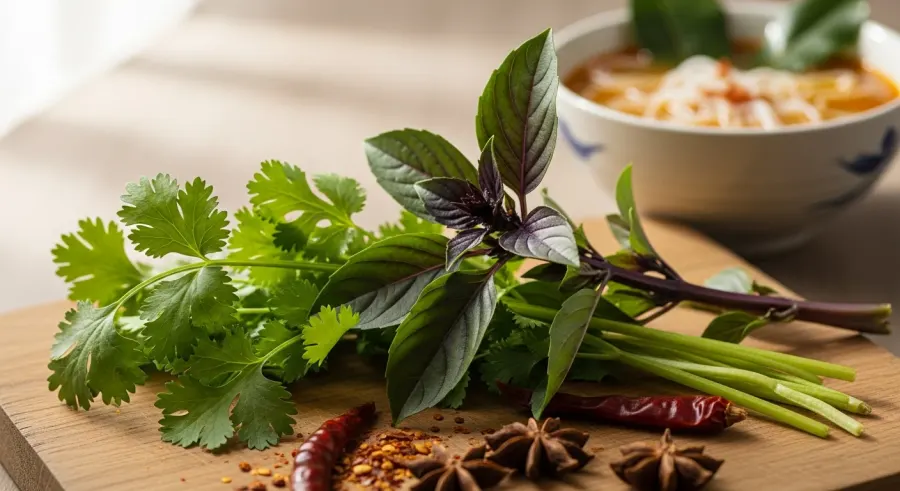
This lateral move works best in Southeast Asian cooking. If you are making a green curry, assembling fresh summer rolls, or garnishing a bowl of noodles, Thai basil feels entirely natural. The two herbs often share space on the same garnish plate in Vietnamese restaurants anyway. When exposed to hot broth, the purple stems and sturdy green leaves sweeten and mellow out significantly.
The absolute worst thing you can do is try to force Thai basil into Latin American dishes. The strong licorice notes will completely derail the flavor profile of a classic tomato salsa or a batch of salsa verde. The sweetness of the basil fights directly with the acidity of the tomatoes and limes, creating a confused and unbalanced dip.
Fresh Dill Is Better Than You Think
Dill feels like a strange recommendation until you actually taste it next to the original herb. If you can mentally separate it from the flavor of a pickle jar, you will notice that fresh dill is intensely bright, grassy, and packed with citrusy undertones. Much of that comes from a compound called limonene, which naturally bridges the flavor gap.
It is a highly aromatic plant, so restraint is necessary. Start with a 1:2 ratio, using half as much dill as you would the original herb. You can always add more, but it is very difficult to walk back an over-dilled sauce. According to USDA FoodData Central, a 100g serving of fresh dill provides 43 calories, 3.46g of protein, and 1.12g of fat. It is a slightly hardier plant than it looks.
This swap shines in cold applications and dairy-heavy recipes. If you are making a yogurt-based dip, a cold pasta salad, or finishing a piece of grilled white fish, the dill provides exactly the right kind of sharp, green contrast. It cuts through dietary fat beautifully without weighing down the palate.
It falls apart in hot, robust environments. Dill becomes muted and slightly muddy when exposed to sustained heat. It also has a strange relationship with roasted peppers and cumin, meaning it has no place in a hot skillet of fajitas or a slow-simmered chili.
Mint Works If You Balance It
Menthol is a notoriously aggressive flavor compound. It has a cooling, numbing effect that can easily wash out subtle spices if you aren't paying close attention to your ratios. But when used carefully, fresh mint offers the exact kind of vibrant, leafy lift that you might be missing.
The trick to using mint as a substitute in salsa or chutney is to cut it with something neutral. A common kitchen practice is mixing about one part fresh mint with three parts flat-leaf parsley. If you are using mint on its own, stick to roughly one-quarter the amount to avoid turning your dinner into a tube of toothpaste. Interestingly, the menthol in mint stimulates cold receptors in your mouth, which can counteract the heat from capsaicin (the compound that makes chilies hot) to make spicy food feel cooler.
Mint is naturally at home in Middle Eastern and Indian flavor profiles. If you are blending a green chutney for samosas or tossing a cucumber and tomato salad, the mint works seamlessly. It plays exceptionally well with warm spices like cardamom, cumin, and coriander seed.
You will run into trouble if you try to drop it into heavy, slow-simmered meat dishes. A beef stew or a pork braise usually relies on earthy, savory herbs to ground the rich fat. The sharp, cooling sensation of mint creates a jarring contrast that just feels off on the palate.
Wait, Can You Use Carrot Greens?
Root-to-stem cooking has finally convinced people to stop throwing away the feathery tops of their carrots. These greens are completely safe to eat and offer a solid herbaceous bite for anyone looking to reduce their kitchen waste.
The flavor is essentially what you would expect from the top of a root vegetable. It is earthy, deeply green, and slightly bitter, bearing a much closer resemblance to parsley than anything else. You can use a 1:1 ratio, but the preparation matters more than the math. Because carrot tops are grown directly in sandy soil, they require a very thorough soaking and rinsing before you use them.
Carrot greens are relatively fibrous. They work beautifully when you break them down mechanically, which is why they are so popular in zero-waste pestos or folded into a chunky chimichurri sauce. The oil and vinegar in those sauces help soften the tough cell walls of the greens, making them pleasant to eat.
They fail completely as a delicate garnish. If you try to scatter raw, roughly chopped carrot tops over a bowl of soup, the texture can be unpleasantly rough and twig-like. Unless you are blending them or mincing them very finely, they feel too much like chewing on actual grass.
Bottom Line
Replacing this specific ingredient usually comes down to geography, temperature, and genetics. A simmering pot of black beans will happily accept the savory backbone of culantro or chopped celery leaves, allowing the heat to extract their oils over time. A quick street taco, on the other hand, just needs the visual pop and mild earthiness of parsley hit with a squeeze of fresh lime. Adjusting your cooking strategy to match what is already sitting in your crisper drawer often yields much better results than abandoning a recipe entirely.