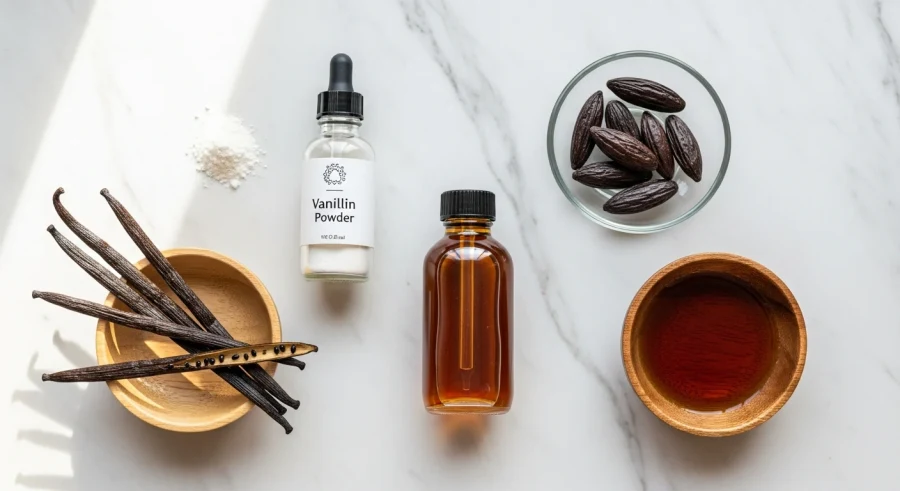
In Short
Vanilla bean paste and bourbon are your closest 1:1 substitutes, while maple syrup and almond extract work beautifully with minor ratio adjustments. Which one you should pick depends entirely on whether you are baking a dark chocolate cake or whipping up a cold frosting (and the reason you should never use bourbon in the latter is explained below).
I used to think that running out of vanilla halfway through a cookie recipe meant the whole project was doomed. It turns out that vanilla extract is usually just doing a very specific, mechanical job in your bowl—enhancing the perception of sweetness and rounding out the harsher notes of flour and raw eggs. Once you understand what it is actually doing, you realize that your pantry is probably full of ingredients that can step up to do the exact same thing.
Vanilla bean paste is the closest match
Vanilla bean paste is exactly what it sounds like. It is a thick, syrupy blend of vanilla extract and real ground vanilla bean pods, usually held together by a natural thickener like tragacanth gum or a simple sugar syrup.
For a direct swap, the ratio is 1:1 (use one teaspoon of paste for every teaspoon of extract).
This works so seamlessly because it literally is vanilla, just in a different physical format. About 85% of vanilla's signature aroma comes from a single compound called vanillin. The paste is absolutely packed with it. Because of the syrupy binder, the paste does have a slightly different texture, but in the context of a cake batter or a cookie dough, that tiny bit of extra viscosity disappears completely. Standard vanilla extract sits at exactly 288 calories and 12.65 grams of carbohydrates per 100 grams (USDA). Vanilla paste will often match or slightly exceed that sugar content depending on the brand, but since you are only using a teaspoon, the nutritional impact is zero.
The flavor difference is minimal, though many bakers find the paste to be slightly more robust and floral than the liquid extract. It is the absolute best choice for puddings, custards, light-colored cakes, and homemade ice creams where you specifically want to see those little black specks of vanilla caviar suspended in the dessert.
You should skip the paste if you are making a dark chocolate cake or a deeply colored spice bread. The primary benefit of the paste is the visual appeal of the specks, and if those specks are going to be hidden by dark cocoa powder, you are just wasting a very expensive ingredient.
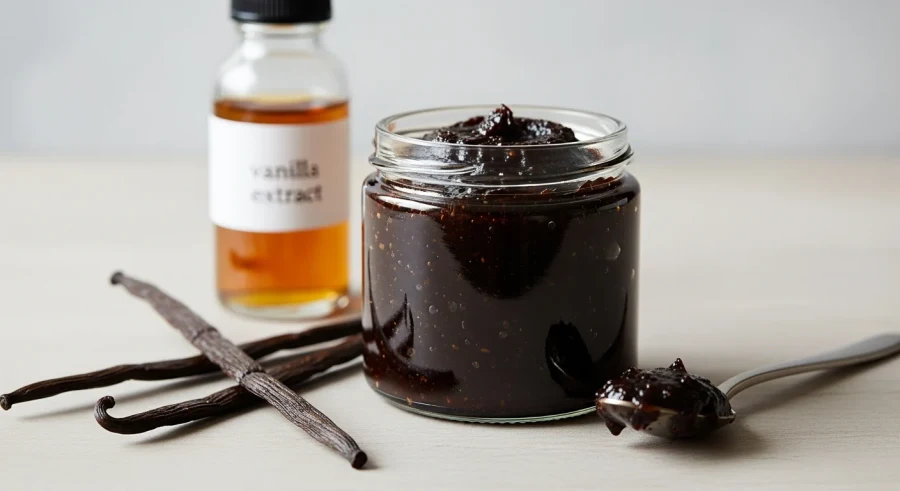
Bourbon is basically vanilla's chemical cousin
When distillers age liquor in charred oak barrels, the wood breaks down and releases a compound straight into the alcohol. That compound is vanillin, which happens to be the exact same primary flavor molecule found in the vanilla orchid.
You can use a 1:1 swap here, but depending on how much you like the warmth of the spirit, a 2:1 ratio (two teaspoons of bourbon per one teaspoon of vanilla extract) often yields a much better depth of flavor in baked goods.
This is a brilliant substitute because it mimics both the flavor profile and the chemical structure of what you are replacing. By law, commercial vanilla extract must contain at least 35% alcohol. Bourbon usually sits around 40% alcohol (80 proof). When you add it to a batter, it performs the exact same chemical function, carrying volatile flavor compounds through the fat in your butter and evaporating at the exact same rate in the oven. It leaves behind a warm, slightly smoky sweetness that tricks the palate into perceiving vanilla.
Bourbon is phenomenal in pecan pies, chocolate chip cookies, gingerbread, and anything involving brown butter. The subtle caramel notes of the liquor bond beautifully with the molasses in brown sugar.
The major failure case for bourbon is any unbaked or cold application. Do not put this in your whipped cream, your royal icing, or a standard buttercream unless you specifically want a cocktail-flavored frosting. In a baked good, the ethanol cooks off at 173°F, leaving just the flavor. In a cold frosting, the alcohol remains trapped, resulting in a sharp, boozy bite that will overpower your sugar and butter.
Maple syrup works for dark baked goods
Pure maple syrup comes in right around 260 calories per 100 grams, which puts it in the exact same energy neighborhood as vanilla extract's 288 calories (USDA). But the reason it works as a substitute has nothing to do with calories and everything to do with trace chemistry.
The substitution ratio is 1:1. Just swap it straight across.
Maple syrup contains trace amounts of vanillin and furanones, which are organic compounds that naturally provide a complex, woodsy, caramel-like background note that rounds out the sweetness of the flour in the exact same way vanilla does. Standard vanilla extract contains barely any fat (0.06g per 100g) and almost zero protein (0.06g). Maple syrup is similarly devoid of fat and protein, meaning it won't accidentally introduce binding or tenderizing agents that could mess up your crumb structure.
This swap shines in pancake batter, banana bread, spiced cakes, and oatmeal cookies. The darker the syrup (like a Grade A Dark Color/Robust Taste), the better it will perform as a flavor enhancer.
You run into trouble with maple syrup when you are baking highly sensitive, pale desserts. A teaspoon of liquid won't ruin the hydration of most batters, but the distinct amber color and the specific maple note will absolutely throw off a delicate angel food cake, a classic white wedding cake, or a meringue. Also, this only works with pure maple syrup. Artificial pancake syrups are essentially just flavored corn syrup and will not provide the complex aromatics you need.
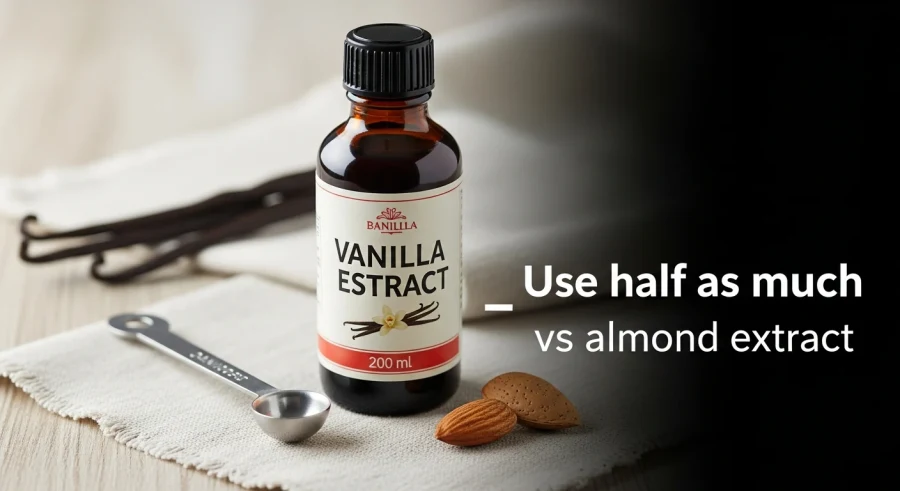
Almond extract (but use half as much)
You have to be quite careful with this one. Almond extract is not a flavor match for vanilla at all, but it is a highly effective functional match. It provides a massive aromatic lift that makes baked goods smell and taste finished.
The ratio here is 1:2. You should use exactly half the amount of almond extract as you would vanilla. If the recipe calls for one teaspoon of vanilla, use a half teaspoon of almond.
This works because almond extract is loaded with benzaldehyde, a naturally occurring organic compound that provides a sweet, piercing, cherry-like aroma. Your olfactory system links that smell directly to sweetness and richness. While vanilla extract contains roughly 12.65 grams of carbohydrates per 100 grams (USDA), almond extract is practically a pure aromatic oil suspended in alcohol, containing essentially zero carbs or sugar. It relies entirely on its intense scent to trick your brain into perceiving a rounded dessert profile.
Almond extract is an incredible substitute in fruit-based desserts. It elevates cherry pie, peach cobbler, and raspberry blondies beautifully. It is also surprisingly good in dark chocolate brownies, where the cherry notes cut through the dense bitterness of the cocoa.
The absolute worst time to use almond extract is when vanilla is meant to be the primary, undisputed star of the show. If you are making a vanilla pound cake, a French vanilla ice cream, or a basic sugar cookie, using almond extract will completely hijack the recipe. Your dessert will taste intensely like marzipan or amaretto, and the subtle buttery notes of your dough will be completely erased.
Vanilla powder is perfect for dry mixes
Liquid extracts inherently add moisture to a recipe. Most of the time, a single teaspoon of liquid doesn't matter, but occasionally you want intense flavor without introducing any wetness to your bowl.
The ratio for pure vanilla powder is 1/2 teaspoon for every 1 full teaspoon of extract called for. It is highly concentrated.
Pure vanilla powder is made by dehydrating vanilla beans and grinding them into a fine dust. Because it contains no alcohol, none of the flavor flashes off or evaporates when exposed to high heat in the oven. This makes it an incredibly stable substitute. Vanilla extract naturally contains 9 milligrams of sodium per 100 grams (USDA), which is a negligible amount, and the powder is similarly neutral, meaning you don't have to adjust your salt measurements at all when swapping it in.
This is the ultimate choice for dry baking mixes, macarons, and delicate meringues where even a drop of liquid alcohol could compromise the egg white structure. It is also fantastic for dusting over finished lattes or rolling truffles in, since it won't make the exterior sticky.
The failure case for vanilla powder is cold liquids. If you try to stir vanilla powder into a glass of cold milk, an iced coffee, or a chilled heavy cream, it will not dissolve. It will clump up and float on the surface like sand. The powder requires either a thick batter to mechanically disperse it, or heat to help it properly hydrate and release its oils.
When to just use honey instead
Sometimes you just need an ingredient that will take the flat, floury edge off a dough, and honey is likely sitting right there in your cupboard.
The ratio is a simple 1:1 swap.
Honey obviously does not contain the 200-plus complex flavor compounds found in pure vanilla extract. What it does have is a unique ratio of fructose to glucose. Fructose is perceived by the human tongue as sweeter than standard table sugar (sucrose). When you add a teaspoon of honey to a batter, you are slightly bumping up the perceived sweetness and adding a mild, floral background note. Honey also retains moisture exceptionally well, which can give your baked goods a very slight, pleasant chewiness.
Use this trick for hearty, rustic bakes. It works wonderfully in oatmeal raisin cookies, bran muffins, granola, and yeast breads where the floral notes of the honey can complement the earthy grains.
Avoid honey if you are strictly baking for a vegan diet, or if you are making a recipe that relies heavily on a crisp, snapping texture (like a biscotti or a thin lace cookie). Honey is hygroscopic, meaning it pulls moisture from the air, which can cause ultra-crispy cookies to soften over a few days.
The espresso powder trick for chocolate
This suggestion sounds completely wrong until you try it, but it is an absolute staple trick in professional bakeries.
The ratio is not a direct swap. Instead of a teaspoon of vanilla, use just 1/4 to 1/2 teaspoon of espresso powder (or instant coffee granules) for the entire recipe.
Vanilla is very frequently added to chocolate recipes, but it isn't there to make the chocolate taste like vanilla. It is there to provide aromatic depth so the chocolate doesn't taste flat. Coffee does the exact same thing, but arguably better. The roasted alkaloids in the coffee interact directly with the theobromine in the cocoa, amplifying the bitter, earthy, and fruity notes of the chocolate. The amount of saturated fat in vanilla extract (0g per 100g, USDA) is functionally zero, so swapping to a dry powder like espresso doesn't alter the fat chemistry of your ganache or batter at all.
This is the ultimate substitute for chocolate cake, fudge brownies, chocolate silk pie, and chocolate frosting. The small amount of coffee won't make the dessert taste like a mocha; it will just make it taste like a darker, richer version of itself.
The failure case here is entirely straightforward. Do not use espresso powder in anything that isn't chocolate. Putting instant coffee into a snickerdoodle or a lemon tart will just give you a confusing, muddy flavor profile that clashes with the bright notes of the dessert.
Bottom Line
Baking usually comes down to managing a few basic chemical reactions. When you swap out a core flavor ingredient, the goal is just to figure out what job that ingredient was doing in the first place. If vanilla was the star of the show, hunting down some paste or powder is worth the effort. But if it was just a background singer holding up the chocolate or the fruit, your liquor cabinet or your spice rack probably already holds exactly what you need.