In Short
The brown edges on your greens are essentially edible rust, caused by an enzymatic defense mechanism that triggers when plant cells are damaged. Why your expensive plastic lettuce knife is a total scam (and what that weird pink discoloration actually means) is below.
You buy a pristine, crisp head of romaine on Sunday. By Wednesday, the edges look like they’ve been singed with a blowtorch, and the white ribs have taken on a weird, rusty hue. It feels almost like a personal betrayal by your produce drawer. But the leaves aren't just decomposing randomly—they are executing a highly coordinated chemical defense strategy.
It Is Literally Edible Rust
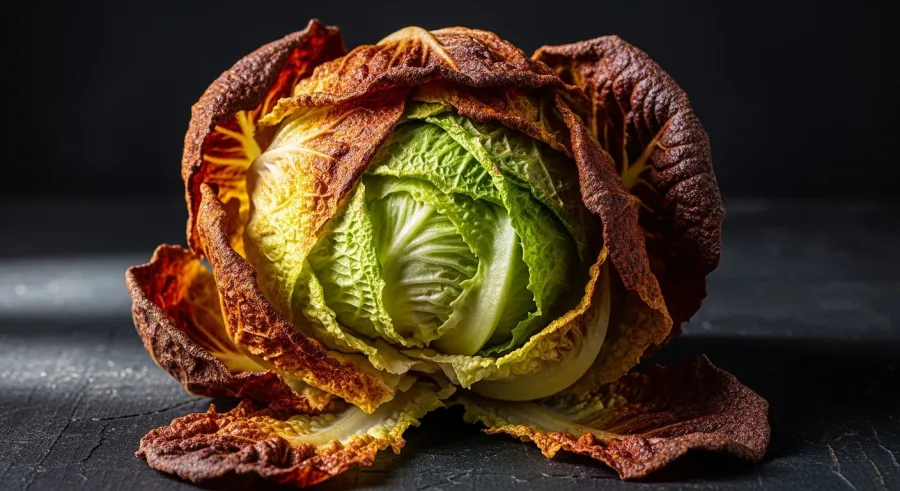
When you examine a bruised lettuce leaf, the discoloration always starts exactly where the structural integrity of the plant was compromised.
Understanding the discoloration requires looking at the microscopic architecture of the leaf. Inside a healthy lettuce cell, different chemical components are kept strictly segregated. The polyphenols sit quietly in one compartment (the vacuole), while an enzyme called polyphenol oxidase (PPO) is locked away in another (the cytoplasm). As long as the cellular walls remain intact, these two compounds never meet.
The moment a chef's knife slices through the leaf, or the head gets crushed at the bottom of your grocery bag, those internal walls shatter. The PPO and the polyphenols flood out and mix together. When this biochemical soup is exposed to the oxygen circulating in your kitchen, a rapid reaction occurs. The enzymes oxidize the polyphenols, linking them together to form dark pigments called melanins.
This is the exact same mechanism that turns a sliced apple brown or ripens a green olive into a black one. According to the Office for Science and Society at McGill University (2017), this reaction is fundamentally a form of oxidation. You are essentially looking at edible rust. The leaf is oxidizing just like a piece of exposed iron left out in the rain.
When the PPO reacts with oxygen, it creates highly reactive compounds called o-quinones. These o-quinones possess no color of their own, but they are chemically unstable. They rapidly bond with amino acids and proteins in the damaged tissue, eventually polymerizing into the large, complex, brown molecules we see on our cutting boards.
A Microscopic Defense Grid
Why would a plant evolve a mechanism that makes itself look so unappetizing?
The harsh truth is that the lettuce does not care about your salad. From an evolutionary perspective, a broken cell wall usually means the plant is under active attack by a pest. A caterpillar chewing on the edge of a leaf or a fungal pathogen boring into the stem triggers the exact same cellular damage as your kitchen prep.
The brown pigments are not a symptom of the plant passively dying. They are an active chemical shield.
When the leaf sustains damage, the rapid formation of those brown melanin-like compounds creates a hostile environment for invaders. Research published in the Journal of Agricultural and Food Chemistry (1997) noted that the plant attempts to repress microbial growth by altering its phenolic metabolism right at the wound site. Those unstable o-quinones we just talked about happen to be highly toxic to many insects and microorganisms.
By instantly browning the damaged tissue, the lettuce is attempting to seal off the wound. It is building a biochemical scab to prevent fungi from entering the healthy, surrounding tissue. The fact that this ancient survival mechanism ruins the visual appeal of your Caesar salad is just collateral damage in a microscopic turf war.
Tearing Versus Slicing
Fourteen days for torn leaves. Twelve days for cut leaves.
Those two numbers represent the actual difference in longevity between the two most hotly debated prep methods in the culinary world. Professional cooks have argued for decades that tearing lettuce by hand is far superior to cutting it with a knife. The theory claims that tearing allows the leaf to break naturally along its structural fault lines, separating whole cells rather than slicing violently through them. Fewer ruptured cells should mean less PPO leaking out, which naturally means less browning.
The culinary team at America's Test Kitchen decided to actually measure this phenomenon to see if the physics matched the folklore. They prepped identical heads of lettuce and monitored them over a strict two-week period.
The results proved that the tearing theory is technically accurate, but practically irrelevant for most home cooks. The torn leaves did resist oxidation slightly longer, but the delay was minimal. The leaves sliced with a standard stainless steel chef's knife began to show faint signs of browning on the cut surfaces at the 12-day mark. The torn lettuce held out until day 14.
If you are prepping a salad to eat tonight, or even within the next three days, the method you choose makes absolutely no difference to the cellular degradation of the plant. The natural aging of the lettuce cells will eventually cause the internal walls to weaken and leak anyway. This triggers the browning process over time even if the head remains completely uncut in your fridge.
The Plastic Knife Scam
There is a persistent kitchen rumor that slicing greens with a metal blade directly causes them to oxidize faster than cutting them with plastic.
You can still find specialized plastic lettuce knives sold in kitchen stores today (often in bright, cheerful shades of green), usually marketed with bold claims that they prevent your produce from turning brown. The underlying assumption driving this entire product category is that the iron or steel in a standard kitchen knife reacts with the plant tissue, acting as a catalyst for oxidation.
It sounds like plausible chemistry. It is completely false.
The Office for Science and Society at McGill University (2017) addressed this exact myth, confirming that the metal of a modern stainless steel knife does not accelerate the enzymatic browning of lettuce. Stainless steel is entirely unreactive in this context. The catalyst for the browning is the oxygen in the air, combined with the plant's own internal enzymes, not the metallurgy of your cutlery.
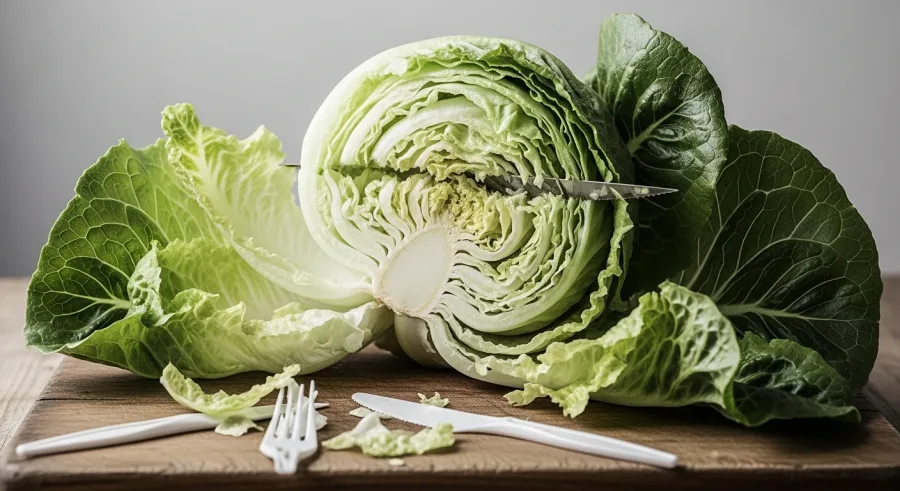
When America's Test Kitchen tested a plastic lettuce knife against a standard metal blade, they found the plastic version bought the lettuce exactly one extra day of freshness before browning occurred. This slight advantage had nothing to do with the material of the blade itself. Plastic lettuce knives are typically dull and heavily serrated. When you press them through a head of iceberg, they inflict a ragged, tearing motion rather than a clean, microscopic slice. The plastic knife is simply mimicking the physical action of tearing the leaves by hand.
The only real difference a plastic knife makes is taking up extra space in your utensil drawer.
Decoding The Pink Ribs
If you pull a head of iceberg out of the crisper drawer after a few days, you might notice bright pink or reddish streaks running straight down the thick, white ribs.
This specific type of discoloration is entirely distinct from the brown, melanin-induced oxidation at the cut edges. The agricultural industry identifies these physiological disorders as "pink rib" (often caused by temperature stress or overmaturity) and "russet spotting" (characterized by brown or pinkish spots). These blemishes often prompt people to throw the entire head straight in the trash, assuming it has contracted a weird mold or soaked up juices from a nearby package of raw meat.
The real culprit for russet spotting is usually sitting right next to the lettuce.
Russet spotting is a physiological disorder triggered by exposure to low concentrations of ethylene gas. Ethylene is a natural, invisible plant hormone emitted by ripening fruits. If you store your lettuce in the same drawer as an apple, a pear, or a slightly overripe avocado, you are effectively bathing the greens in a concentrated cloud of ethylene.
According to the Postharvest Technology Center at the University of California, Davis, ethylene gas stimulates the lettuce to produce specific phenolic compounds. These compounds concentrate aggressively in the thick midribs of the leaf. Over a few days in cold storage, they oxidize into unsightly blemishes.
The process is strictly cosmetic. These discolored ribs are perfectly safe to eat, provided the rest of the leaf is still crisp and firm. You are simply looking at a visual record of the plant reacting to age, temperature, or the invisible gases trapped inside your refrigerator.
The Iceberg Paradox
Dark leafy greens like spinach and romaine carry an enormous nutritional payload, while iceberg lettuce is routinely dismissed by nutritionists as crunchy water.
The USDA FoodData Central database confirms this stark contrast. A 100-gram serving of raw iceberg lettuce contains a mere 14 calories. It possesses negligible amounts of the complex antioxidants, polyphenols, and vitamins found in darker greens, sitting at roughly 96 percent water by weight.
Because enzymatic browning is driven directly by the oxidation of polyphenols, you would naturally assume that a nutrient-poor, water-heavy leaf like iceberg would barely brown at all compared to a polyphenol-rich green. Yet iceberg is notorious for rapidly developing brown edges and deep pink ribs.
This paradox puzzled food scientists enough to prompt a deeper look at the plant's biochemistry. A 2017 study published in the Journal of Agricultural and Food Chemistry utilized liquid chromatography to isolate the phenolic compounds specifically in iceberg lettuce, trying to understand its highly reactive browning mechanisms.
The researchers made a surprising discovery. The total concentration of phenolic compounds in the lettuce was not directly related to how fast or how dark the leaf browned. Instead, the discoloration is driven by very specific "signal metabolites" that trigger the browning cascade, regardless of the overall antioxidant density of the plant. Even with its low total polyphenol count, iceberg possesses the exact chemical triggers necessary to initiate a massive browning response the moment it senses cellular damage.
The high water content doesn't save it. If anything, the fragile, water-gorged cells of iceberg are physically easier to rupture, releasing those enzymes faster than the sturdy, fibrous leaves of kale or collards.
Bottom Line
Next time you spot a rusty edge on a salad green, you don't have to view it as a failure of freshness or bad grocery shopping. It is just the visual aftermath of a microscopic defense system—a chemical reflex that functioned exactly as it was designed to under pressure. A slightly brown leaf isn't spoiled; it's simply a plant that spent its last moments attempting to protect itself.