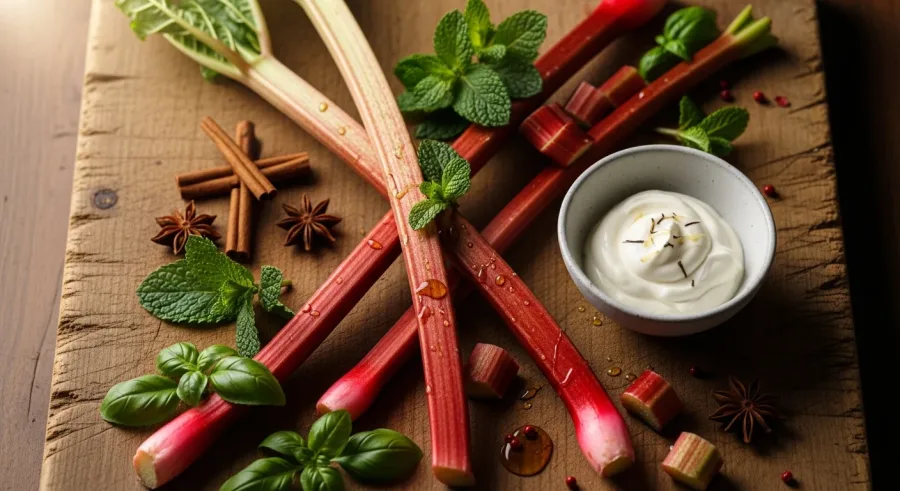
In Short
Rhubarb's sharp malic acid pairs best with sweet notes like vanilla, fat from dairy or pork, and herbal bridges like tarragon. Why matching it with heavy cream is biochemically clever (and why black pepper works) is below.
Rhubarb is a vegetable masquerading as a fruit, carrying a tartness so sharp it can strip the moisture right out of your mouth. When deciding what to make with rhubarb, finding the right flavors means figuring out how to balance that intense acidity without just burying it in refined sugar. It just requires leaning on a little flavor science.
The vanilla trick for sweetness
Most people throw cups of white sugar at rhubarb until it stops tasting like rhubarb. You do not actually have to do that. The pure, clear tartness that defines the rhubarb flavor profile comes from malic acid—the exact same organic compound that gives green apples and sour candies their signature bite. To mellow that bite, you just need to trick the palate into thinking it is eating something sweet. Vanilla does exactly this.
Natural vanilla is loaded with a volatile compound called vanillin. Because humans spend their entire lives consuming vanilla in desserts and baked goods, our brains strongly associate the aroma of vanillin with sugar.
Research published in Chemical Senses (1999) shows that simply adding vanillin to a dish significantly increases the perceived sweetness of that food, even when no extra sugar is added. When you chew, the volatile compounds travel up the back of your throat to your olfactory bulb in a process called retronasal olfaction. You smell the vanilla, and your brain immediately tells your tongue the food is sweeter than it actually is.
This phenomenon works perfectly with rhubarb. When roasting the stalks, tossing them with a split vanilla bean or a heavy splash of good extract can easily cut the required sugar by a third. The vanilla smooths out the sharp edges of the malic acid, leaving a balanced, fruity dessert that does not mask the plant's natural personality.
There is a situational catch, though. Vanilla extract works beautifully for wet compotes, but if the rhubarb is roasting on a dry sheet pan, the alcohol in the extract evaporates too quickly, taking the vanillin with it. That is when scraping a whole vanilla bean directly into the roasting sugar makes a noticeable difference. The fat and natural oils inside the vanilla pod cling to the rhubarb, ensuring the flavor survives the heat of the oven.
Why heavy cream changes the chemistry
Ever wonder why rhubarb crumble is almost always served with a pool of custard or a scoop of mascarpone? It is not just a comforting culinary tradition. It is pure chemistry.
Rhubarb contains high levels of oxalic acid. While the toxic leaves harbor dangerous amounts of the stuff, the edible stalks still hold enough to leave a chalky, astringent feeling on the teeth. It is the exact same fuzzy, dry sensation that happens after eating a large bowl of raw spinach.
Dairy fixes this problem at a molecular level. According to studies published in the Journal of Food Science (1997), calcium binds directly to oxalic acid. When a person eats rhubarb alongside calcium-rich dairy products like heavy cream, milk, or yogurt, the calcium binds to the oxalates in the mouth and digestive tract. This neutralizes that dry, astringent sensation almost entirely, allowing the fruitier notes of the rhubarb to come forward.
Fat also plays a mechanical role in this pairing. The rich milk fat in mascarpone or clotted cream physically coats the tongue. This creates a temporary barrier that shields the taste buds from the aggressive acidity of the vegetable.
Choosing the right dairy matters depending on the application. Using a low-fat milk might provide the calcium needed to bind the oxalates, but it lacks the lipid structure to coat the palate. On the other hand, butter provides the fat coating but does not have enough free calcium to neutralize the oxalic acid. Heavy cream or a rich mascarpone hits the exact intersection of both requirements.
Folding a spoonful of mascarpone into the base of a rhubarb tart, or pouring cold heavy cream over warm roasted stalks, provides about the right ratio. Usually, two parts rhubarb to one part cream is enough for the calcium to do its job without drowning the dish.
Fatty cuts of pork
When exploring savory rhubarb pairings, pork and apples are a classic culinary match. Pork and rhubarb follow the exact same logic, but with a much sharper execution.
When rich, fatty meats like pork belly or shoulder are slow-roasted, the amino acids and sugars undergo the Maillard reaction, creating deeply savory, browned crusts. But the interior remains intensely rich and fatty. Consuming too much rendered animal fat can quickly overwhelm the palate, causing palate fatigue. A sharp, acidic counterpoint is necessary to clear the taste buds between bites. Rhubarb steps into this role beautifully.
With only about 1.1 grams of sugar per 100 grams (USDA FoodData Central), rhubarb is essentially an acidic blank canvas. When cooked down into a savory compote, the malic and citric acids act just like a squeeze of lemon or a splash of vinegar. It becomes a palate cleanser built right into the meal. The acid causes a sudden spike in saliva production, which physically washes away the coating of pork fat from the tongue.
Timing the cooking process is the only real hurdle. Rhubarb breaks down into a puree in about ten to twelve minutes of simmering. It cannot survive the long, slow braise required for a pork shoulder or a thick cut of belly. The vegetable must be cooked separately and introduced at the end, almost functioning like a vibrant condiment rather than a traditional braising vegetable.
Sautéing a diced shallot in butter, adding 300 grams of chopped rhubarb, a splash of water, and a generous pinch of salt creates a simple savory sauce in under fifteen minutes. Spooning this thick puree directly over roasted pork chops or a crispy piece of pork belly creates a perfect equilibrium. The acid clears the fat, the fat softens the acid, and the entire meal feels substantially lighter.
Tarragon and the anise connection
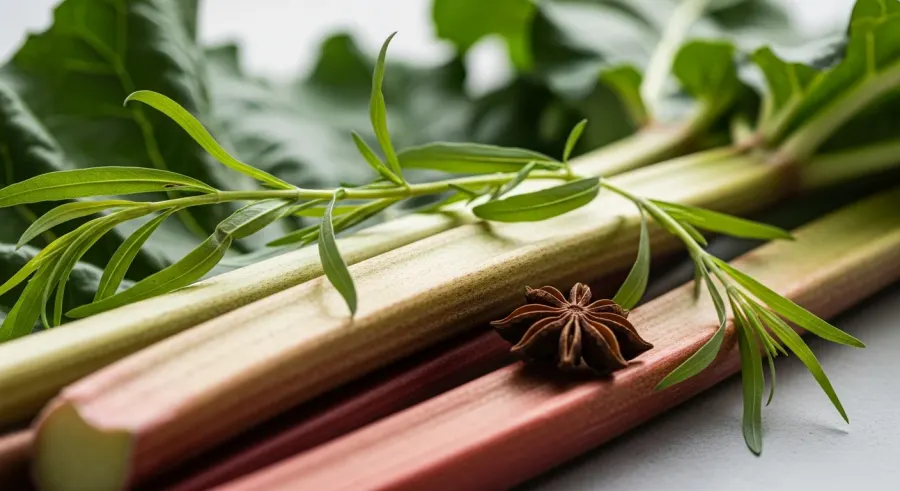
Estragole makes up 60 to 75 percent of the essential oil in fresh tarragon (European Commission Scientific Committee on Food, 2001). This volatile compound is responsible for the sweet, slightly bitter, licorice-like aroma that defines much of classic French cooking.
Pairing herbs with acidic produce is always a bit of a balancing act. When testing herbs that go with rhubarb, mint is the standard fallback because it contains menthol, which triggers cold receptors on the tongue and distracts from the acidity. But mint can sometimes overpower the delicate floral notes of the rhubarb itself. Tarragon is a much more cooperative partner. The anise notes in tarragon act as a bridge between savory and sweet, pulling the underlying floral tones out of the rhubarb while standing up perfectly to its aggressive tartness.
Heat management is critical when working with estragole. The compound is highly volatile, meaning its flavor burns off quickly if it is boiled. If tarragon is thrown into a simmering pot of rhubarb jam, the essential oils will evaporate into the kitchen air long before the jam cools.
For a rhubarb syrup intended for cocktails or sodas, the trick is removing the syrup from the heat completely before dropping in a few sprigs of fresh tarragon. Letting it steep as it cools extracts the flavor gently, treating the herb more like a delicate green tea.
In savory applications, raw tarragon shines without any heat at all. Tossing raw, thinly sliced rhubarb with fresh tarragon leaves, good olive oil, and flaky salt creates a sharp, crunchy garnish for grilled white fish or roasted chicken. Only a few leaves are needed—roughly a tablespoon of chopped tarragon for every two cups of rhubarb—to successfully bridge the gap between the garden and the plate.
Black pepper and balsamic vinegar
Sometimes balancing the acidity is the wrong approach entirely. Sometimes you just lean into it.
Balsamic vinegar and black pepper might sound like ingredients reserved strictly for salad dressings, but they pull rhubarb in a deep, earthy direction. Black pepper contains piperine, a chemical compound that triggers the heat receptors on the tongue. Balsamic vinegar brings acetic acid alongside a complex, caramelized sweetness that develops over years of barrel aging.
When these three elements combine, the piperine adds a sharp, warming bite that distracts the palate from the sourness of the rhubarb. The balsamic vinegar provides a dark, syrupy backbone that prevents the vegetable from tasting thin or watery.
Ingredient quality determines whether this pairing succeeds or fails. Commercial grocery store balsamic is often just wine vinegar colored with caramel, which only adds empty sweetness to an already tart dish. A true aged balsamic vinegar, or at least a high-quality thick balsamic glaze, contains complex phenols from the wooden barrels that round out the sharp edges of the malic acid.
This combination shines brightest in an agrodolce, a traditional Italian sweet-and-sour sauce. Tossing 400 grams of rhubarb chunks with two tablespoons of aged balsamic vinegar, a tablespoon of honey, and a heavy grating of coarse black pepper prepares it for the oven. Roasting the mixture at 400°F (200°C) for about 15 minutes allows the rhubarb to hold its shape while turning completely jammy inside.
The context of the dish dictates how the pepper should be ground. If the rhubarb is intended for a dessert, a very fine dust of black pepper highlights the natural sweetness. If the dish is savory, a coarse grind provides physical crunch and random bursts of heat that break up the soft texture of the cooked stalks.
Warm spices like ginger and cardamom
The smell of fresh ginger hitting a hot pan immediately warms up a kitchen. That specific heat is exactly what rhubarb needs when its tartness starts to feel a bit too shrill.
Ginger contains gingerol, a compound that provides a slow, creeping warmth. Cardamom is packed with cineole, a chemical that leaves a cooling, almost eucalyptus-like finish on the palate. Both of these spices share a common trait: they are highly aromatic but not inherently sweet.
When paired with rhubarb, these warm spices fill out the middle of the flavor profile. The sharp malic acid registers on the tongue first, the ginger warms the back of the throat seconds later, and the cardamom lingers in the nose long after the bite is gone. It makes eating rhubarb feel like consuming a complex, deliberate dish rather than just enduring a sour stalk.
The chemistry of ginger changes drastically depending on how it is handled. Gingerol is chemically related to capsaicin, the compound that makes chili peppers hot. However, gingerol is much less stable. When fresh ginger is cooked, the gingerol transforms into zingerone, which is significantly milder and noticeably sweeter. This is why a slow-baked rhubarb and ginger crumble tastes warm and comforting, rather than sharp and spicy like a stir-fry.
Cardamom requires a different approach entirely. The spice loses its volatile cineole rapidly once the seeds are ground and exposed to oxygen. Crushing green cardamom pods right before mixing them into a rhubarb dish ensures the eucalyptus notes actually survive the heat of the oven. Folding a half teaspoon of freshly ground cardamom into a rhubarb muffin batter changes the entire aroma profile, as the fat in the butter traps the cineole and carries that floral spice through every single bite.
Bottom Line
Rhubarb forces a cook to pay attention. You cannot just slice it and eat it raw like an apple, and treating it like a normal fruit usually results in a mouth-puckering mistake. Finding the right pairing is just about understanding what the vegetable needs in that exact moment—whether that is a touch of fat to calm it down, a warm spice to ground it, or an olfactory illusion to round out the edges.