In Short
Cranberries are the closest structural and acidic match for baking, while Granny Smith apples with lemon juice are the most accessible. Why pectin levels matter (and which delicate berries to avoid in pies) is explained below.
Rhubarb has a notoriously short season, and sometimes a craving hits in late November when the stalks are nowhere to be found. Baking with it requires a specific balance of high moisture, intense tartness, and structural integrity. Replacing it isn't just about finding something sour.
Why Cranberries Are the Best Match
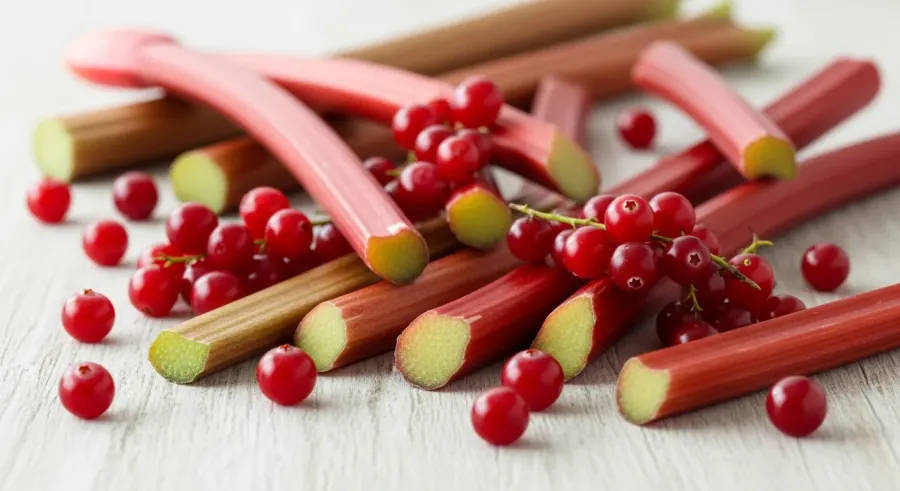
Cranberries are the closest structural and acidic match you can find for baking. A cup of chopped fresh rhubarb and a cup of whole cranberries behave surprisingly alike when tossed with sugar and exposed to high heat.
Both are fiercely tart and rely heavily on added sugar to become palatable in a dessert. When substituting, use a 1:1 ratio by volume or weight.
The main reason this swap succeeds is pectin. Pectin is a naturally occurring fiber found in the cell walls of fruits that forms a gel when combined with heat, sugar, and acid. Cranberries are packed with it. This means they will thicken their own juices as they bake, preventing the dreaded soggy bottom in your pastry. Rhubarb does this to a lesser extent, but both will set up nicely in a pie filling.
There is a flavor difference to note. Cranberries carry a distinct astringency—that dry-mouth feeling—which rhubarb lacks. Rhubarb is purely sour.
Do not use cranberries in delicate desserts like a smooth custard tart. The tough outer skins of cranberries do not break down completely in the oven. You will be left with chewy red flecks interrupting a silky vanilla base.
From a nutritional standpoint, the swap adds a few more carbohydrates. Rhubarb sits at just 21 calories and 0.9g of protein per 100g, while cranberries bring about 46 calories per 100g (USDA).
If you are making a simple streusel muffin, you won't even need to adjust the baking time. The heat penetrates the berries at the same rate it breaks down chopped stalks. Frozen cranberries work just as well as fresh, but they will bleed their color into the batter immediately because freezing fractures their cell walls.
Granny Smiths Need a Little Lemon
Green apples are the most accessible swap on this list. Almost every grocery store carries Granny Smiths year-round, making them a reliable fallback when rhubarb season ends.
To mimic the sharp bite of rhubarb, use a 1:1 volume ratio of chopped apples, but add one tablespoon of fresh lemon juice for every cup of fruit.
The science behind this combination comes down to specific organic acids. Rhubarb gets much of its signature tartness from malic acid. While rhubarb also contains citric and oxalic acids, malic acid is a primary driver of its sharp flavor profile. Granny Smith apples are also packed with malic acid.
By adding a splash of lemon juice (which is pure citric acid), you drop the pH to match rhubarb's aggressive sourness while maintaining that malic acid backbone.
The flavor will clearly be apple. There is no hiding that. But in a heavily spiced dish like a ginger crumble, the texture and tartness matter more than the exact fruit flavor. Apples have a dense cellular matrix that doesn't collapse into a puddle when exposed to a 350-degree oven. While rhubarb eventually melts into a jammy consistency, chopped apples will retain a slight bite.
Avoid this substitute if your recipe relies on rhubarb's vibrant pink color for presentation. An apple compote is going to look pale and golden.
Nutritionally, Granny Smiths are denser, bringing 59 calories and 14g of carbs per 100g (USDA). You can leave the skins on for a crisper texture, though peeling them creates a softer filling.
The Traditional Gooseberry Swap
British bakers have treated gooseberries and rhubarb as interchangeable for generations. Before the 19th century, rhubarb was primarily used for medicinal purposes. It wasn't until sugar became cheaper that it transitioned into baking, often stepping in for gooseberries. Reversing that historical swap works perfectly today.
You can swap them in an exact 1:1 ratio.
Gooseberries are essentially tiny, tart grapes with a slightly fuzzy skin. When baked, that skin pops, releasing a highly acidic juice into your batter. This mimics the way rhubarb releases its water content during the first twenty minutes in the oven.
The flavor is somewhat floral. While rhubarb tastes distinctly green and vegetal, gooseberries have a softer, grape-like undertone beneath their sourness. They excel in simple fools, quick crumbles, and sponge puddings.
The failure case here is prolonged baking. Rhubarb stalks are composed of thick cellulose strings that take time to soften. Gooseberries are delicate. If you put them in a deep-dish pie that requires an hour in the oven, they will disintegrate entirely into a watery mush.
Their macro profile is remarkably similar to the stalks they are replacing. Gooseberries contain 44 calories and 0.88g of protein per 100g, which is a near-perfect match for rhubarb's 0.9g of protein (USDA).
If you buy them fresh, remember to snip off the tiny stem and tail from each berry before tossing them into your mixing bowl.
Sour Cherries for Pies and Tarts
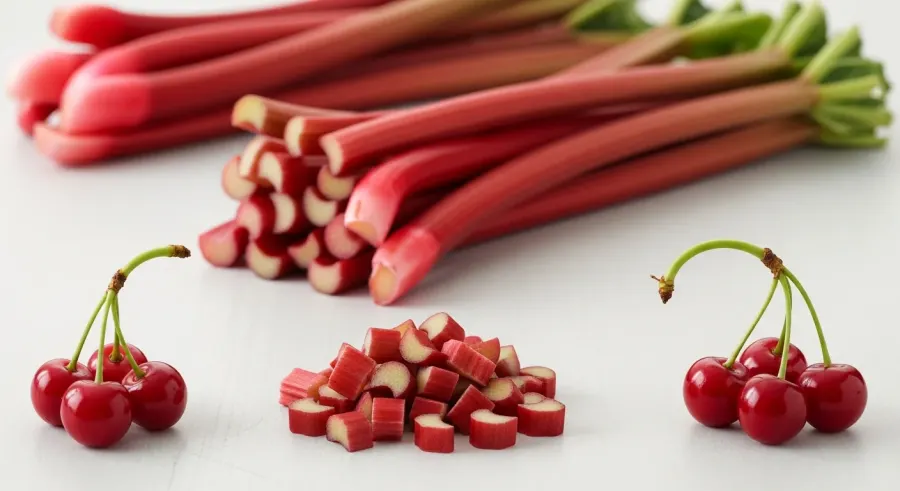
Finding a replacement that keeps your baked goods bright red is tricky. Sour cherries—specifically the Montmorency variety—are the best option for maintaining that visual appeal.
Use a 1:1 volume ratio, but hold back on the liquid. You will want to reduce any added water or milk in your filling by about one to two tablespoons per cup of cherries.
Sour cherries bring a massive hit of acidity, which is exactly what you want. They perform beautifully in double-crust pies and hand tarts. The flavor profile is deeply fruity and lacks the earthy, celery-like notes of rhubarb.
Do not use them in recipes that require distinct, structural chunks of fruit. Cherries soften dramatically when heated. If you are making a rustic galette where the fruit is supposed to stand tall, cherries will slump and flatten out.
You will usually find these canned in water or frozen. If you buy them canned, drain them in a colander for at least ten minutes. Any residual water will thin out your thickener. Frozen cherries should be left in a bowl at room temperature until fully thawed, then drained.
Sour cherries sit at 50 calories and 1g of protein per 100g (USDA).
Store fresh ones in the coldest part of your fridge and only pit them right before mixing your dough. Pitting them early causes them to leak juice prematurely.
Underripe Plums Actually Work
Most baking guides warn against using unripe fruit, but this is the rare exception. Firm, slightly green plums are a fantastic stand-in for rhubarb.
The substitution ratio is 1:1 by volume.
Plums work because their skins are deeply tart and contain high amounts of pectin. As they bake, the firm flesh softens to a texture very similar to a cooked rhubarb stalk. You get a stone fruit sweetness that persists even when the fruit isn't fully ripe, so your dessert will taste a bit more complex.
The biggest risk is guessing the ripeness incorrectly. Fully ripe plums are essentially water balloons. If you put soft, dark plums into a pie crust meant for rhubarb, the massive moisture release will result in a soggy bottom and a soupy filling. Stick to plums that feel heavy and yield zero give when you press them with your thumb.
Since plums are less acidic than rhubarb, you might find the final dish lacks a certain edge. A tiny pinch of kosher salt in the fruit filling helps amplify the tartness of the skins without making the dessert taste savory.
You do not need to peel them. The skin is where the pectin and the sourness live.
Raspberries Are Only for Sauces
Sometimes you only need a rhubarb substitute for a quick stove-top sauce, a jam, or a swirl for a pound cake. This is where raspberries shine.
Swap them using a 1:1 ratio by volume, but add one teaspoon of lemon juice per cup of berries.
Raspberries share that brilliant red color and a sharp, punchy acidity. They break down fast on the stove, creating a thick, vibrant syrup in minutes. To make a quick sauce, just heat the berries with sugar in a saucepan over medium heat. The heat breaks them down almost instantly. You don't need to add water; they contain enough internal moisture to create a syrup on their own.
The flavor is highly aromatic. Rhubarb is earthy, while raspberries are intensely fragrant and floral.
You cannot use raspberries as a direct replacement in structured pies or heavy crumbles without altering the thickeners. Rhubarb has enough structural integrity to hold up a top crust. Raspberries do not. They will collapse immediately under the weight of pastry.
If you absolutely must use them in a pie, you will need to double your cornstarch or tapioca to handle the liquid.
Because they mold so fast, only buy them the day you plan to turn on your oven.
Pre-Poached Quince for Winter Baking
Quince is an old-world fruit that looks like a lumpy pear but behaves like a stubborn root vegetable. It is heavily acidic, deeply aromatic, and rock-hard.
The substitution ratio is 1:1 by volume, but there is a major catch. You cannot put raw quince into your batter.
Rhubarb softens nicely during a standard forty-five-minute bake. Quince does not. If you use it raw, your guests will be biting into something resembling a raw potato. You must pre-poach peeled and diced quince in a pot of simmering water or a light sugar syrup. Leave it on the stove for at least forty minutes until the hard, pale flesh turns slightly pink and yields to a fork. Once poached, you can drain it and use it exactly as your recipe intended for the rhubarb.
The flavor is hauntingly good. It tastes like a cross between an apple, a pear, and a lemon, with a floral aroma that fills the whole kitchen. It works best in heavy, spiced desserts. Think ginger cakes, winter crumbles, and dense loaves.
Do not bother with quince if you are making a quick weekend muffin. The prep work defeats the purpose of an easy recipe.
A raw quince provides about 57 calories and 15g of carbohydrates per 100g (USDA).
Bottom Line
Baking is mostly an exercise in managing moisture and acidity. When you pull a recipe apart and look at what the rhubarb is actually doing—providing a sharp malic acid backbone and holding its shape under heat—the list of alternatives starts to make sense. You don't always need the exact ingredient to capture the feeling of the dessert.