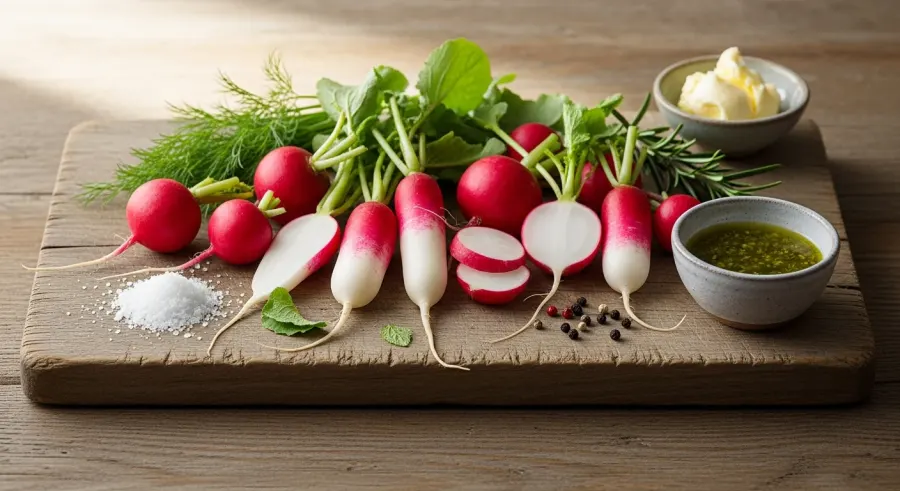
In Short
Butter neutralizes their spicy bite, and citrus also helps to mellow the heat. Why fat, salt, and raw seafood work so well with radishes (and the chemical illusion of pairing them with mint) is below.
You know that sharp, mustardy heat that shoots straight up your nose when you bite into a raw radish? That aggressive peppery note is exactly what makes them a little intimidating to pair. It feels like they want to overpower everything else on the plate. But that heat actually becomes their best feature when you know how to work with it. Figuring out what goes with radishes really just comes down to managing one specific chemical compound.
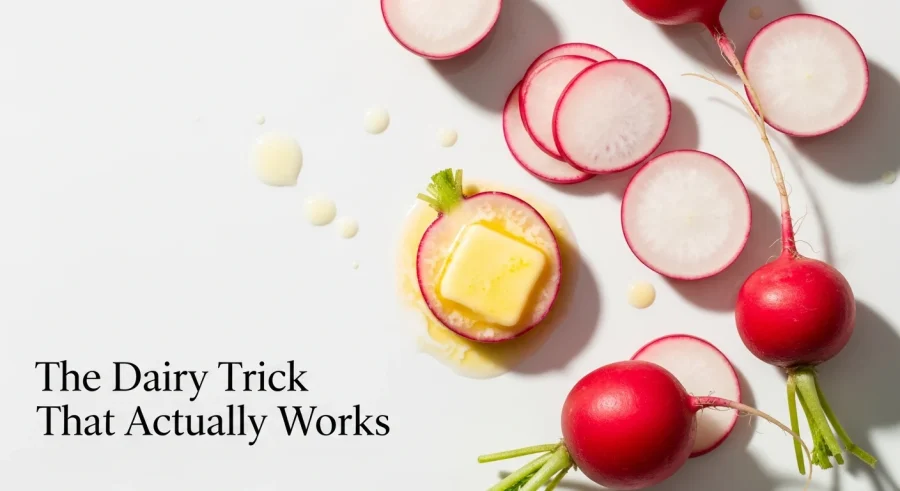
The Dairy Trick That Actually Works
People in France have been dragging raw radishes through salted butter for over a century. At first glance, it looks like an odd mismatch of textures. A wet, crunchy root vegetable and a thick layer of dairy fat shouldn't really make sense together. But the combination is based entirely on fat solubility.
Radishes get their heat from a class of compounds called isothiocyanates. According to the Journal of Natural Products (2015), allyl isothiocyanate is the main driver of that familiar horseradish-like pungency. When you chew the root, these volatile compounds bind to TRPA1 receptors in your mouth and throat. Your brain interprets this chemical binding as a physical burning sensation. It feels hot, even though the vegetable is cold.
Because isothiocyanates are highly soluble in fat, coating your tongue in butter intercepts the heat. The dairy fat physically binds to the compounds before they can fully trigger your pain receptors. You get the earthy, floral flavor of the vegetable with the spice turned down. It works like a charm.
This works beautifully with European-style cultured butter, but skip it for clarified butter or ghee. The water content and milk solids in standard butter help emulsify the radish juice in your mouth. Pure butterfat just leaves a greasy film on the palate. A simple setup involves smearing a thick layer of soft butter on a piece of sourdough, adding thinly sliced French breakfast radishes, and finishing with flaky salt.
Pairing Them With Sweet Seafood
If you ever look at a fancy tasting menu, you will probably see radishes paired with scallops. The reason is a pretty stark contrast between dense sweetness and watery crunch.
Raw sea scallops are packed with amino acids like glycine, giving them a distinct, almost sugary sweetness. Radishes offer the exact opposite profile. They lack the heavy structural sugars of other root vegetables like carrots or beets. When you serve them together, the radish acts as an instant palate cleanser that slices through the richness of the seafood without leaving a sticky, starchy residue behind.
This dynamic is perfect for crudo. Thinly slicing raw scallops and layering them with translucent rounds of watermelon radish creates a highly balanced bite. Watermelon radishes are slightly milder and sweeter than standard red globe radishes, making them ideal for delicate raw fish. The gelatinous, soft yield of the raw seafood contrasts directly with the snap of the fresh root.
If raw seafood isn't your preference, this works just as well when the scallops are seared. Searing scallops at a high surface temperature (around 300°F) triggers the Maillard reaction, developing complex caramelized notes on the crust. These browned proteins are deeply savory but can dominate the palate quickly. The raw radish provides a sharp, uncooked contrast that prevents the seared butter and caramelized proteins from feeling too heavy. A reliable preparation involves tossing a cup of quartered radishes with olive oil, lemon zest, and black pepper to serve alongside a half-pound of pan-seared scallops.
Just keep in mind that this works for mild, sweet seafood, but you should avoid pairing radishes with oily fish like mackerel or sardines. The heavy fish oils clash with the sharp sulfur compounds, creating a muddy, metallic aftertaste.
Mint, Cilantro, and Temperature Tricks
Mint probably sounds too aggressive for a vegetable that already brings its own spice. But the interaction between the two creates a really fun sensory illusion in your mouth.
Mint contains menthol, a compound that triggers the TRPM8 receptors in your mouth, which are responsible for signaling cold. Radishes, as we know, trigger the TRPA1 receptors that signal heat. When you eat them in the same bite, your trigeminal nerve receives simultaneous hot and cold signals. The physical temperature of your food hasn't changed at all, but your mouth feels a complex, tingling contrast. It is a biological trick that chefs use to make a dish feel exceptionally vibrant.
Cilantro provides a slightly different angle. It leans into the earthy, green notes of the radish while offering a milder cooling effect thanks to its own unique aldehydes. If you are serving a heavy, spiced dish like lamb shawarma, the combination of radish and cooling herbs resets the palate between bites.
Chopping equal parts fresh mint and cilantro, and tossing them with quartered radishes and grapeseed oil, creates a sharp side dish. Keep in mind that this only works for raw applications. Mint should never be used if you plan to roast or braise the radishes. Heat destroys menthol rapidly, leaving you with a wilted leaf that tastes faintly of swamp water. For cooked radishes, woody herbs like thyme or rosemary are much better companions.
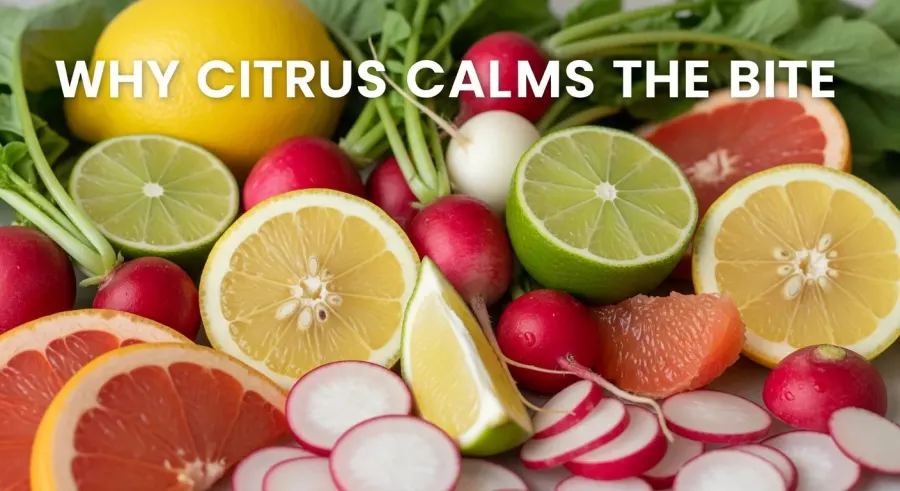
Why Citrus Calms the Bite
Most people assume a quick squeeze of citrus will calm down the bite of a spicy vegetable. They are absolutely right when dealing with the compounds in radishes.
If you want to make a radish taste milder, you add acid. Lowering the pH with lime juice or grapefruit segments changes the chemical environment. The acid helps break down the volatile isothiocyanates and inhibits the myrosinase enzyme responsible for generating the heat. The citrus actively neutralizes and mellows the intense peppery bite.
This is a highly useful mechanic when you are serving dense, fatty meats. Think about a taco truck serving heavy pork carnitas or beef barbacoa. A radish soaked in lime juice is perfect. The bright, acidic crunch cuts right through the dense animal fat and resets your palate for the next bite without overwhelming it with spice.
Grapefruit works especially well for salads because it brings its own slight bitterness, mirroring the earthy notes of the root. Slicing a handful of radishes and letting them sit in lime juice for ten minutes creates an ideal taco garnish, acting as a quick pickle that tames the heat.
Coarse Salt Fixes the Bitterness
Sometimes you bite into a radish and it just tastes bitter, completely lacking that bright peppery snap. This usually happens in larger, older radishes, or ones grown in unexpectedly hot weather. When the plant gets stressed, its defensive glucosinolates break down into bitter compounds like goitrin. Black Spanish radishes and oversized daikon are particularly prone to this harsh, astringent profile.
Salt is the most effective tool for fixing this flaw. Sodium ions physically interfere with the bitter taste receptors on your tongue. When you apply coarse salt to a radish slice, you aren't just making it salty. You are actively suppressing your brain's ability to perceive the bitterness, which allows the subtle, underlying sweetness of the vegetable to come forward.
You have to use coarse sea salt or large flaky salt for this. Standard iodized table salt should be skipped entirely. Fine salt dissolves too quickly and pulls the water out of the radish through rapid osmosis, leaving it limp and rubbery within minutes. Large flakes provide concentrated bursts of salinity as you chew, protecting the structural integrity of the vegetable while still neutralizing the bitter compounds.
Adding Weight With Lentils
It is easy to forget that radishes are mostly just water. Looking at their nutritional profile makes this super obvious: a 100g serving of radishes contains 16 calories, 3.4g of carbohydrates, and 1.6g of fiber (USDA FoodData Central). They contain barely any fat (0.1g, with just 0.03g of saturated fat) and very little protein (0.68g), alongside just 1.86g of sugar and 39mg of sodium.
That high moisture content makes them refreshing, but it also means they lack structural weight in a dish. Pairing them with dense, earthy bases like French green lentils or farro grounds the vegetable. The complex carbohydrates and starches in the lentils absorb the radish's volatile mustard oils, softening the overall flavor profile. It turns a sharp, watery garnish into a cohesive, filling salad.
Mixing a cup of cooked, cooled lentils with diced radishes, a splash of red wine vinegar, and enough olive oil to coat the beans yields a salad that stays crisp for days. The legumes provide the necessary weight, while the radishes offer a clean textural snap.
Bottom Line
Understanding how radishes interact with other ingredients transforms them from a simple salad garnish into a versatile culinary tool. The heat isn't a flaw to be masked. It is just a chemical reaction you can mellow with acid or soften with fat, depending entirely on what the rest of the plate needs.