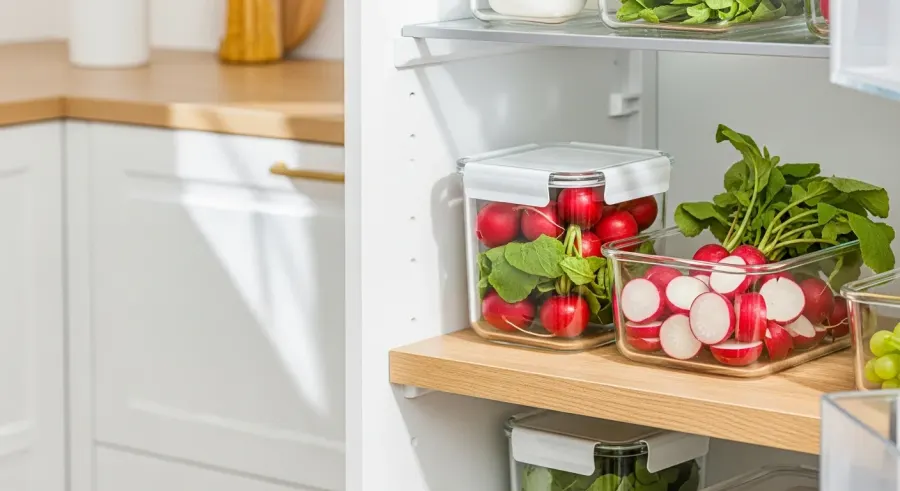
In Short
Cut the leafy tops off immediately, as they drain moisture from the bulb. To keep radishes crisp for up to two weeks, submerge the trimmed bulbs in a jar of cold water in the fridge.
Figuring out how to store fresh radishes often feels like a race against the clock. Left alone on the counter, they have a habit of turning soft and rubbery before you even have a chance to chop them for a salad. But keeping them fresh mostly comes down to understanding how they handle water.
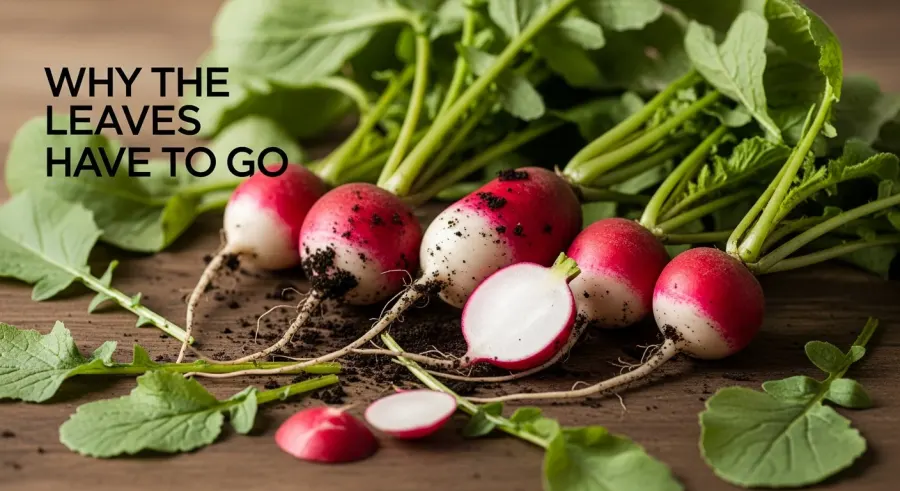
Why the Leaves Have to Go
Most of us toss a fresh bunch of radishes straight into the crisper drawer, leaves and all. Keeping the plant whole seems like the natural way to preserve it. But those bright green tops are actually actively working against the root.
Radishes are essentially a botanical water storage system. While the plant is still in the ground, the root pulls moisture and nutrients from the soil to feed the leaves above. Once harvested, that vascular system does not simply shut down. The leaves continue trying to survive by pulling moisture straight out of the radish bulb. Research published in the Journal of Food Quality (2005) using MRI imaging showed that radishes exposed to low relative humidity do not just shrink over time. They develop massive internal cavities as their tissues break down. Protecting their water content is non-negotiable.
Removing the stems right above the bulb immediately halts this moisture loss. You do not have to throw the greens away, as they make a peppery addition to salads and pestos. Proper radish leaves storage involves keeping them in their own breathable bag in the fridge for two to three days. Meanwhile, the bulbs are saved from drying out. According to USDA FoodData Central, a raw radish is over 95 percent water, carrying only 16 calories and 3.4 grams of carbohydrates per 100-gram serving. All of its signature snap comes from that hydration.
The Mason Jar Water Trick
Putting vegetables in a jar of water usually sounds like a fast track to rot. With delicate greens like spinach, submerged storage would result in slime within a day. But radishes are sturdy root vegetables that thrive when completely underwater.
Once the leafy tops are trimmed, placing the unpeeled bulbs in a glass jar filled with cold, filtered water mimics the damp conditions of the soil. When you store radishes in water, the bulbs actually absorb the liquid through their root hairs, which plumps them up and reinforces their crisp texture. Screwing a lid on the jar and keeping it in the refrigerator (ideally between 34°F and 40°F, or 1°C to 4°C) maintains a stable, cold environment.
They will easily last up to two weeks stored this way. Changing the water every two to three days prevents any bacterial growth or cloudiness from developing. If you happen to bring home radishes that already feel slightly soft from sitting on the grocery store display, this water bath method acts as a revitalizing treatment. After a few hours in the jar, they often firm right back up.
Using the Crisper Drawer Instead
Not everyone wants to sacrifice valuable vertical shelf space for a heavy jar of floating vegetables. The crisper drawer offers an excellent alternative, provided you control the environment correctly.
Washing radishes before putting them in a bag is a common mistake. Scrubbing the dirt off adds excess surface moisture, which encourages mold when sealed in a plastic environment. Leaving the soil on the skins until you are ready to eat them offers a natural layer of protection.
Placing the trimmed, unwashed bulbs in a zip-top bag alongside a slightly damp paper towel creates the perfect microclimate. The towel provides ambient humidity without leaving the vegetables sitting in a puddle. Squeezing out as much air as possible before sealing the bag limits oxidation. Tucked away in the crisper drawer—which naturally maintains a higher humidity level than the rest of the fridge—they will keep radishes crisp for ten to fourteen days.
Keeping Them on the Counter
You might be surprised to learn that refrigeration is not strictly necessary for root vegetables. Sailors and homesteaders have long utilized a damp cloth method to keep radishes fresh without taking up any cooler space.
Wrapping unwashed, trimmed radishes in a clean, damp kitchen towel and placing them in an open bowl on the counter works remarkably well. The key is leaving the bowl uncovered to ensure proper airflow. Every two days, unrolling the bundle to rinse and wring out the cloth before wrapping the radishes again keeps the moisture levels consistent.
This method relies on evaporative cooling. As water slowly evaporates from the cloth, it slightly cools the radishes inside while surrounding them in high humidity. Depending on how warm your kitchen gets, they can easily last two to four weeks on the counter. If they begin to feel a bit limp toward the end of their run, soaking them in a bowl of cold water for an hour usually restores their firm texture.
Freezing Changes the Texture
Radishes present a unique challenge when it comes to long-term freezer storage. Because their water content is so high, freezing them whole causes the internal liquid to crystallize and expand, which splits their tough outer skins wide open.
It is entirely possible to freeze radishes, but the texture will permanently change. Thawed radishes lose their raw snap and become much softer, making them better suited for roasting, tossing into stews, or blending into soups rather than eating in a fresh salad.
Prepping them requires a few specific steps. Slicing the radishes into thin rounds or chopping them into small cubes ensures they freeze evenly. Blanching is then required to neutralize the peroxidase enzymes that cause color and flavor degradation during frozen storage. Boiling the pieces for two to three minutes, followed immediately by a two-minute plunge in an ice water bath, halts the cooking process. Drying them completely with a towel before packing them tightly into freezer bags prevents freezer burn. Kept at 0°F (-18°C), they remain viable for up to six months.
How to Tell If They Are Bad
Sometimes a rogue vegetable gets pushed to the back of a drawer and forgotten for a month. Knowing the difference between a dehydrated radish and a spoiled one saves perfectly good food from the compost bin.
Softness alone does not indicate rot. A radish that bends slightly but still has smooth, bright skin has simply lost some of its internal water pressure and can often be revived with a soak. True spoilage looks much different.
When the skin turns translucent or develops deep, sunken black spots, the cellular structure has broken down beyond repair. A slimy film on the surface is a clear indicator of bacterial growth. The smell also shifts noticeably. Fresh radishes carry a distinct, sharp, peppery scent, but a spoiling bulb emits a harsh, sour odor. Throwing them out is the only option once mold or severe discoloration appears.
Bottom Line
Getting a longer life out of your radishes mostly comes down to managing humidity. Whether you decide to submerge them in a jar, tuck them into the crisper drawer, or wrap them in a damp towel on the counter, protecting their internal water content is the only thing that preserves that signature snap.