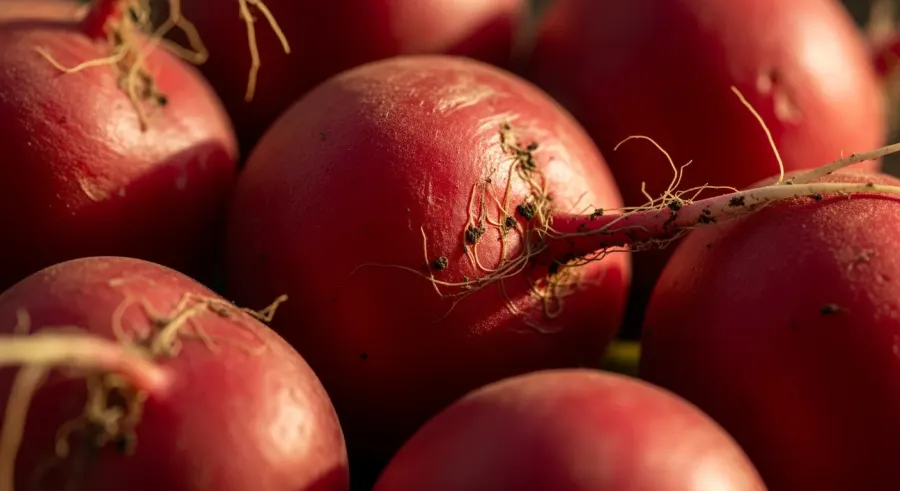
In Short
Radishes aren't naturally spicy—they create a real-time chemical reaction in your mouth using defense compounds to deter pests. The severity of the bite is dictated by weather stress, skin anatomy, and cooking temperatures, rather than the variety or color of the root.
An intact radish sitting on your cutting board isn't spicy at all. If you could somehow swallow it whole, you wouldn't taste a hint of heat. The sharp, mustardy bite you associate with radishes is actually a chemical reaction happening in real time.
It Doesn't Exist Until You Bite
Radishes belong to the brassica family, making them botanical cousins to mustard and horseradish. Like their relatives, they rely on a highly evolved, two-part defense system to stop insects from eating them out of existence. Inside the plant cells are harmless compounds called glucosinolates. Stored in an entirely separate cellular compartment is an enzyme called myrosinase.
When you chew a radish, you physically crush those cell walls. The two isolated chemicals flood together and react instantly, creating a brand new compound called an isothiocyanate. This volatile oil is what triggers the heat receptors on your tongue and sends that wasabi-like vapor up your nasal passages. You are literally tasting the plant's security system deploying.
The finer you crush the cells, the more intense the reaction. This is why grating a radish into a slaw yields a much sharper, more pungent flavor than simply cutting it into thick wedges.
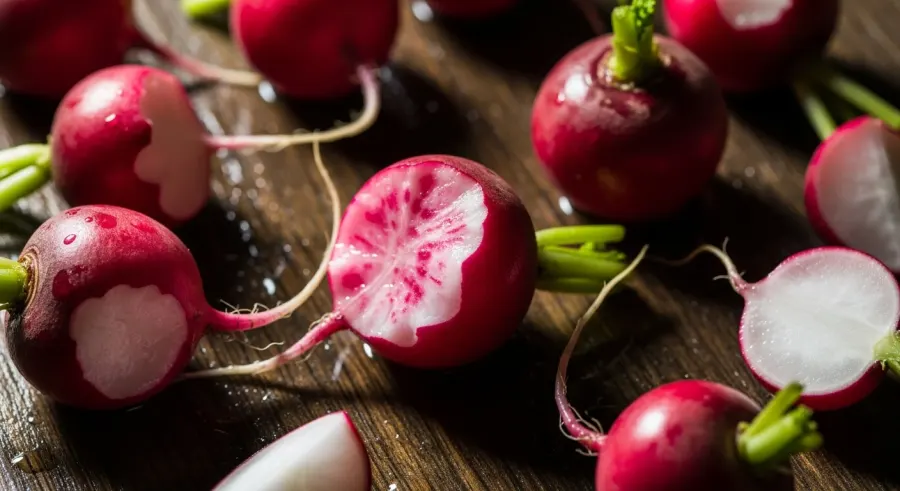
The Weather Makes Them Panic
Ever wonder why a bunch of radishes from a spring market tastes like a mild cucumber, while a batch pulled in late July burns your palate? The answer comes down to plant anxiety.
Radishes are exceptionally fast growers, but they are also delicate. A standard raw radish is mostly water, clocking in at just 16 calories per 100 grams (USDA FoodData Central). Because they rely so heavily on moisture, drought and high temperatures cause them significant physical stress. When the soil gets too hot or dry, the plant assumes its survival is threatened and goes into lockdown. It dramatically ramps up its production of defensive glucosinolates to ensure pests don't wipe it out before it can drop seeds.
Spring and autumn radishes get the cool, damp soil they prefer. They grow relaxed and plump, diluting whatever mustard oils they do have with plenty of water. Summer radishes, on the other hand, are fighting for their lives, and they taste like it.
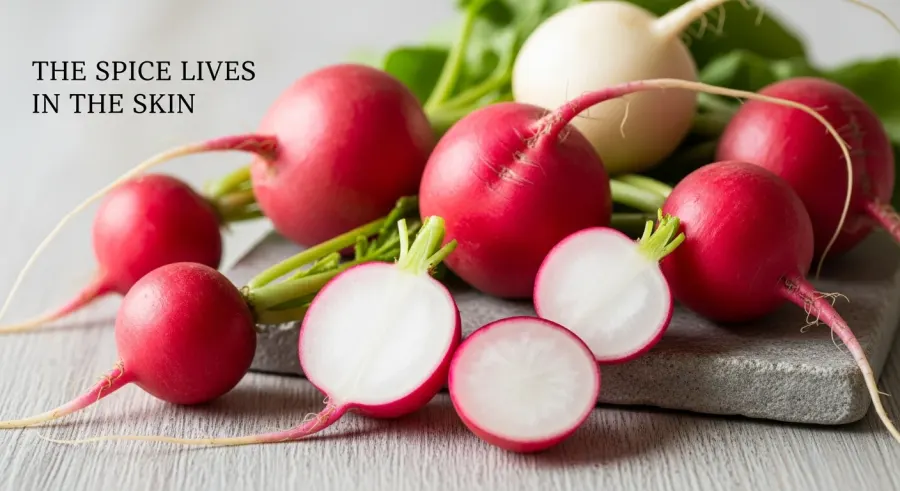
The Spice Lives in the Skin
You have near-total control over how much a radish bites back, simply based on how you prep it. The plant didn't distribute its chemical weapons evenly throughout the root. It put them right on the outer perimeter.
According to a 2008 study in the Journal of Agricultural and Food Chemistry, the enzyme myrosinase is heavily concentrated in the outer epidermal layer of the radish. The crisp white flesh inside contains the precursor compounds, but it severely lacks the spark plug needed to ignite them.
If you have a batch of aggressively hot radishes, taking a vegetable peeler and removing that thin outer skin strips away the majority of the myrosinase. The resulting peeled radish will be watery and surprisingly gentle, allowing you to salvage a crop that would otherwise be too intense to eat raw.
Cooking Disarms the Trap
Toss a handful of radishes into a roasting pan with olive oil, pull them out twenty minutes later, and the fiery bite is completely gone. They emerge tender, earthy, and distinctly sweet.
This transformation isn't just the magic of caramelization. Heat physically breaks the chemical booby trap. The myrosinase enzyme is highly sensitive to temperature and degrades rapidly when heated. Without that active enzyme to act as a catalyst, the glucosinolates remain locked in their harmless state, and the spicy isothiocyanates are never formed.
Once the fiery distraction is neutralized, you can finally taste the sugars that were hiding in the root all along. Radishes contain roughly 1.86 grams of natural sugars per 100 grams (USDA FoodData Central), primarily glucose and fructose. You just can't taste that sweetness when your tongue is overwhelmed by the plant's chemical defenses.
The Red Skin is Just a Distraction
There is a persistent gardening myth that the bright red skin of a standard supermarket radish is a warning label for heat, while white varieties like daikon are inherently mild. The colors are beautiful, but they have zero correlation with pungency.
The crimson exterior of a Cherry Belle or French Breakfast radish comes from anthocyanins, which are water-soluble pigments that carry no flavor whatsoever. The heat profile is dictated entirely by genetics and growing conditions. In fact, while the giant white daikon radishes sold in grocery stores are bred for mildness, some wild and heirloom strains of Japanese daikon can contain over five times the amount of spicy isothiocyanates as conventional varieties.
Even within a single radish, the heat varies by geography. The top of the bulb, near the leafy green stem, tends to be sweeter and milder because it develops above the soil line. The tapered bottom tail, which pushes deepest into the dirt where pests live, holds the highest concentration of spicy compounds. If you are serving raw slices to a spice-averse friend, give them the shoulders. Keep the tails for yourself.
Bottom Line
It changes how you look at a simple salad ingredient when you realize you're eating a complex botanical defense mechanism. The next time a radish lights up your palate, you'll know it's not trying to be a condiment—it's just a tiny root that was fighting a little too hard to survive the summer.