In Short
Saskatoon berries and huckleberries are the closest direct swaps, while chopped blackberries or sweet cherries work beautifully with minor prep. You can even use dried blueberries if you rehydrate them first.
I used to abandon entire baking projects if I didn't have the exact fruit a recipe called for. It turns out, finding the best substitute for blueberries in baking is mostly just an exercise in matching water content and tartness. Once you know how a fruit holds its moisture, you can easily swap in other berries without throwing off the chemistry of your dough.
Wait, Have You Tried Saskatoon Berries?
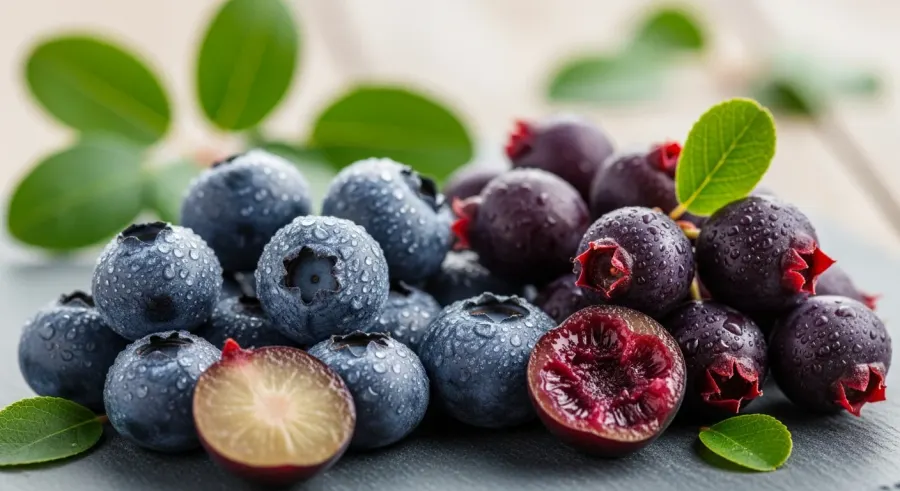
Depending on where you live, you might know these as serviceberries, juneberries, or prairie berries. Visually, they are dead ringers for blueberries, complete with that dusty blue-black skin.
Biologically, they are actually pomes. This makes them distant cousins to apples. Because of this, they have a slightly tougher skin and a much firmer, meatier interior. They hold their shape under heat much better than a standard berry, which is ideal when you need to replace blueberries in muffins without turning the batter gray.
You can swap them at an exact 1:1 ratio.
The flavor brings a subtle shift. Saskatoon berries have distinct almond and cherry notes, and they are less tart than a blueberry. They are brilliant in scones, galettes, and muffins where you want distinct, intact fruit pockets rather than bleeding purple streaks. Their lower moisture content keeps the surrounding pastry crisp.
The worst application for saskatoons is any recipe that asks you to mash the raw fruit into a jammy puree without adding liquid. Their firm, apple-like flesh simply will not break down into a smooth liquid the way a blueberry would, leaving a chunky fruit paste instead.
Huckleberries Are the Botanical Twin
If you happen to live near the Pacific Northwest, you already know about these. Huckleberries are a close botanical relative to blueberries, making them an almost flawless 1:1 swap in baking recipes.
The flavor is essentially blueberry dialed up. They carry a more intense, slightly woodsy tartness that cuts through heavy butter and sugar beautifully.
But there is a slight moisture difference when looking at huckleberry vs blueberry. USDA FoodData Central notes that huckleberries are about 90.7% water, compared to a standard blueberry's 84.2%. They are also significantly lighter on calories, at just 37 calories per 100 grams (blueberries hover around 57).
That extra liquid means they release more juice in the oven. For pancakes or rustic pies, this is exactly what you want. The berries burst and create a vibrant purple syrup.
A dense, wet quick bread is the one place huckleberries struggle. Because they release so much liquid, a heavy loaf might fail to bake through in the center, resulting in a soggy core. Tossing them in a teaspoon of flour first absorbs some of that escaping moisture.
The Blackberry Chopping Trick
Swapping in blackberries seems obvious until you actually look at the size of them. A standard blackberry is significantly larger than a blueberry, which fundamentally changes how a batter bakes and how the heat moves through the pan.
If you quarter them, they become an excellent substitute. Use a 1:1 ratio by volume after you chop them, so the measurement stays accurate to the original recipe.
Blackberries share a similar dark fruit profile, but they bring a more floral, wine-like acidity that cuts through heavy butter doughs. They also have much more prominent seeds, which adds a distinct crunch to the final texture that some bakers love and others try to avoid.
Looking at the numbers, blackberries carry about 88% water and are quite low in fat and protein. The USDA notes they contain just 0.49 grams of fat and 1.39 grams of protein per 100 grams. This high water-to-fat ratio means they bake up juicy and tender, releasing a lot of vibrant color into the surrounding crumb.
They shine in crumbles, cobblers, and streusel-topped cakes where their slight astringency balances out heavy crumb toppings.
Dropping whole blackberries into delicate cupcake batters is a recipe for disaster. As the large fruit bakes, it collapses and releases water, creating a massive steam pocket in the center of the tin. The delicate cake crumb will cave into that empty space, resulting in a sunken, hollow bake.
Be Careful With Raspberries
Moisture is the defining challenge when working with delicate fruit in the oven. Raspberries look like an easy alternative to blueberries, but their structural fragility requires a specific approach to keep them from ruining your hard work.
You can use a 1:1 ratio, but the folding technique has to change entirely.
Flavor-wise, raspberries are sharper and more acidic. They lack the earthy depth of a blueberry but make up for it with a bright, punchy tartness that pairs exceptionally well with lemon zest or vanilla-heavy batters.
A fresh raspberry is about 86% water (USDA), which is very close to a blueberry. The issue lies in the physical structure. They lack a solid skin. The moment they hit heat and friction, they disintegrate.
They work wonderfully in quick-baking items like thin pancakes or standard muffins. For the best results, freeze the raspberries first and fold them into your batter at the absolute last second. This temperature drop prevents them from turning your entire bowl of dough pink.
Fresh raspberries fail completely in heavy, long-baking doughs like a dense pound cake. The extended oven time causes the fragile berries to melt into a mushy liquid before the heavy crumb has a chance to set, creating soggy pockets throughout the cake.
Sweet Cherries Work With Lemon
Sometimes you just want to make a pie and the grocery store is entirely out of berries. Sweet cherries offer a reliable, fleshy alternative that behaves very predictably in the oven, provided you prep them correctly.
To match the volume, use 1 cup of pitted, chopped cherries for every 1 cup of blueberries. Because they lack the natural acidity of a blueberry, adding 1 teaspoon of fresh lemon juice per cup of cherries restores that missing tart edge.
Cherries bring a deep, rich sweetness. They have around 82% water and 63 calories per 100 grams (making them slightly denser and less watery than most delicate berries). They hold their shape beautifully when baked, offering a satisfying, distinct bite rather than a burst of thin juice.
They are an absolute triumph in pies, hand pies, and rustic fruit tarts. The firmer texture stands up to a thick pastry crust without turning the bottom layer soggy, which is a common problem with very wet fruit.
Chopped cherries perform poorly in drop scones or very light angel food cakes. They are physically heavy and tend to sink to the bottom of thin batters, causing uncontained doughs to spread out flat on the baking sheet instead of rising.
The Rehydrated Pantry Swap
A bag of dried fruit sitting in the cupboard can save a baking project. The catch is that you cannot just dump them into a wet batter and expect them to act like fresh fruit.
Fresh blueberries are mostly water, which provides steam and lift in the oven. Dried blueberries have had almost all of that moisture removed, condensing their nutritional profile into a very dense package. According to the USDA, 100 grams of sweetened dried blueberries packs 317 calories, compared to just 57 calories for the fresh version. The water content drops from roughly 84% to under 15%.
To use them as a substitute, use a 3/4 cup of dried berries for every 1 cup of fresh. The reduced volume accounts for the missing water weight.
The flavor is intensely concentrated and significantly sweeter. They provide a chewy texture rather than a juicy pop, which completely changes the mouthfeel of the final pastry.
Baking with dried blueberries is excellent in biscotti, oatmeal cookies, and dense bran muffins where a chewy element is welcome and extra moisture isn't strictly necessary for the structure.
Using dried blueberries straight from the bag in a standard fluffy muffin is a common mistake. They act like tiny sponges, pulling moisture out of the surrounding batter during the baking process and leaving the crumb dry. Soaking them in very hot water for 15 minutes and draining them thoroughly prevents this issue and restores a bit of their original plumpness.
Blackcurrants for Natural Thickening
European bakers rely on these dark, glossy berries constantly for a very good reason. While harder to find fresh in the United States, blackcurrants are an outstanding substitute if you can source them from a local farm or specialty market.
You can substitute them at a 1:1 ratio. Because they are naturally quite astringent, adding an extra 1 to 2 tablespoons of sugar per cup of fruit helps offset the tartness and brings them closer to a blueberry flavor profile.
The taste is deeply earthy, complex, and significantly more acidic than a standard blueberry. They bring a robust, almost savory edge to baked goods that pairs wonderfully with warm spices like cinnamon and cardamom.
Nutritionally, they are famously packed with vitamin C and hover around 63 calories per 100 grams. But their secret weapon in the kitchen is pectin. Blackcurrants naturally contain very high levels of pectin, the structural carbohydrate that causes fruit to gel when heated.
This makes them the ultimate choice for fruit fillings, pies, and crumbles. As they bake, their natural pectin interacts with the sugar to create a thick, glossy, jam-like consistency without the need for heavy amounts of cornstarch or tapioca.
A plain southern-style biscuit or a mild shortcake is a bad match for blackcurrants. Their aggressive acidity easily overpowers a delicate, lightly sweetened dough unless balanced by a substantial amount of sugar and fat.
Bottom Line
Baking is ultimately just an exercise in managing water and sugar. Once you know how a piece of fruit holds its moisture and how it reacts to the heat of the oven, the exact type of berry becomes less of a strict rule and more of a starting point. Adapting a recipe based on what you actually have in the kitchen often leads to a much more interesting result anyway.