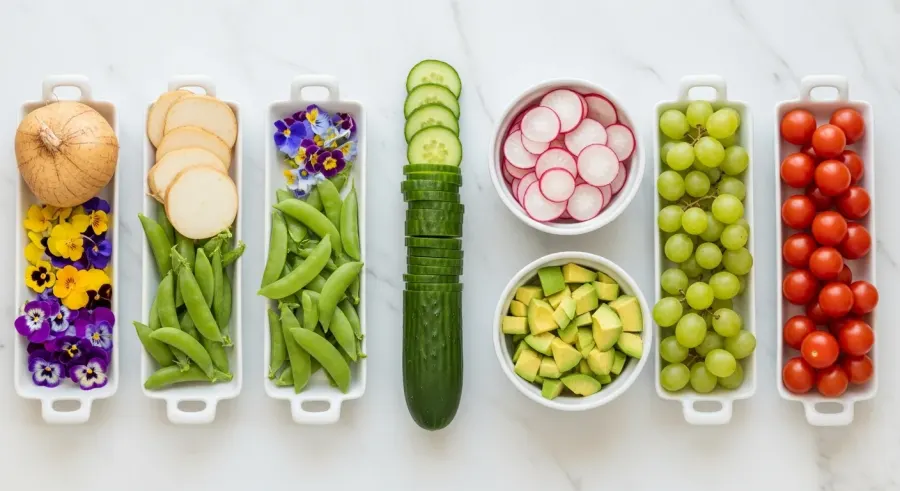
In Short
Zucchini is the closest visual and textural match, while jicama is the best choice if you need the crunch to survive in the fridge for a few days. The exact prep tricks for making these alternatives work (including why you must salt raw zucchini) are detailed below.
You are half-way through chopping vegetables when you realize the cucumber in your crisper drawer has turned into a squishy puddle. Replacing a cucumber is mostly an exercise in mimicking its 95 percent water content and acoustic snap. You need a substitute that delivers pure, structured moisture to your bowl, and you probably already have one in your kitchen.
Raw Zucchini Actually Works If You Salt It
Most people think of zucchini strictly as a vegetable to grill, bake, or spiralize into hot noodles. It is rarely the first vegetable reached for when building a cold dish. But botanically speaking, zucchini and cucumbers are close cousins. Both belong to the Cucurbitaceae family, which explains why they share a striking visual resemblance, a nearly identical internal seed structure, and a thin, edible dark green skin.
At 94.8 percent water and 17 calories per 100 grams (USDA FoodData Central), its nutritional profile and physical density are remarkably similar to an English cucumber. A direct 1:1 ratio by volume works best when substituting.
To make it work flawlessly, you have to manage the moisture. Raw zucchini contains slightly more structural starch than a cucumber, giving it a spongy, faintly astringent mouthfeel if used straight off the cutting board.
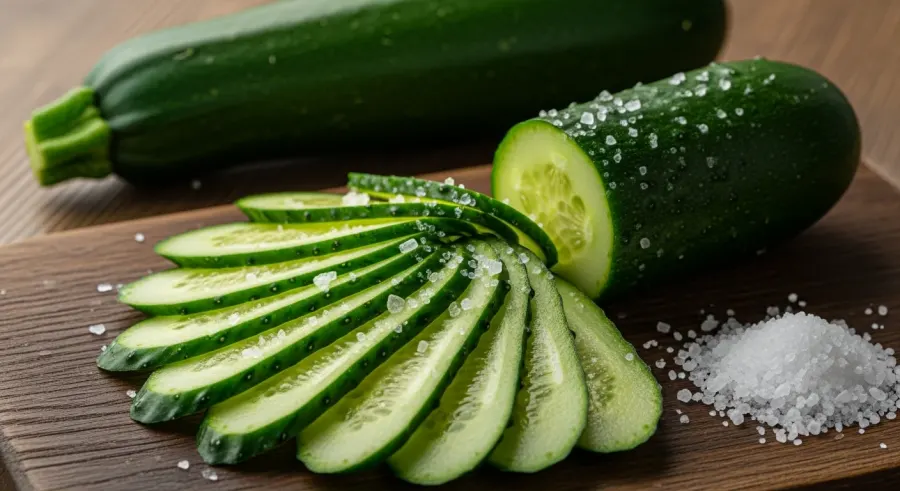
The solution relies on basic osmotic pressure. Slicing or chopping the zucchini, tossing it with a heavy pinch of kosher salt, and letting it sit in a colander in the sink for 15 minutes draws out the excess water and softens the starch matrix. This yields a tender, crisp bite that perfectly mimics cucumber. Patting the pieces dry with a paper towel before tossing them into your bowl ensures the seasoning stays balanced. Leaving the skin on is ideal, as it contains antioxidants like lutein and zeaxanthin (USDA FoodData Central).
Skipping this salting step is a mistake if your salad relies on a delicate vinaigrette or a thick yogurt sauce. Unsalted raw zucchini weeps its internal water slowly into your dressing, diluting the entire dish and leaving an unappetizing puddle at the bottom of the bowl.
Jicama Is Perfect For Meal Prep
If you pack your lunches on Sunday to eat on Wednesday, cucumbers are your worst enemy. After two days in the refrigerator, they turn translucent, mushy, and ruin the texture of the greens around them. Jicama solves the meal-prep texture problem permanently.
This root vegetable is roughly 85 to 90 percent water and sits at just 38 calories per 100 grams (USDA FoodData Central). Beneath its thick exterior lies a crisp white flesh that tastes like a cross between a savory pear and a water chestnut.
A 1:1 substitution ratio works perfectly here.
Its dense cellular structure means it holds its crunch for days, even when sitting in a highly acidic dressing. It carries zero bitterness, making it an excellent bridge ingredient in spicy salads, tropical fruit salads, or bright citrus slaws. Because it contains high amounts of inulin, a type of prebiotic fiber, it has a faint natural sweetness that pairs exceptionally well with lime juice and chili powder.
The preparation requires a bit more effort. The skin of a jicama is thick, papery, and fibrous. A standard vegetable peeler will struggle to remove it, making a sharp paring knife the better tool to strip away the tough outer layer entirely.
There is one structural catch to keep in mind. Because jicama is much denser than cucumber, it does not absorb dressings quickly. Using it in salads that are meant to be tossed and eaten immediately often results in a bland bite. It needs at least ten minutes of resting time in the bowl to actually take on the flavors of your vinaigrette.
Celery Gives You The Exact Same Crunch
Replacing cucumber is largely about preserving the acoustic experience of the salad. When you bite into a fresh vegetable, you expect a loud, satisfying snap. Celery delivers that crunch with authority.
Clocking in at 95 percent water and just 14 calories per 100 grams (USDA FoodData Central), celery is a hydration powerhouse that perfectly matches the moisture levels of a cucumber. Half a cup of chopped celery effectively replaces every cup of cucumber your recipe calls for.
The flavor is earthy, herbaceous, and noticeably saltier than a gourd. Celery contains naturally occurring sodium—roughly 80 milligrams per 100 grams (USDA FoodData Central)—which subtly enhances the overall seasoning of your salad. This makes it a perfect swap for heavy, creamy dishes where you need a sturdy textural contrast that cuts through rich fats. Tuna, chicken, and potato salads actually benefit far more from the rigid bite of celery than the soft, weeping flesh of a cucumber, which tends to make mayonnaise-based dressings watery over time. Slicing the stalks on a bias exposes more surface area to your dressing and creates a more elegant, elongated shape in the bowl. You can also finely chop the pale yellow celery leaves and toss them in as a fresh herb garnish.
The failure case here is purely textural. The tough outer stalks of a bunch of celery are heavily ribbed with fibrous strings that can get caught in your teeth. Putting those into a delicate garden salad without prepping them ruins the mouthfeel. The tender, lighter green inner stalks are a much better choice, or you can simply take a vegetable peeler and shave the thick strings off the back of the outer stalks before chopping.
Daikon Radish Brings A Nice Peppery Bite
Daikon is a large white winter radish common in East Asian cuisines, and when peeled and diced, it looks remarkably like the interior flesh of a cucumber.
It shares the same impressive 95 percent water content as a cucumber, with a low 18 calories per 100 grams (USDA FoodData Central). A direct 1:1 ratio by volume provides the right balance.
Where it diverges is the flavor profile. Daikon has a mildly spicy, peppery bite that clears the palate. It is crisp, juicy, and far less aggressive than the tiny, sharp red radishes you might be used to slicing into a garden salad. A single daikon can weigh over a pound, providing a massive yield for large batch cooking.
This is your absolute best choice for Asian-inspired salads, cold noodle dishes, or shaved thin into a cabbage slaw. The sharp flavor cuts through rich sesame dressings, heavy peanut sauces, or fatty meats perfectly. Interestingly, the top half of the daikon root near the leaves is sweeter and milder, while the bottom tip is highly pungent due to concentrated isothiocyanates. Using the top half for raw salads mimics cucumber beautifully, while the spicy bottom half is better saved for pickling.
Just be careful with context. Daikon easily overpowers subtle, fruit-heavy salads. Mixing it into a delicate watermelon and mint salad usually results in an unbalanced flavor, as it refuses to fade into the background.
Shaved Fennel Bulb Tastes Like Anise
Sometimes you want a substitute that elevates the dish rather than just blending into the background. Fennel is a bulbous, layered vegetable that is 90 percent water with about 31 calories per 100 grams (USDA FoodData Central).
Because the flavor is intense, half a cup of shaved fennel replaces one full cup of cucumber. The thick, overlapping layers of the bulb provide a massive crunch.
Fennel contains E-anethole, the exact same aromatic compound that gives anise, star anise, and licorice their signature scent (Journal of Agricultural and Food Chemistry, 2017). That licorice flavor can seem intimidating when you smell the raw bulb on the cutting board, but it mellows out beautifully when tossed with an acidic dressing like lemon juice or apple cider vinegar.
It shines in bright, acidic profiles. Pairing shaved fennel with blood oranges, baby arugula, and a sharp Pecorino cheese creates a far more sophisticated flavor dynamic than a watery cucumber ever could.
The preparation method dictates the success of this substitution. Thick chunks of fennel are woody and unpleasant to chew. Shaving it paper-thin, ideally using a mandoline slicer, turns the layers into delicate ribbons. If you or your guests have an aversion to black licorice, this is a substitution to skip. The flavor profile is too pronounced to hide in a standard garden side salad.
Green Bell Peppers For That Diner Salad Vibe
Classic American diner salads and casual side salads have long relied on green bell peppers to provide cheap, reliable crunch.
They sit at roughly 94 percent water and 20 calories per 100 grams (USDA FoodData Central). Three-quarters of a cup of chopped green pepper replaces one cup of chopped cucumber perfectly.
The physical structure of a green bell pepper is defined by its thick, waxy skin and dense, water-rich flesh. This combination creates a rigid crunch that refuses to weep water into your dressing, even if the salad sits on the table for an hour. Green peppers are simply unripe red peppers. Because they are harvested early, they lack the developed sugars of their colorful counterparts, leaving a flavor that is grassy, slightly bitter, and highly robust. This vegetal bitterness expertly mimics the slight astringency you normally get from eating an unpeeled English or Persian cucumber.
Green peppers work exceptionally well in Mediterranean and Middle Eastern salads, like a Fattoush, Greek salad, or Shirazi, where the grassy notes complement heavy pours of extra virgin olive oil and fresh lemon juice. Removing the core and slicing away the spongy white pith on the interior ribs is an important preparation step, as that pith carries an unpleasant bitterness that can overwhelm a vinaigrette.
Colored varieties like red, yellow, or orange bell peppers are poor choices if you want the exact astringency of a cucumber. Those varieties have ripened much longer on the vine and developed deep, fruity sweetness that throws off the delicate flavor balance of a savory side salad.
You Can Just Use The Lettuce Cores
You might not need to buy a specific substitute at all. If you are already building a salad, you likely have a head of lettuce on your cutting board. Turning the discarded parts of that lettuce into your cucumber replacement is a brilliant zero-waste kitchen strategy.
The thick, white ribs of romaine lettuce or the dense, pale core of iceberg lettuce are essentially pure hydration. The plant cells in these lower stems are fully turgid with water, giving them a phenomenal snap. They offer a neutral, faintly sweet flavor with zero bitterness.
A 1:1 ratio works seamlessly. Chopping the thickest parts of the stems—the parts that usually end up in the compost bin—into bite-sized cubes provides the perfect filler.
This works best for simple chopped salads where the dressing is the star of the show and you just need a neutral vehicle for texture. A heavy blue cheese dressing or a sharp Italian vinaigrette clings beautifully to the smooth surface of a diced iceberg core.
The downside to this free substitution is longevity. Lettuce stems lack the protective skin of a gourd or root vegetable. They wilt and lose their crunch within twenty minutes of coming into contact with the salt and acid in your dressing. This trick fails for a make-ahead lunch, as you will open your container to find a soggy, unappealing mess.
Bottom Line
Cooking is rarely about finding an identical twin for a missing ingredient. It is about understanding what that ingredient was actually doing in the bowl in the first place. Cucumbers exist to provide water and noise. Once you realize you are just looking for a vehicle for crunch, a whole world of root vegetables, stalks, and squashes opens up to take their place.