In Short
Green peas and diced bell peppers are the closest substitutes for corn kernels, while cauliflower is your best bet for a low-carb swap. Figuring out which alternative to use depends entirely on whether your original recipe needed starch, sweetness, or physical crunch.
Corn kernels bring a unique mix of sweetness, starch, and a satisfying pop to a dish. When a recipe calls for it and you have an empty pantry, you have to decide which of those three traits matters most. Replacing it is just a matter of matching the substitute to the job.
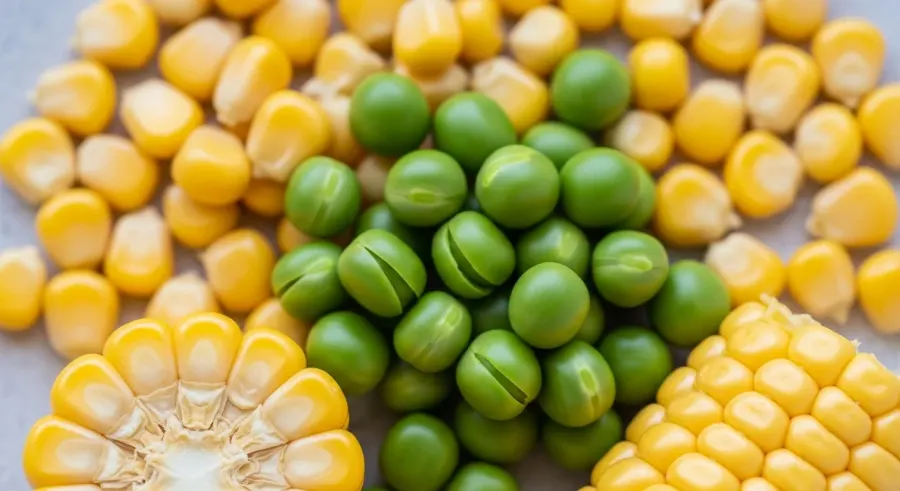
Green Peas Are the Texture Match
No other vegetable mimics the physical pop of a sweet corn kernel quite like a green pea. They have the same spherical shape, a similar burst of moisture when you bite into them, and an underlying sweetness that blends beautifully into savory dishes. You can pull a bag straight from the freezer, run them under warm water, and they are ready to go.
Use a straight 1:1 ratio. If your recipe asks for a cup of corn, measure out a cup of peas.
They bring a distinct grassy flavor that corn lacks, so they aren't completely invisible in a dish. But nutritionally, they are a slight upgrade. Green peas pack about 5.4g of protein and 5g of dietary fiber per 100g, compared to the 3.2g of protein you get from sweet corn (USDA FoodData Central). The fiber helps them hold up well in hot liquids without disintegrating.
These are excellent in pasta salads, traditional shepherd's pie, and fried rice. They hold their shape perfectly during cooking and provide the exact visual bulk you expect. If you are making a creamy chicken casserole, tossing in a handful of peas gives you that same pop of color and texture as a handful of corn. They also work very well in quick weeknight curries where you just need to add a bit of vegetable volume at the last minute.
Do not use them in southwestern or Mexican-inspired dishes. The sweet, earthy taste of green peas clashes horribly with cumin, chili powder, and lime juice. Putting peas in a black bean salsa is a mistake you will only make once.
Chop Up Some Bell Peppers Instead
A yellow or orange bell pepper might not look like a corn kernel, but once diced small, it fills the exact same role. You get that satisfying crunch and a heavy dose of natural sugar. It is one of those substitutions that looks weird on the cutting board but makes perfect sense once it hits the pan.
Swap one cup of diced bell pepper for every cup of corn. Try to chop the pieces to roughly the size of a kernel so they distribute evenly through your food.
The flavor profile is surprisingly close in sweetness, especially if you stick to the warmer colors rather than bitter green peppers. A red bell pepper has been on the vine longer, allowing those natural sugars to develop fully. They are also much lighter on the stomach. Red and yellow bell peppers contain only 31 calories and about 6g of carbs per 100g, whereas sweet corn carries 86 calories and nearly 16g of carbs for the same amount (USDA FoodData Central). This makes them a great option if you want the sweetness of corn without the heavy starch.
Salsas, chili, and cornbread are where bell peppers truly shine. They fold into a thick batter beautifully. When baked into a jalapeño cheddar cornbread, the diced peppers soften slightly but retain enough bite to mimic corn perfectly.
Skip this substitute if you are making a creamy dish like a chowder. Bell peppers turn mushy when boiled in cream for too long. Worse, their thin outer skins tend to peel off and float around in the broth, which throws off the entire texture of the soup.
Edamame Adds Way More Protein
Sometimes corn is just there to add weight and hardiness to a bowl. When sheer bulk is the main goal, shelled edamame is a brilliant swap.
Use a 1:1 ratio. You can usually find bags of shelled edamame right next to the frozen corn in the grocery store. Just run them under hot water in a colander for a minute, and they are ready to be tossed into your pan. They do not require any extensive boiling or prep work.
These young soybeans have a sturdy, chewy texture that stands up to intense heat without breaking down. The flavor is slightly nutty and deeply savory. You do lose the distinct sweetness of corn, but you gain a massive nutritional boost in return. Edamame provides roughly 11.2g of protein and 4.7g of healthy fats per 100g (USDA FoodData Central). It transforms a simple side dish into a filling meal.
Throw them into grain bowls, stir-fries, and robust salads where the dressing is strong enough to marry the flavors. They are especially good in quinoa salads or anything featuring a soy-based vinaigrette.
Keep edamame far away from sweet applications. If you are baking a corn pudding, sweet fritters, or a dessert bread, the savory, bean-like taste will completely ruin the dish. The grassy notes of the soybean just do not pair well with sugar or butter.
Grab a Can of Chickpeas
If your recipe relies on corn for its starchy, filling qualities, a simple can of garbanzo beans will do the trick.
Use 3/4 cup of roughly chopped chickpeas for every 1 cup of corn. You want to chop them slightly so they mimic the smaller size of a kernel and distribute evenly through your food. Leaving them whole can make the dish feel a bit chunky.
Chickpeas have a dense, hearty bite. They lack the snap of a fresh vegetable, leaning instead into a soft, potato-like texture. A standard can of drained chickpeas contains about 139 calories, 7g of protein, and 23g of carbohydrates per 100g (USDA FoodData Central). This makes them a very close match for corn's energy density and starchiness.
Use them in chili, hearty vegetable soups, and roasted vegetable medleys. You can even toss them in olive oil and roast them beforehand to give them a crispy exterior, which adds a lovely crunch to a taco filling.
Do not use whole chickpeas in fresh salsas or delicate summer salads. They are far too dry for raw applications. They will soak up all the lime juice, olive oil, or vinaigrette in the bowl, leaving the rest of the dish feeling arid and heavy. They also clash texturally with soft, watery vegetables like tomatoes and cucumbers, creating a jarring bite that pulls focus away from the rest of the ingredients.
When to Use Butternut Squash
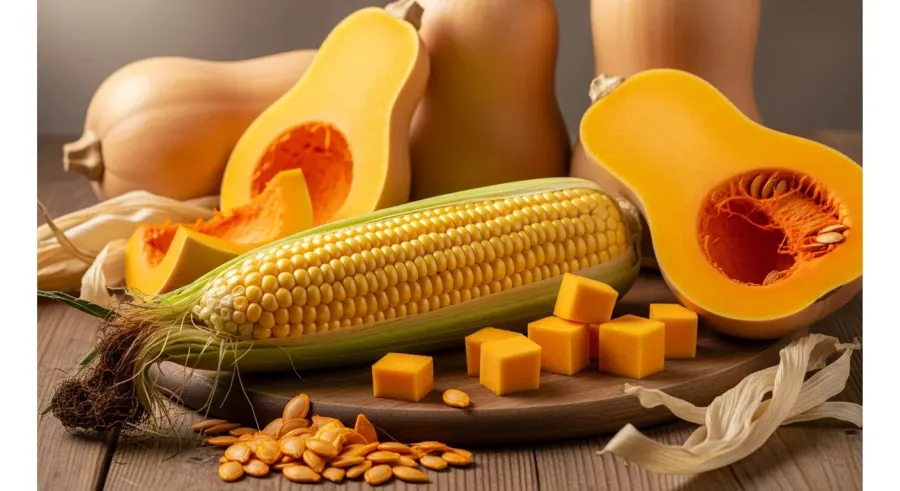
Winter squash hits the exact sweet-and-starchy notes that make corn so universally popular.
You can swap it 1:1, but there is a catch. The squash must be cooked first. You can boil it, steam it, or roast it until fork-tender. Dicing it into tiny, kernel-sized cubes before roasting ensures that it cooks quickly and evenly. Tossing those tiny cubes in a bit of olive oil and salt before baking brings out a caramelized edge that mimics roasted corn on the cob.
When diced small and cooked, butternut squash softens into a tender, sweet bite that practically melts in your mouth. The flavor is a bit earthier than corn, but the sweetness level is nearly identical. It is also lighter, offering that comforting starchiness at just 45 calories per 100g (USDA FoodData Central).
This is your best bet for chowders, autumn stews, and savory pies. The squash breaks down just enough to thicken the broth while leaving distinct chunks to chew on. If you want to replicate the creaminess of a blended corn soup, pureed butternut squash is a phenomenal base.
It fails completely in raw applications. Throwing raw butternut squash into a salsa or a fresh side salad is a quick way to ruin a meal. It is tough, chalky, and practically flavorless until heat is applied to coax out the natural sugars.
Cauliflower Rice for Low-Carb Diets
Keto dieters have been swapping corn for cauliflower for years. It has become the default low-carb vegetable for a reason.
Use a 1:1 ratio, but pay close attention to moisture. Cauliflower holds a lot of water, so you might need to cook it a few minutes longer in an open pan to let the excess steam evaporate.
Cauliflower provides a mild, neutral base that absorbs whatever spices and fats you throw at it. The texture is softer and far less chewy than a real kernel. The real appeal here is the math. Corn has around 16g of carbohydrates per 100g, while cauliflower drops that number to roughly 5g (USDA FoodData Central).
It works surprisingly well in a mock corn chowder. If you puree half of the cooked cauliflower, it mimics the starchy thickness of a traditional soup base. It is also great in casseroles and low-carb burrito bowls.
Avoid using cauliflower in fritters, cornbread, or baked goods. It releases too much water as it cooks in the oven, which will turn your baking dish into a puddle. More importantly, it completely lacks the natural starches needed to bind a batter together, leaving you with a crumbly, wet mess instead of a cohesive muffin or bread slice.
Zucchini Is the Blank Canvas
A diced yellow squash or zucchini is the easiest way to stretch a recipe when your pantry is bare. It is the ultimate utility vegetable.
Use 1 cup of diced zucchini per 1 cup of corn. However, because zucchini releases so much moisture when it hits a hot pan, you should reduce the other liquids in your recipe by a tablespoon or two. If you are making a filling for tacos or enchiladas, sauté the zucchini separately for a few minutes to cook off that excess water before mixing it with your other ingredients.
Zucchini is a blank canvas. It doesn't taste like corn, but it doesn't really taste like much of anything at all once it is cooked. It simply provides physical volume and a bit of color. Because it is mostly water, it only has about 17 calories per 100g (USDA FoodData Central).
This works best in sautéed vegetable sides, frittatas, and wet burritos where you just need to bulk up the filling. If you are tossing together a quick hash on the stove, zucchini will happily take on the flavors of your onions, garlic, and spices.
It is a terrible choice for dishes requiring a firm crunch. Zucchini cooks down into a soft, wet texture that will turn a crisp salsa into a soggy disappointment. It also vanishes completely in long-simmered soups.
Diced Carrots Bring the Sweetness
Carrots are an overlooked pantry staple that naturally replicate the sugary bite of sweet corn.
Swap them at a 1:1 ratio, but dice them very small (about the exact size of a corn kernel).
They have a firm, satisfying crunch when raw, and a tender, sweet profile when cooked. They are also very cheap and have a long shelf life in the fridge. Carrots sit comfortably in the middle ground nutritionally, offering 41 calories and almost 10g of carbs per 100g, along with a heavy dose of Vitamin A (USDA FoodData Central).
Fried rice, pot pies, and slow-cooked stews are the ideal homes for diced carrots. They hold their shape perfectly during a long simmer and provide a burst of orange color that visually brightens a dish. If you are making a vegetarian chili, adding tiny cubes of carrot provides a subtle background sweetness that balances the heat of the chili powder and cumin, much like sweet corn would.
Do not use raw carrots as a corn substitute in soft salads or salsas. The crunch is too aggressive and woody compared to the gentle snap of a corn kernel. They need to be blanched or sautéed first to soften the bite.
Diced Potatoes for Soups and Stews
White or yellow potatoes do not bring any sweetness to the table, but they are unmatched when it comes to replacing the starch and comfort factor of corn.
Use a 1:1 ratio. You will need to dice the potatoes quite small—roughly a quarter of an inch—so they cook through in the same amount of time it takes to heat up a cup of corn.
Potatoes offer a completely neutral flavor, acting as a sponge for the broths and spices around them. A standard white potato contains roughly 77 calories and 17.5g of carbohydrates per 100g (USDA FoodData Central), which makes it a near-identical calorie and carbohydrate swap for sweet corn.
This substitute shines in hearty, liquid-heavy meals. Think chowders, spicy chili, and thick curries. The starch from the potato naturally thickens the cooking liquid, giving you a rich, velvety texture.
Skip potatoes if you are making a quick, fresh side dish. Raw potatoes are completely inedible, and even when cooked, they feel entirely out of place in a crisp summer salad or a fresh tomato salsa.
Bottom Line
Replacing corn is rarely about finding an exact clone. It is about identifying what the corn was actually doing in the recipe. If it was providing a pop of texture, green peas do the job beautifully. If it was there for sweetness, diced bell peppers step right in. Once you figure out the purpose of the ingredient, adjusting the rest of the dish becomes second nature. You might even find that you prefer the savory bite of edamame or the hardiness of a chickpea over the original version.