In Short
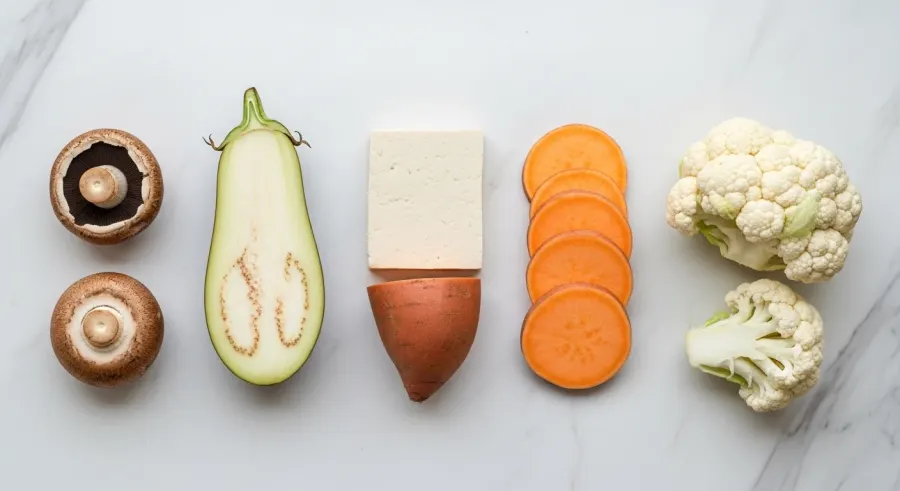
Zucchini is the best 1:1 substitute for eggplant when you need a flavor sponge, while portobello mushrooms bring the missing meaty bulk to heavy bakes. Which swaps ruin a moussaka (and how to match the exact texture for curries) is below.
Eggplant is a polarizing vegetable, and sometimes you just do not want to deal with its spongy texture or that faint bitter aftertaste. Or maybe you just forgot to buy one. Whether you are building a delicate summer ratatouille or a heavy pan of moussaka, swapping it out requires a bit of strategy. Finding the right substitute for eggplant comes down to knowing if you need a flavor sponge, a meaty texture, or a structural layer.
Zucchini Is Your Safest Bet
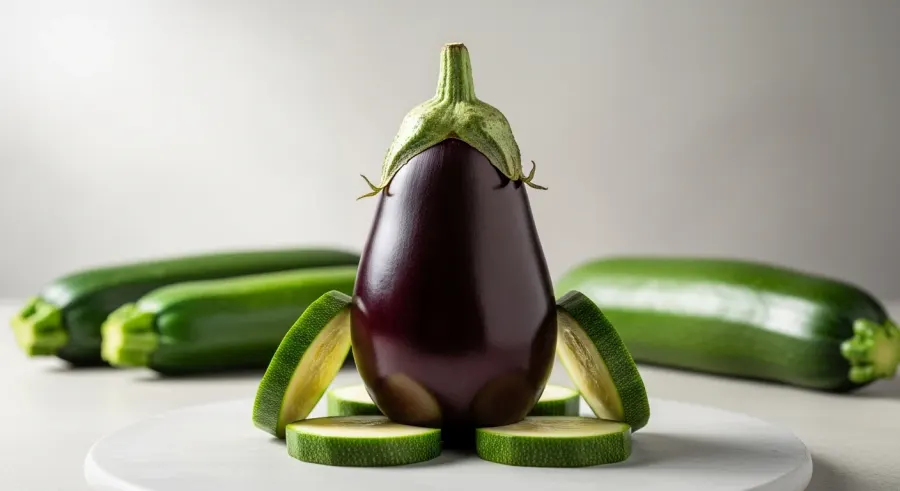
Zucchini acts just like a sponge. That makes it the absolute closest botanical cousin you can toss into a pan when you need a substitute for eggplant. You can use an exact 1:1 ratio by volume for almost any recipe, swapping thick slices for slices, or cubes for cubes.
It brings the same soft, yielding interior to the pan once it meets heat. The flavor is slightly sweeter and lacks the subtle bitter undertone that older eggplants usually carry, but it blends into tomato and garlic sauces flawlessly. At just 17 calories, 1.2g of protein, and 0.3g of fat per 100g (compared to raw eggplant's 25 calories and 0.2g of fat), it keeps the meal very light and hydrating.
The cooking mechanics do change slightly, mostly because zucchini is 95% water by weight (USDA FoodData Central). Eggplant famously drinks up cooking oil because of the air pockets inside its spongy flesh. Zucchini does not absorb oil the same way due to its tighter cellular structure and higher moisture. If a recipe tells you to salt your eggplant to draw out bitterness, you should actually still salt your zucchini slices before cooking. The salt pulls out excess moisture so your final dish doesn't turn into a watery soup. If you are making a baked dish, roasting the zucchini slices for ten minutes before layering them into the casserole will prevent any watery pooling at the bottom of the pan.
It shines in ratatouille, quick pasta sauces, and grilled vegetable platters. Just avoid using zucchini to make a creamy dip like baba ganoush. You cannot roast and mash summer squash and expect that thick, smoky emulsion to hold together. It will just weep water into a sad puddle.
Portobello Mushrooms Bring the Meaty Bite
What if your recipe relies on eggplant for actual physical heft? Portobello mushrooms step in beautifully for this specific job.
Use a 1:1 ratio by volume, substituting thick mushroom slices for thick eggplant slices. Mushrooms deliver a massive umami punch that eggplant simply doesn't have. This brings an earthy, savory flavor that shifts the profile of the dish toward a much richer, darker finish. A 100g serving of raw portobellos provides around 22 calories and about 2g of protein, keeping them low-calorie but highly satisfying.
One quick prep note makes a huge difference here. Scrape out the dark black gills under the mushroom cap with a spoon before you cook them. If you leave them in, they will release a dark, muddy liquid that turns your whole dish gray. Mushrooms also release a lot of water before they start to brown, so you may need to cook them a few minutes longer than eggplant to get a proper sear in the pan.
These are perfect for burger patties, heavy roasting, or thick-cut grilling. The main failure case happens in delicate curries or sweet-and-sour stir-fries. The intense mushroom flavor will overpower lighter sauces, so skip them if the dish requires a neutral vegetable.
Reaching for Extra Firm Tofu
Sometimes you need an ingredient that simply exists to absorb marinades. If you are cooking Asian cuisine, extra firm tofu is a flawless 1:1 volume swap for diced eggplant.
While the flavor is obviously different, offering a mild soybean note rather than a vegetal one, the mechanics in the wok are nearly identical. Tofu drinks up soy sauce, ginger, and garlic just like eggplant does. The macro shift is quite noticeable, jumping to 83 calories, 5.3g of fat, and 10g of protein per 100g, compared to raw eggplant's 25 calories and about 1g of protein (USDA).
To get the texture right, you have to adjust your prep. Eggplant has air pockets, while tofu has water. To make tofu act like that thirsty eggplant sponge, you must press the water out so your marinades can rush in. (If you want an even spongier texture, freeze the tofu first, then thaw and press it. The ice crystals expand and create literal pockets in the tofu). If you are looking for a crispy exterior, you will also need to toss the tofu in cornstarch before pan-frying. Eggplant naturally crisps up when fried in oil, but tofu requires a dry starch coating to achieve that same golden crust.
Toss it into mapo tofu, Thai green curries, or spicy garlic stir-fries. Do not try to use tofu in a moussaka or a baked Italian gratin. Eggplant melts down and melds with tomato sauces over long cooking times. Tofu will stubbornly retain its exact cubic shape and rubbery bite, which ruins the melting layers of a casserole.
When to Just Use Potatoes
A three-quarter cup portion of cubed potatoes will comfortably replace one cup of eggplant. Root vegetables are significantly denser and more filling, so you actually need a little less of them to bulk up a meal.
Potatoes provide rigid, reliable structure. If you are building a layered dish like moussaka, potato slices hold the casserole together without turning mushy. The flavor shifts from slightly bitter to earthy, starchy, and sweet. Naturally, this comes with a calorie bump to about 79 calories and 17g of carbohydrates per 100g.
The thickening mechanics change when you make this swap. Potatoes thicken a sauce by releasing starch into the liquid. Eggplant thickens a sauce through cellular breakdown as its pectin dissolves. You also have to watch your heat timing closely. Potatoes take twice as long to cook through. You usually need to par-boil potato slices before adding them to a quick bake so you don't end up with crunchy, raw centers.
They thrive in heavy, baked casseroles and rich Indian curries. You run into trouble if you try to use potatoes in quick summer sautés or light Mediterranean side dishes. They will throw the timing of a quick pan-fry entirely off.
Okra Handles the Stews and Curries
Eggplant is often cooked down until it practically dissolves. When it does this, it naturally thickens whatever liquid it simmers in. Okra offers that exact same thickening power at a strict 1:1 replacement ratio.
It has a grassy, slightly sweet flavor that blends nicely into heavily spiced dishes. At 33 calories and 3.2g of fiber per 100g, it stays well within the same nutritional neighborhood as your original ingredient.
The secret here is the mucilage. When cooked low and slow, the viscous liquid that okra is famous for breaks down and provides a silky texture similar to slow-braised eggplant. If you slice it into thin wheels, it releases more thickening power. If you leave the pods whole or just split them lengthwise, they hold their shape much like a chunk of roasted eggplant.
Use it in gumbos, Middle Eastern tomato stews, or heavy curries where that natural binder is required. The failure case is fairly obvious. Never try to grill okra whole as a replacement for an eggplant steak, and do not try to bread and bake large slices of it expecting a firm, meaty bite.
Frying? Grab Some Green Tomatoes
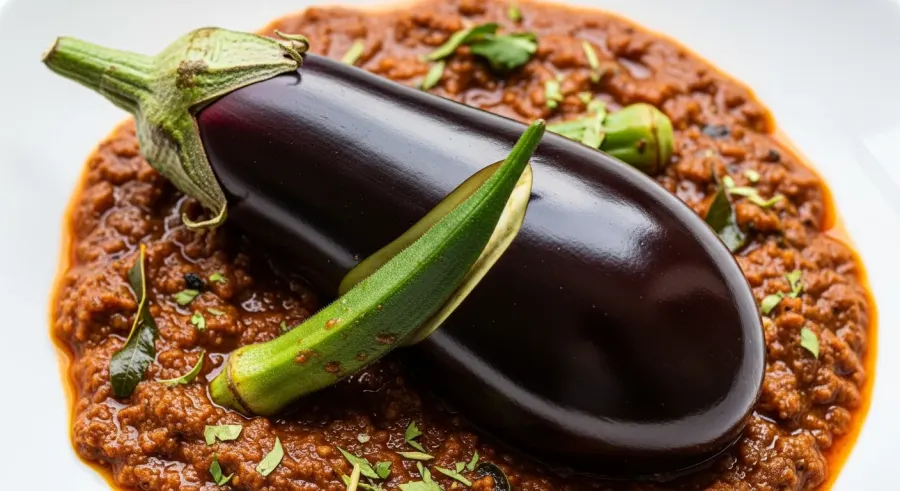
Southern cooking figured out a long time ago that unripe tomatoes fry up beautifully. If you are replacing eggplant in a parmesan bake, use a 1:1 ratio of thick-sliced green tomatoes.
They maintain a firm structural integrity when raw and soften just enough under heat. This allows them to hold onto breading perfectly. The flavor is significantly more tart and acidic than eggplant, which actually cuts through heavy mozzarella and marinara sauce nicely. They hover around 23 calories, 1.2g of protein, and 5.1g of carbs per 100g (USDA).
You might need to tweak your recipe's acid balance. Eggplant is neutral, meaning the tomato sauce usually provides all the acid in a parmesan dish. Green tomatoes bring their own sharp acid to the party. You might want to reduce any extra vinegar or lemon juice in the rest of the recipe to keep things balanced.
Keep them strictly in the frying pan or the oven for breaded applications. If you drop green tomatoes into a slow-simmering stew, they will break down entirely into the sauce, leaving you with zero texture and a highly acidic broth.
Green Jackfruit for Heavy Braises
You can usually find young green jackfruit canned in water or brine at the grocery store. It works beautifully as a 1:1 volume swap for eggplant in heavy vegan curries.
The texture is the main draw. Jackfruit is stringy and fleshy, pulling apart under heat very much like slow-cooked eggplant strips do. It has a neutral flavor with a slight artichoke-like tang that disappears into whatever sauce you cook it in. A 100g serving of raw green jackfruit provides very few calories, with minimal protein and fat.
Because it comes out of a can, you do not have to worry about salting it or dealing with oil absorption. You just drain it, rinse it, and drop it into your pot. It absorbs coconut milk and chili pastes effortlessly. (Just make sure you are buying young green jackfruit, not ripe jackfruit packed in syrup, which tastes like bubblegum).
It is best used in slow-cooked Indian or Thai curries and vegan stews. Just skip it for quick stir-fries or grilling. Jackfruit out of a can really needs long simmering in a flavorful liquid to become tender and palatable.
Cauliflower Steaks Mimic the Bulk
Sometimes you just need a massive chunk of vegetable on the center of the plate. Cauliflower works perfectly as a 1:1 volume swap. You can use small florets to replace diced eggplant, or slice the whole head into cross-section steaks to replace thick eggplant rounds.
Cauliflower offers a very firm texture that roasts beautifully. It has a nutty, distinct brassica flavor with zero bitterness. At 25 calories, 2g of protein, and 5g of carbs per 100g, it sits almost exactly side-by-side with eggplant nutritionally.
Cauliflower handles high-heat roasting much better than most vegetables. While eggplant can sometimes turn mushy if the oven isn't hot enough, cauliflower simply chars on the outside while softening inside. It also interacts with oil differently. Eggplant drinks oil, while cauliflower just gets coated in it. This means you can use significantly less olive oil when roasting a cauliflower steak compared to an eggplant steak, lowering the total fat of the finished dish.
Use it for roasting whole steaks or in heavy Indian dishes like Aloo Gobi. The time to avoid it is when you are making pasta sauces or dishes that require a soft, melting vegetable. Cauliflower will always retain a grainy, firm bite even when cooked for a long time.
Bottom Line
Replacing a vegetable is rarely about finding an exact genetic match. It usually just means figuring out what job that ingredient was hired to do in the pan. Once you know if you are looking for a flavor sponge, a thickener, or a sturdy structural layer, making the swap becomes second nature.