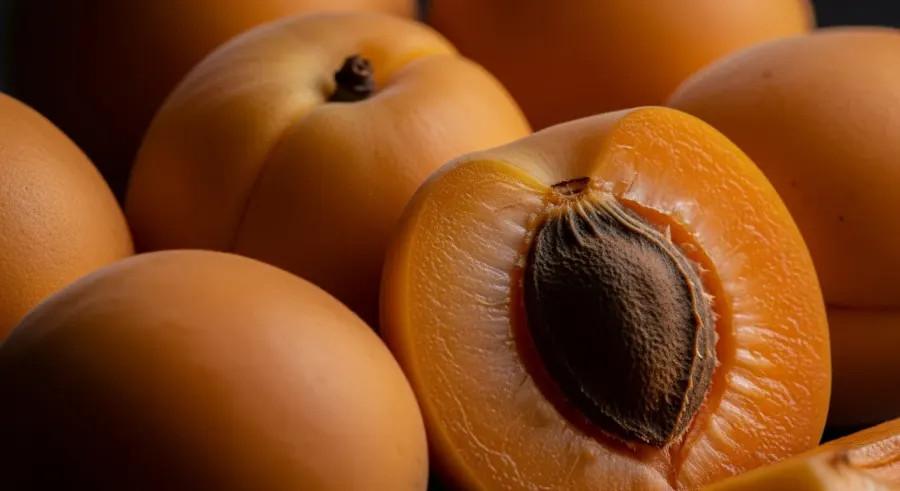
In Short
The sudden astringency in an apricot's skin comes from harmless phenolic compounds, but the true bitter agent is locked inside the pit. The kernel contains a binary chemical weapon that creates cyanide when crushed, a defense mechanism bypassed only by a rare genetic mutation.
A raw apricot is a delicate thing. Weighing in at just 48 calories per 100 grams (USDA FoodData Central), with about 11 grams of carbohydrates and barely half a gram of fat, the flesh itself is mostly water, sugar, and fiber. But when you bite into one and experience a sudden, sharp bitterness, you are encountering a highly evolved defense system.
The Distraction On The Surface
When you bite into an apricot and pull your face back from an unexpected bitter tang, you are usually just tasting the skin. The flesh of the fruit ripens from the inside out, accumulating sugars as it softens, but the skin operates under an entirely different set of rules.
Supermarket fruit is often harvested early to survive cross-country shipping logistics. If an apricot is picked before it reaches full maturity, the sugars in the flesh never fully develop to mask the natural compounds resting in the outer layer. You bite down expecting a rush of sucrose and glucose, but instead, you get a mouthful of defensive chemistry.
It is an unpleasant sensation that dries out the back of your tongue and leaves a sour, metallic finish. Because of this, people often assume the fruit has gone bad or turned toxic. But this surface bitterness is completely harmless. It is merely a botanical misdirection, a mild astringency that distracts from the actual chemical weapon locked away much deeper inside the stone.

The Phenolic Sunscreen
Plants synthesize chemicals for a variety of reasons, and the apricot tree is particularly skilled at protecting its offspring. The outer skin of the fruit is packed with phenolic compounds, specifically salicylic acid and chlorogenic acid.
These compounds are not poisons. They act more like an environmental shield. A developing apricot hangs in the direct sunlight for months, exposed to harsh ultraviolet radiation. The phenolic acids absorb this radiation, acting as a natural sunscreen that prevents the delicate, water-heavy flesh from degrading.
At the same time, these tannins serve as a deterrent. Before the seed is fully developed and ready to be dispersed, the tree does not want birds or insects eating the fruit. The bitter, astringent flavor of the skin discourages early snacking. As the fruit finally reaches peak ripeness on the branch, these compounds begin to break down, allowing the sweet flavor to take over. When we eat early-picked apricots, we are simply interrupting the plant's schedule.
A Two-Part Chemical Weapon
A plant cannot run from a predator. To survive, it must build elaborate traps. The apricot pit is a masterpiece of defensive engineering.
Inside the hard, wooden shell sits the kernel, which looks remarkably like a small, flat almond. If you were to crack it open and eat a bitter variety, the taste would be overwhelmingly sharp. This intense flavor is due to a massive concentration of a compound called amygdalin. Amygdalin by itself is a cyanogenic glycoside. In its resting state, it is a stable, relatively harmless storage molecule. The plant spends significant energy building it, attaching a cyanide group to a benzaldehyde ring, and locking the entire structure down with sugar molecules.
But amygdalin is only half of the equation. The kernel also contains a highly reactive enzyme called beta-glucosidase. To prevent the seed from poisoning itself, the plant keeps these two chemicals in entirely separate cellular compartments. They sit in the dark, waiting.
When a pest or a curious human cracks the pit and starts chewing, the physical crushing ruptures those microscopic cellular walls. The enzyme meets the amygdalin, and the chemical reaction is immediate. The enzyme cleaves the sugar molecules away. What remains breaks down rapidly into benzaldehyde and hydrogen cyanide. The benzaldehyde gives the kernel that distinct, sharp bitter-almond flavor—the smell of amaretto or marzipan. The hydrogen cyanide is the actual poison, designed to disrupt cellular respiration in whatever just tried to digest the seed.
The Silk Road Lottery
History is full of accidental agricultural discoveries. If the pit is a cyanide-producing trap, you might wonder why people in Central Asia and parts of the Mediterranean have spent centuries snacking on apricot kernels like they are ordinary nuts.
As the apricot tree (Prunus armeniaca) moved along the Silk Road from its origins in China, farmers noticed something unusual. Occasionally, a tree would produce pits that lacked the harsh, medicinal bite. The kernels were mild, nutty, and completely edible. Ancient agriculturalists took cuttings from these specific trees, propagating them generation after generation.
This created a massive divergence in the apricot family tree. Today, we have two distinct categories of apricot kernels in the global market: bitter and sweet. They look absolutely identical. A farmer cannot look at the wooden shell or the brown skin of the kernel and determine which chemical profile is hiding inside. The only way to know is to test the genetics or to take a very cautious bite.
The Microscopic Typo
Modern genome mapping has finally explained this ancient mystery. The difference between a toxic pit and a sweet snack comes down to a microscopic genetic glitch.
According to genetic analysis published in The Plant Journal (2025), sweet apricot kernels possess a tiny error in their DNA—specifically a 15-base-pair mutation in a transcription factor known as PabHLH2. This transcription factor acts like a master switch for the prunasin pathway, which is the biological assembly line the tree uses to manufacture amygdalin.
Because of this mutation, the switch is permanently flipped off. The sweet apricot tree simply forgets how to build the poison. The chemical difference between the two varieties is profound. Sweet apricot kernels contain an average of just 0.16 milligrams of amygdalin per gram. The bitter kernels, sitting on an un-mutated genetic branch, hold upwards of 26 milligrams per gram (Toxicological & Environmental Chemistry, 2015). During peak development phases, the amygdalin content in a bitter kernel can actually reach 6.22% of its total weight (Forestry Research, 2024).
The Trouble With Vitamin B17
In the 1970s, a massive alternative health trend began surrounding these bitter kernels. Entrepreneurs started extracting the amygdalin, slightly modifying it, and selling it in pill form under the names "laetrile" or "Vitamin B17."
The marketing pitch was highly compelling. The theory suggested that the cyanide released by the apricot kernel would specifically target rogue, unhealthy cells in the body while leaving normal tissue completely alone. It was positioned as a hidden, natural cure that the medical establishment was actively ignoring.
The scientific community spent years testing this hypothesis. The Cochrane Collaboration performed a rigorous review of the clinical data surrounding amygdalin and laetrile. They found zero clinical evidence supporting the health claims. Furthermore, they noted a significant number of patients suffering from acute cyanide toxicity.
"Vitamin B17" is not a recognized vitamin. It is a fabricated nutritional category. Consuming large amounts of bitter apricot kernels does not deliver a missing nutrient to your body; it just taxes your liver's ability to clear hydrogen cyanide from your bloodstream. When the liver gets overwhelmed, the cyanide binds to an enzyme in your mitochondria called cytochrome c oxidase. This physically stops your cells from being able to use oxygen. Symptoms usually start with a mild headache and nausea, escalating quickly from there. Because of this, regulatory bodies have stepped in. In 2020, Health Canada established a strict maximum level of 20 parts per million for extractable cyanide in any apricot kernels sold as food.
Does Roasting Fix The Problem?
Cooking a food often feels like a guaranteed way to make it safe. If you boil a raw kidney bean, the heat breaks down its natural toxins, rendering it perfectly edible. Many home cooks try to apply this same logic to bitter apricot kernels, throwing them in the oven to toast the bitterness away.
Amygdalin does not play by those rules. A 2025 study in ACS Food Science & Technology tested various drying and heating methods on apricot kernels. They found that while dry roasting them in an oven at temperatures up to 150°C (300°F) reduces the amygdalin content, it leaves a significant amount of the compound intact. The heat does not completely destroy the core chemical structure of the poison.
You might assume that roasting at least destroys the plant's built-in beta-glucosidase enzyme, effectively breaking the two-part weapon. That is technically true, as high heat denatures the plant's enzyme. But there is a biological catch.
Your own gut microbiome produces beta-glucosidase. If you eat a roasted bitter kernel containing intact amygdalin, your stomach and intestines provide the exact enzyme needed to unlock the cyanide. Boiling the kernels in water and discarding the liquid works slightly better because amygdalin is water-soluble and leaches out into the pot, but dry roasting provides a false comfort. Your digestive tract simply becomes the mixing chamber, and the chemical reaction happens anyway.
Bottom Line
The apricot is a study in boundaries. The sweet flesh invites you in, the astringent skin protects the water inside, and the kernel sets a hard limit on what you are allowed to take. Recognizing the difference between a harmless sour skin and a chemically armed seed gives you a quiet respect for the invisible biology happening inside the fruit bowl.